blog

Cardinal Virtues

This spring a cardinal family visited our enclosed patio. The parents were fussing because their baby couldn’t fly above the fence to make an exit. The baby would flap its wings, rise a bit, then fall back to the ground. For a few minutes I debated whether or not to intervene. Should I pick the baby up and carry it somewhere?

I knew the nest wasn’t in our courtyard. I sought out my Facebook friends, who responded with a number of ideas. “Cover it with a towel and take it back to a grassy area.” Another person told me, “Don’t move the baby without a clothes basket on your head because the father cardinal will attack you.” My husband told me to wait and see what happens. (That’s usually his advice about most things.)

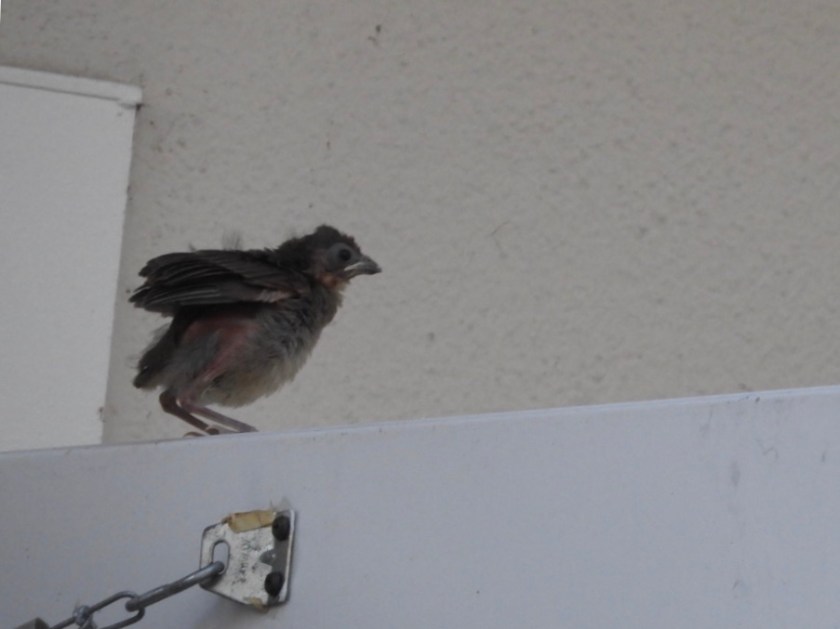
I watched the cardinal family for an hour through the back door window.  Finally the baby cardinal made it to the top of the table. Encouraged by his mother, he managed to fly from the table to the top of the fence.  My husband got a terrific photo of him preparing for final take off.

OPSLE3934

This event sparked my curiosity. I wanted to know more about cardinals. I discovered they were named after the red robes of the cardinals of the Catholic Church. Immediately the term “cardinal virtues” came to mind.  I applied the seven virtues to a cardinal’s behavior.

Faith: Believing the promises of God. Cardinals stay in the same general vicinity twelve months out of the year.  God provides for them through the cold, grey winter months. The male cardinal’s red color reminds us to “keep the faith” during bleak times.

Prudence: The ability to use foresight, knowing when it’s the right time to take action. Since cardinals do not migrate, they grow extra feathers and eat more to prepare for winter.

 Hope: Cardinals sing cheery songs which lift our spirits and encourage us to persevere through trials.

Love: Male and female cardinals mate for life and share the duties of child raising. The female cardinal calls to the male who responds by bringing her food when she’s nesting.

Justice: Male and female cardinals sing together. Both compliment one other. Each gender has a “voice” in cardinal matters.

Temperance: Both male and female cardinal parents restrain themselves from exploring other interests when they are raising their young. Cardinal babies hop around on the ground for a few days until they learn to fly. The parents stay close by to feed and protect their young.

Courage: A male cardinal is a fierce defender of the nest. He will attack other birds, cats, dogs, and snakes who intrude upon his territory. Males are know to even attack their reflection in a window (side-note: Intelligence isn’t one of the seven virtues).

I’m impressed. After I shared the extensive list of cardinal virtues, my husband asked, “What about the seven cardinal sins?”

I guess that’s one cardinal matter I’ll never know.


The Majestic Marigold

Welcome to my garden. Like other city dwellers, I have a very small space to work. Consequently when plants die, it’s a great loss. Last fall I planted marigolds. My mom is a terrific gardener and told me they are easy to grow. I agree. However, the stems become woody and their fresh green leaves fade after awhile.

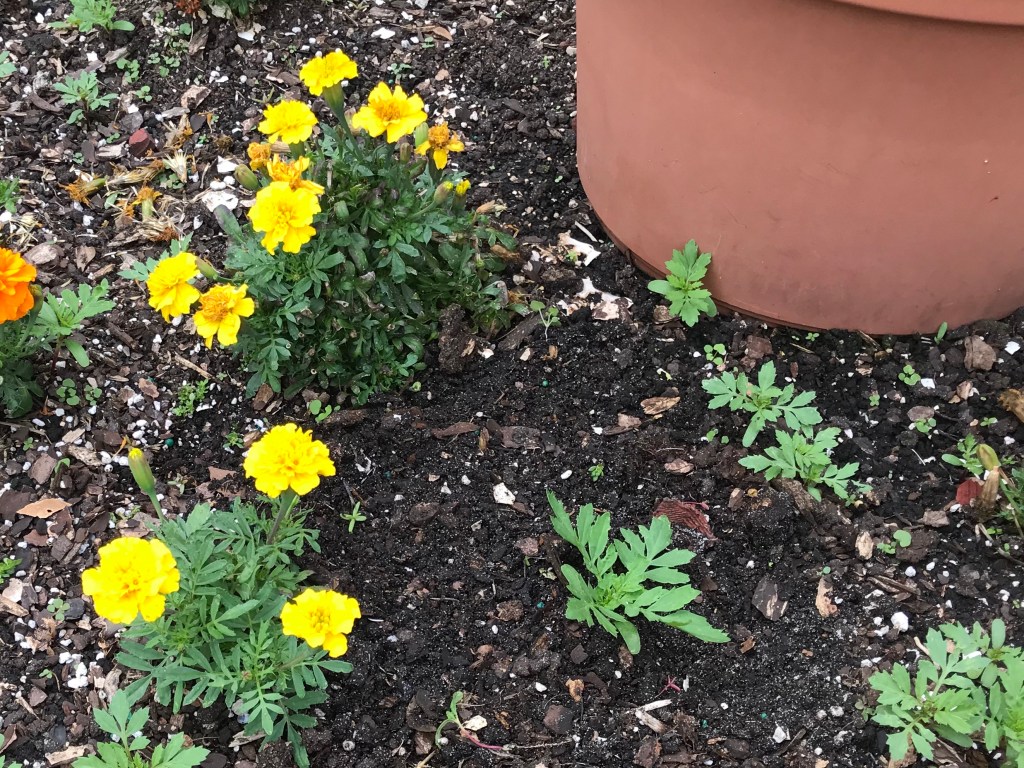
Since Florida experiences a year round growing season, I replace my flowers every few months. But something different happened this spring. During March we had a few cold snaps. I didn’t want to replant my garden, so I let it go. By the time I took a closer look, I noticed the weeds were taking over. “Wait a minute,” I thought. “Those aren’t weeds. The leaves look like marigold plants.” The dead blooms from the parent plants fell to the ground and new marigold seedlings were starting to grow. I ran in the house to tell my husband, “Honey, we have a second generation of flowers out here!”

IMG_E3321

Check out these interesting facts about marigolds:

Marigolds are versatile.  They like full sun and hot days. They need little care. Water them twice a week and they’ll do great. Dead head the spent blossoms and the plant will produce more blooms. You can save the spent blossoms and replant your next crop. They are perfect for Florida gardeners who replant often.

Marigolds are good companion plants.  I don’t mean for people, I mean for other plants. They actually repel pests like beetles and snails. (And I’ve fought many battles with snails.) If planted as a border for your garden, their aroma discourages rabbits and deer from eating vegetables.

Marigolds are edible.  This was new information for me. Hybrid varieties can be added to salads, teas, stir fries, soups, and any dish that needs color.  If you have ever tasted one, let me know. I’m a little hesitant.

Marigolds can be used to make dye for cloth.

Marigolds were named after the Virgin Mary. Native to the Americas, the plant was treasured by Aztecs for its medicinal value. Spanish explorers brought them back to Europe and referred to them as “Mary’s Gold.”

I didn’t know marigolds were so valuable. Long live marigolds! I spread more of the seeds from the parent plants on the soil in my garden and they took root. As they grew I removed some of the parents and replaced them with seedlings.  Now there are only three parent plants. They rest of the bed is new growth. Have you ever stumbled onto an exciting discovery by accident? Leave a comment and let me know.

Read another post about gardening by clicking on “The Attack of the Killer Snails.”

Unhappy Campers at Anastasia State Park

Florida’s weather changes right along with whatever storms affect the Atlantic seaboard. This was evident at Anastasia State Park last week. While camping at the park I met a couple who were almost ready to literally throw in the (wet) towel and go home.

Donna and Geren set up camp on Monday with plans to stay for the rest of the week. At that time the sun was shining. By nightfall a steady rain began pelting against their tent. They huddled under their blankets, hoping it might let up. It didn’t. In the middle of the night they were disturbed by the sound of wild animals rummaging through their camp. When they peeked outside they saw fat furry bodies scampering into the underbrush.  Sleeping was impossible. Both the tent and air mattress leaked. By morning, they were laying on the hard ground under wet blankets, and it was still raining.

Desperate for coffee, Donna opened the tent and looked around. Through the pouring rain, she noticed the ground was littered with wrappers. During the night raccoons invaded their camp. These masked bandits were so experienced they opened sealed Tupperware containers and gorged themselves on the contents. They ate a brand new box of Granola Bites which had never been opened.

Donna and Geren worked together to clean up the mess left by the raccoons. To add insult to injury their coffee maker didn’t work. No hot coffee. Geren stumbled off to the shower house where he learned (a little too late) that there was no hot water in the men’s shower and he forgot to bring a towel.

Upon Geren’s return the couple got in their car and drove to the nearest McDonald’s in St. Augustine. Over breakfast they assessed their present situation, and made plans for what to do next. They made a trip to Walmart where they purchased cots, a new coffee maker, and another awning. By the time they returned to Anastasia to reestablish their territory, the rain was letting up some.  That afternoon they dried their bedding at the campground laundry, and put their food in the car, except for their cooler. After visiting some friends for dinner, (who by the way camp in a trailer), Donna and Geren returned to their tent just after dark.

They were shocked to discover the raccoons had struck again! This time the little rascals opened the cooler. Once inside they got their paws on an egg carton and opened it, too. The thieves sucked out the liquid and threw the shells on the ground. The raccoons made off with a whole package of ham and a loaf of bread. For some unknown reason they weren’t interested in the gluten free English muffins. At this point Donna and Geren were so tired they could have slept standing up. They managed to put the dirty cooler in the car before collapsing on their new cots. The raccoons must have finally filled their bellies because they didn’t return.

For the rest of the week the couple experienced restful sleep and beautiful weather. They enjoyed all the natural beauty Anastasia has to offer. Donna and Geren haven’t given upon tent camping. In the future they’ll be upgrading to a new waterproof tent.


Going Dark at Kissimmee Prairie Preserve

There are times when everyone needs to escape the hustle and bustle of life. For nature enthusiasts who long to get away, I recommend camping for a few nights at Kissimmee Prairie Preserve State Park. Located outside of Yeehaw Junction, the park is five miles from the middle of nowhere. Since the phone signal is weak,  you have a really good excuse to not return any texts, calls, or emails. It’s the perfect opportunity to “go dark.”

IMG_3295The preserve protects 54,000 acres of Florida’s dry prairie. Looking out over the sweeping vistas of grassland, I’m reminded of the great plains of the Midwest. In the late 1800’s Florida cowboys, known as crackers, drove herds of cattle through here to markets on the  coast. This rare prairie ecosystem hosts an abundance of wildflowers, birds, and animals.  During our stay, my husband, Herb took some amazing wildlife photos.
 

JDTX1301
Whitetail Deer


JOEA3315 (2)
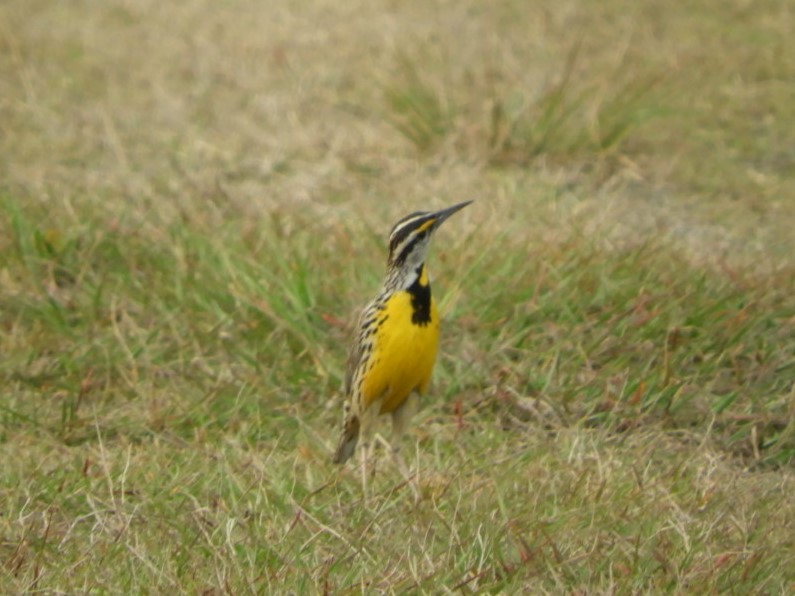
Migrating Meadowlark

ROTC5065 (2)
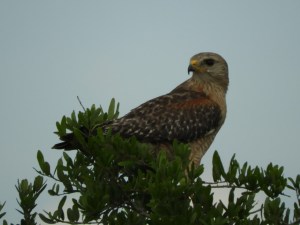
Crested Caracara

IMG_3227
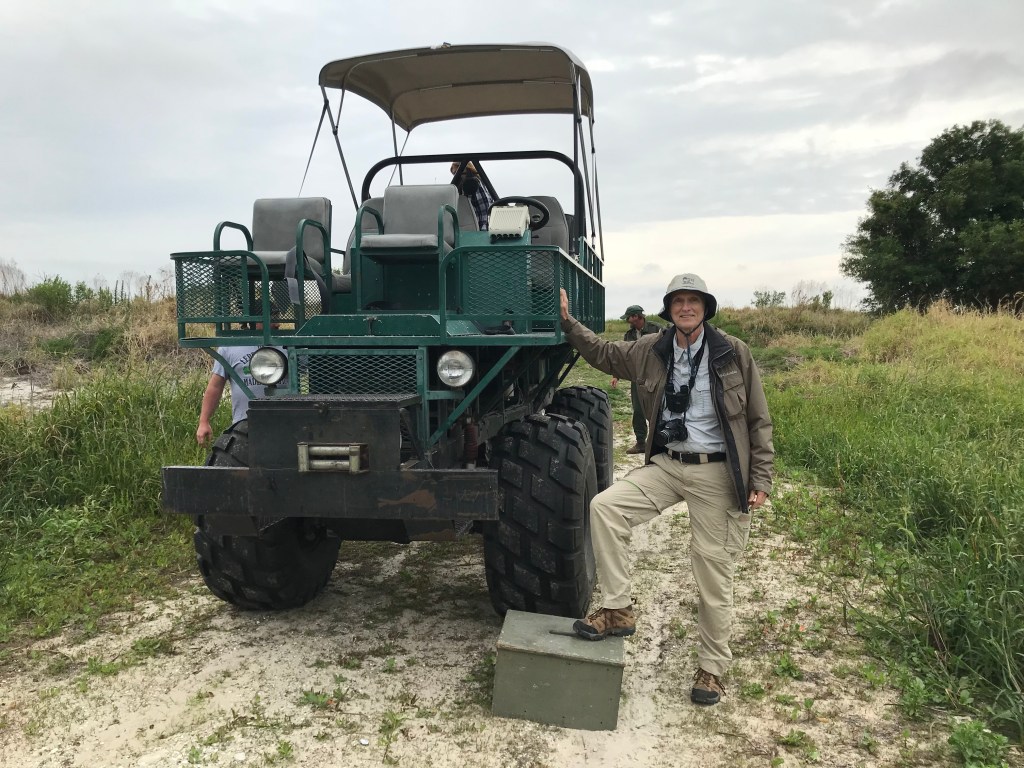
Herb, the photographer, posing with the prairie buggy.

Few roads exist in the preserve, but there are one hundred miles of multi-use trails for hiking, biking, and horseback riding.  Visitors can access remote areas of the park on the prairie buggy tour. These tours are conducted during the fall and winter seasons, when the park is more populated. We took the last tour offered on March 31.  Our guide explained that in Florida an extra inch or two of elevation creates the right environment to establish a hammock of palms or oak trees.

IMG_3193And of course, lower, marshy land makes a great home for Great Blue Herons and everyday alligators.

ILRB6390


QTQJ2093

When we parked our trailer at campsite five, we noticed a familiar RV at site four. We were surprised to discover our neighbor was someone we camped next to at Highlands Hammock in January. John is a snowbird from Traverse City, Michigan. This winter he camped at numerous parks throughout Florida to escape the ice and snow of the frigid north. His wife Vicki recently joined him for a few weeks. She spent the winter at their home in Michigan. As a quilter, Vicki finds it difficult to work in a trailer. Kissimmee Prairie Preserve is their favorite place to camp. They love it because it’s quiet. With no interstates or airports nearby, one doesn’t hear any traffic.

IMG_3153
John and Vicki Keeling relaxing outside their RV.

We met another interesting camper during this trip. Amanda Kincaid pitched her tent before nightfall at site one.

IMG_3311
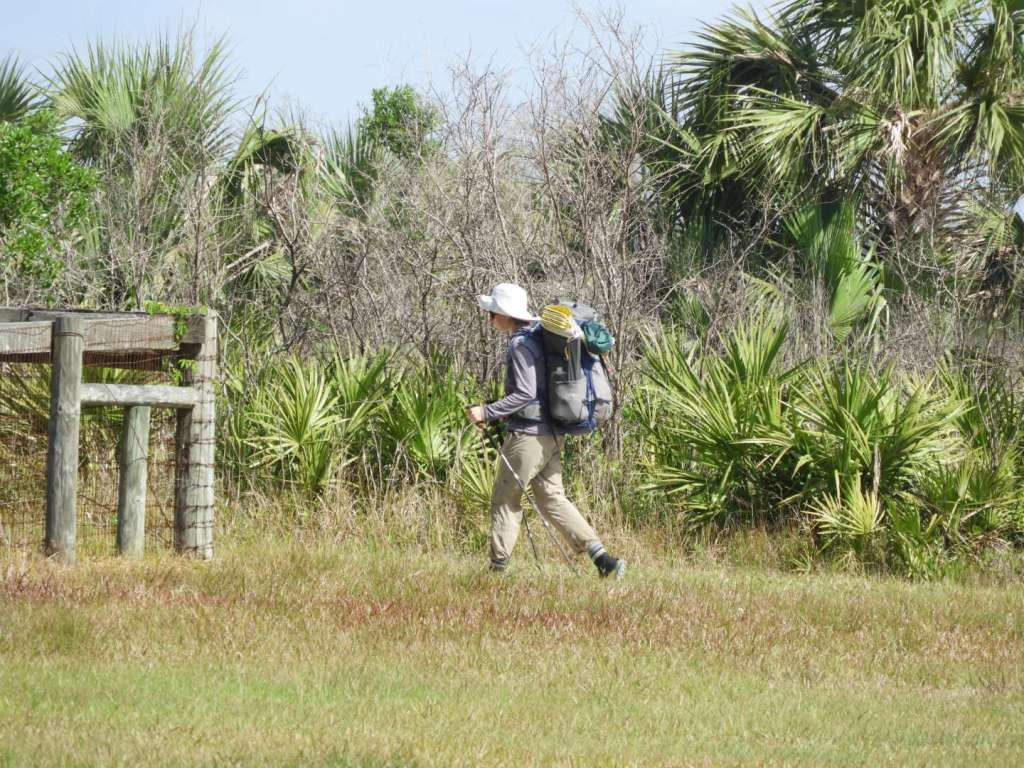
Amanda Kincaid with all of her gear.

A long distance hiker, Amanda started her trek on March 10. She’s walking from Gainesville to Big Cypress, near the Everglades. By the time she arrived at Kissimmee Prairie Preserve she hiked three hundred fifty miles. She has two hundred miles to go on the Florida Trail to reach her goal. I offered Amanda a cup of coffee which she gladly accepted. She shared that she began backpacking with her dad about five years ago. Her experiences on the Appalachian Trail and Pacific Crest Trail were cut short at four hundred miles due to injuries. This time she has high hopes of reaching her goal.

WWCR6397
Amanda Kincaid loves the special moments hiking offers.

Amanda is a member of Trail Angels, an organization that offers advice and provisions to hikers along the trail. She must plan carefully to have access to safe drinking water. Amanda averages between fifteen to twenty miles a day. With spring temperatures climbing, hydration is an issue. The Trail Angels place bottled water at locations she will pass  through.  Even with all of the hardships, Amanda loves backpacking and meeting people.

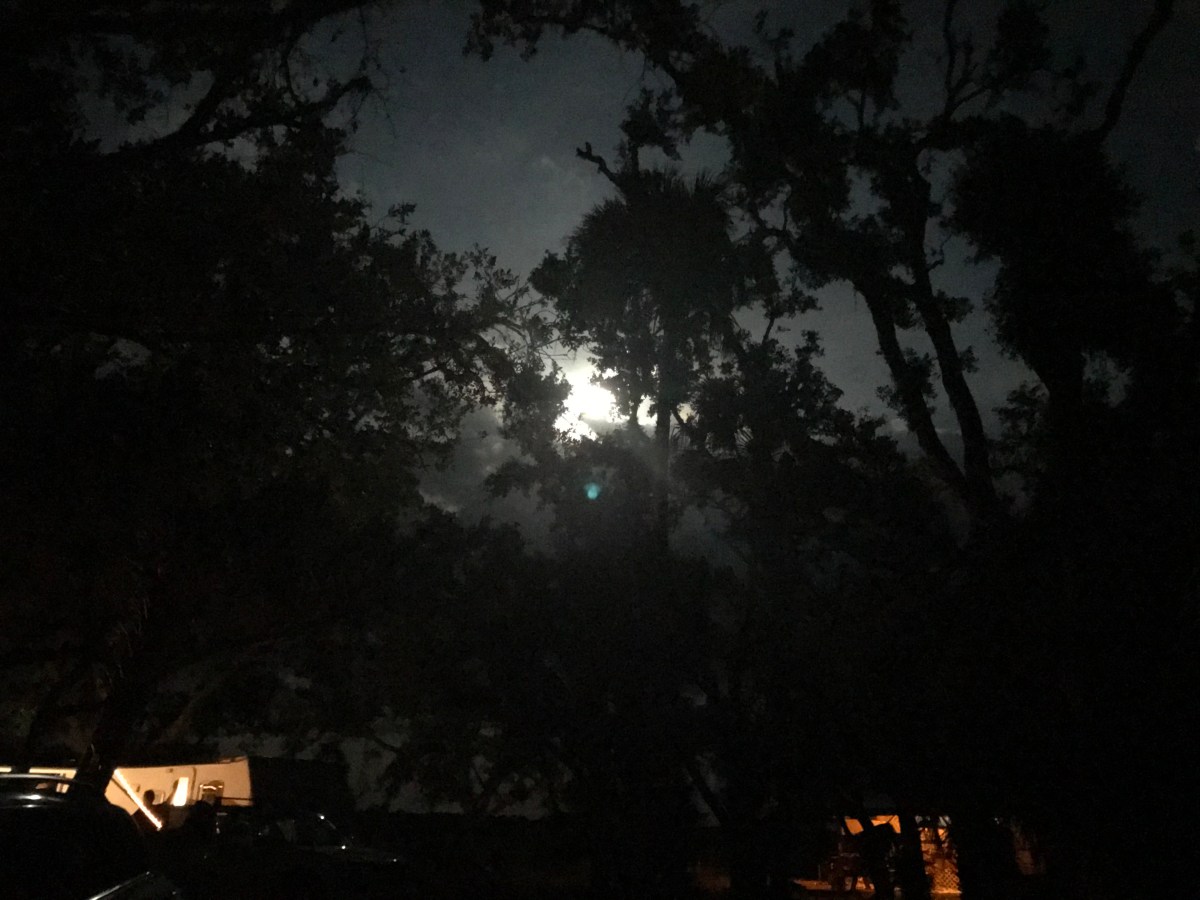
When the sun goes down, the stars come out at the preserve which is known for it’s “dark skies.” A section of the park is designated as the “red light district.” Here only red lights are used by campers, and no campfires are permitted. There is little or no light pollution at Kissimmee Prairie Preserve and stargazing is superb.

RRRP4423

Of course no one can douse the moonlight.


One Beagle’s Battle with Degenerative Disk Disease

If you’ve followed my blog during the past year, you know I like to travel.  This month my main trips have been to the veterinarian’s office.  The four-footed furry member of our team, experienced a set back in his health, forcing him to be on medical leave.

On our most recent camping trip, Buddy, our beagle, couldn’t seem to get comfortable. He paced, shivered, and whined. Buddy suffers with degenerative disk disease. On occasion he struggles with pain in his back. We phoned our vet, who advised us how to handle the present emergency. Fortunately, we brought along some medication to relieve his pain. Can you believe we actually carry a first aid kit for our dog? We administered the medication, but decided to come home early in case his condition worsened.

The next day Buddy improved. The combination of pain medication and steroids halted what might have been another terrible event.  In 2013, one of Buddy’s disks ruptured, resulting in paralysis of his hind legs. Click on the “buddy’s world” tab above for details.

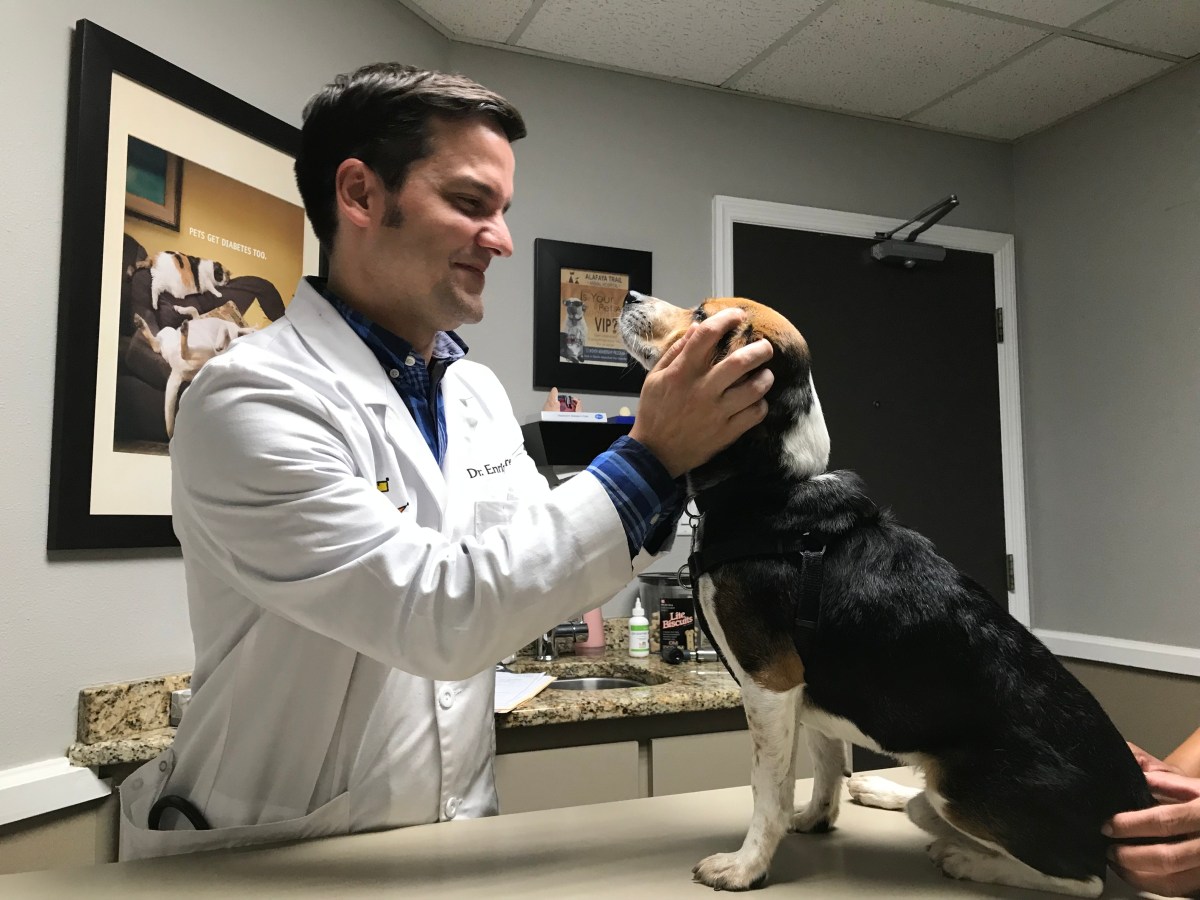
We scheduled a follow-up appointment for Buddy with Dr. Enrique Duprey of the Corrine Drive Animal Hospital. The two of them have an understanding. Buddy strikes a cute pose and stares at Dr. Duprey. Few can resist Buddy’s beguiling brown eyes. Buddy knows his cuteness pays off in treats. On this visit Dr. Duprey offered more than treats. He offered laser treatments.

Low-level laser therapy is a relatively new concept being used to treat dogs with arthritis and degenerative disk disease. This illness is fairly common in long-bodied dogs. The treatments use light to stimulate cell regeneration, reduce inflamation, and increase blood circulation. For almost four years after his surgery and recovery, Buddy got along very well. His recent pain episode indicates the disease is still present.

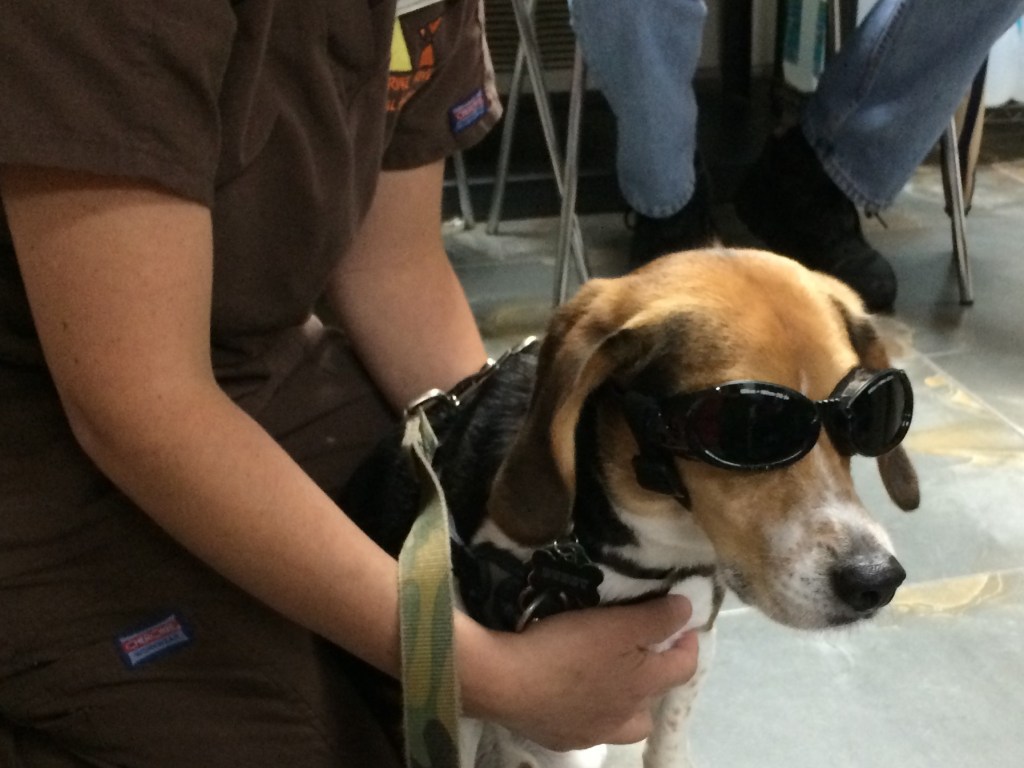
A typical treatment session lasts ten to fifteen minutes. Buddy wears special dark goggles to protect his eyes. I’ve been told the laser feels good to the dogs. Buddy hasn’t complained. If laser therapy reduces his need for medication and prevents another ruptured back disk, we’re all for it. Right now he’s receiving two treatments a week. If he continues to do well, the treatments will be decreased to once a month. He’s had eight treatments so far. Buddy enjoys all the special attention he receives from the technicians at the animal hospital. He’s the coolest beagle in Orlando.

IMG_4443 (2)

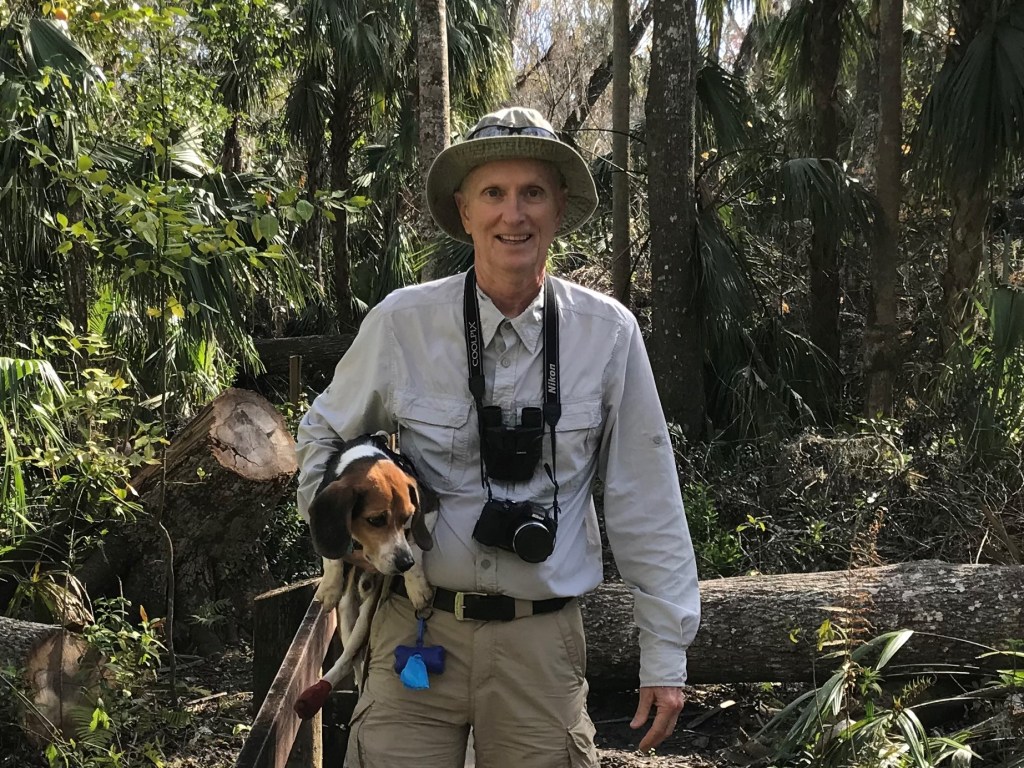
Looking back, we’re not sorry we share our home and our lives with Buddy. Beagles give more than they take. Buddy is charming and congenial.  He’s a great companion. Relatively calm, Buddy’s not a nuisance barker, but he’ll let us know if cats or other visitors are near. Then he omits a loud baying sound heard for blocks. Out on a hike Buddy is attuned to the smells and sounds of the woods, a part of his hunting heritage.

IMG_9524

IMG_4628


If you’ve experienced medical issues with a pet, or if you are simply crazy about beagles, leave a comment. I’d like to hear your story.


Camping at Highlands Hammock

Highlands Hammock is a popular place to camp. Many people come to see the ancient trees of the hammock.  Eager to escape the frigid north, snowbirds migrate south in their RV’s. They camp in one state park for a week or two then move on to another. Highlands Hammock campground contains one hundred thirty-eight campsites. We were there midweek and every site was occupied. The developers of Highlands Hammock capitalized on the high demand for campsites by crowding as many sites as they could into the area.  As you can see in the photo above there’s not much privacy between sites.

IMG_2656
Buddy stands guard scanning the environs for squirrels and stray cats.

Our own site was difficult to navigate. My husband skillfully parked our trailer between two trees and in front of an electric pole. (We’ve owned our Viking for one year now, and he’s getting better.) At least we didn’t have anyone camped behind us, but our neighbors on either side were fairly close.  We got to know our neighbors. Buddy, our beagle, always draws everyone’s attention. IMG_2588

The close proximity of our campsites promoted more interaction among the campers. One morning a group of volunteers served a delicious and reasonably priced breakfast for everyone at the recreation hall. We enjoyed meeting other campers, talking about our adventures, and trading tips on the best campgrounds we’ve visited. There was a great feeling of community here. Proceeds from the breakfast help support the park.

I highly recommend the Tram Tour.  Ranger Kevin took us for a tour through the more remote wilderness areas of the park.  IMG_2616Kevin drove us through three different ecological communities. The palm hammock, pine flatwoods, and cypress  swamp. Along the way he stopped to describe the plants and animals.  He told us that alligators often lose body parts due to fights with other gators. Yet, they never die from infection. Alligator blood contains antibiotics and may be helpful as a remedy for MRSA. Scientists certainly have enough specimens to study in these parts.

IMG_2617 (2)
Juvenile alligators are camouflaged by their striped hides.

The cypress swamp teemed with life. Scores of alligators, snakes, birds, and turtles abounded in this beautiful place. Herb zoomed in on this delightful turtle.SNQQE3053

Ranger Kevin plucked his favorite flower from the swamp. The floating bladderwort is not only pretty, but helpful. This plant is carnivorous. Its underwater leaves bear small “bladders” which trap and digest mosquito larva.  MXST1689And like all good conservationists, Kevin placed the flower back in the water after his demonstration so it can continue its work.
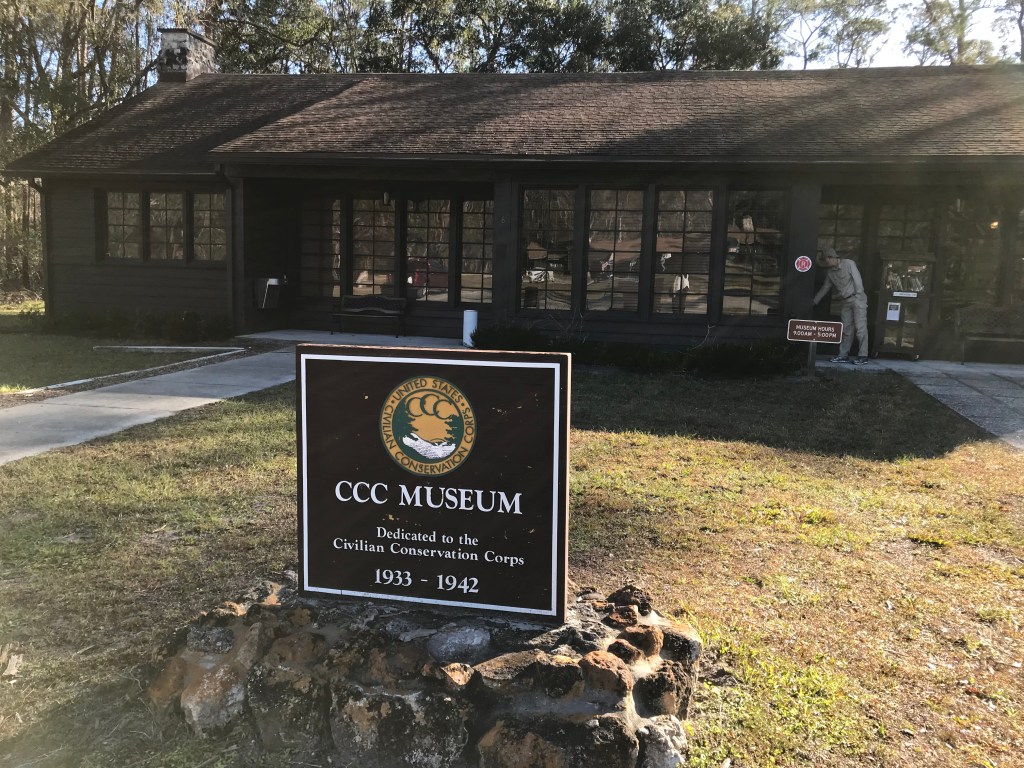
IMG_2518Highlands Hammock State Park is proud of its history. The park is one of eight in Florida  developed by the Civilian Conservation Corps as part of Roosevelt’s New Deal of the 1930’s.  The CCC constructed the visitor center. concession building, roads, and bridges. A museum displays memorabilia, photographs, and examples of CCC workmanship.
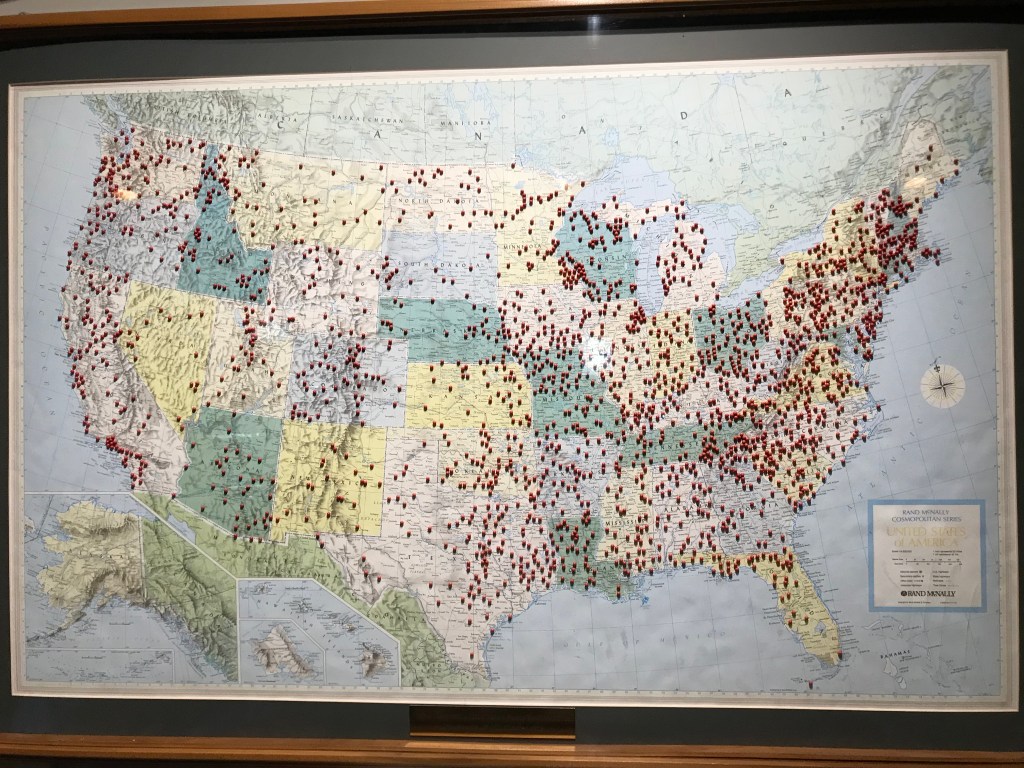
IMG_2528

During the past year we visited two other parks built by the CCC, Florida Caverns and Hillsboro River. In the museum we viewed a map of all the public works initiated by this organization. We were amazed to learn they established 800 state parks throughout the country. The CCC built 13,100 miles of trails, and planted billions of trees. These men worked hard and were happy to earn a dollar a day.

And where was Buddy during all of our educational touring? Inside the trailer, of course. He learned something too. How much he misses us when we are away.  Luckily beagles are quick to forgive. IMG_2609 (2)


Long Live Highlands Hammock

What is a hammock? I always thought of it as a shady place to rest. While hiking at Highlands Hammock State Park, near Sebring, I walked through the oldest hammock in Florida.  A hammock is a stand of trees growing in an elevated area surrounded by wetlands. Think of it as ecological island where plants and animals abound.

While camping at the park, Herb, Buddy, and I traversed trails through wild orange trees, ancient live oaks, and towering Sabal palms.

IMG_2579

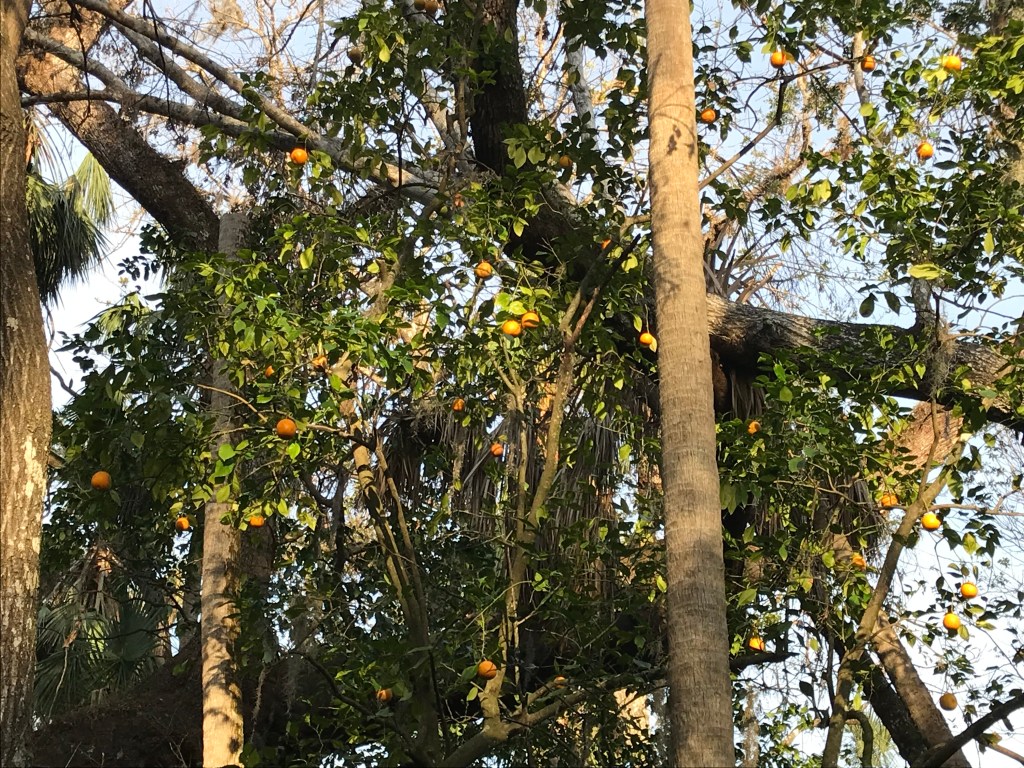
These wild oranges look almost ready to eat. Early Spanish explorers brought orange seeds to Florida.  Seville oranges can be found throughout the state from Jacksonville to Key West. Wild oranges contain a large amount of seeds and taste sour. Yet, they are a valuable ingredient in orange marmalade, and can also be substituted in recipes which call for lemons.

IMG_2550
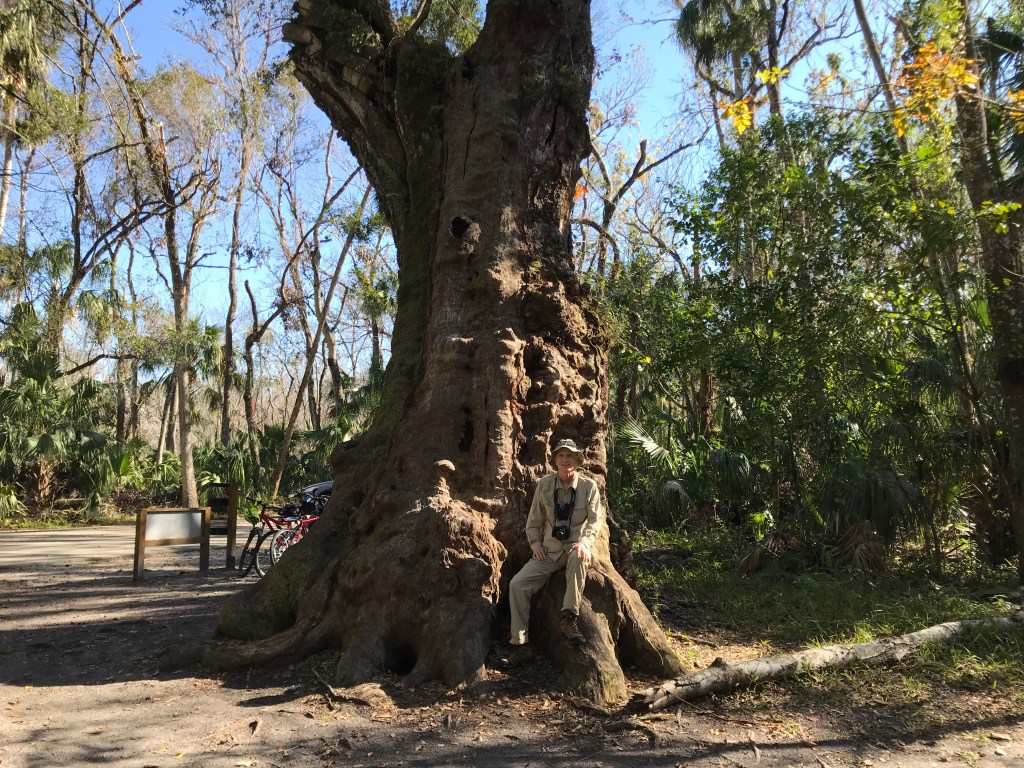
Herb, posing with an oak tree estimated to be one thousand years old.

The park contained many old oak trees, living and dead. The center of an old oak often rots away from disease, parasites, or fire leaving a hollow space with little skeletal support.

IMG_2595

Tree surgeons attempted to save this oak by supporting it with cement blocks. It didn’t work. The tree died, but an artifact remains for now, until the wood decomposes.

IMG_2581My favorite tree is the Sabal palm. In Highlands Hammock many of these trees grow between  seventy and one hundred feet tall. Upon my arrival home, I researched information about the life span of palm trees. I discovered palms do not have rings, so their age is determined by their height, rate of leaf production, and visible scars from fallen leaves.
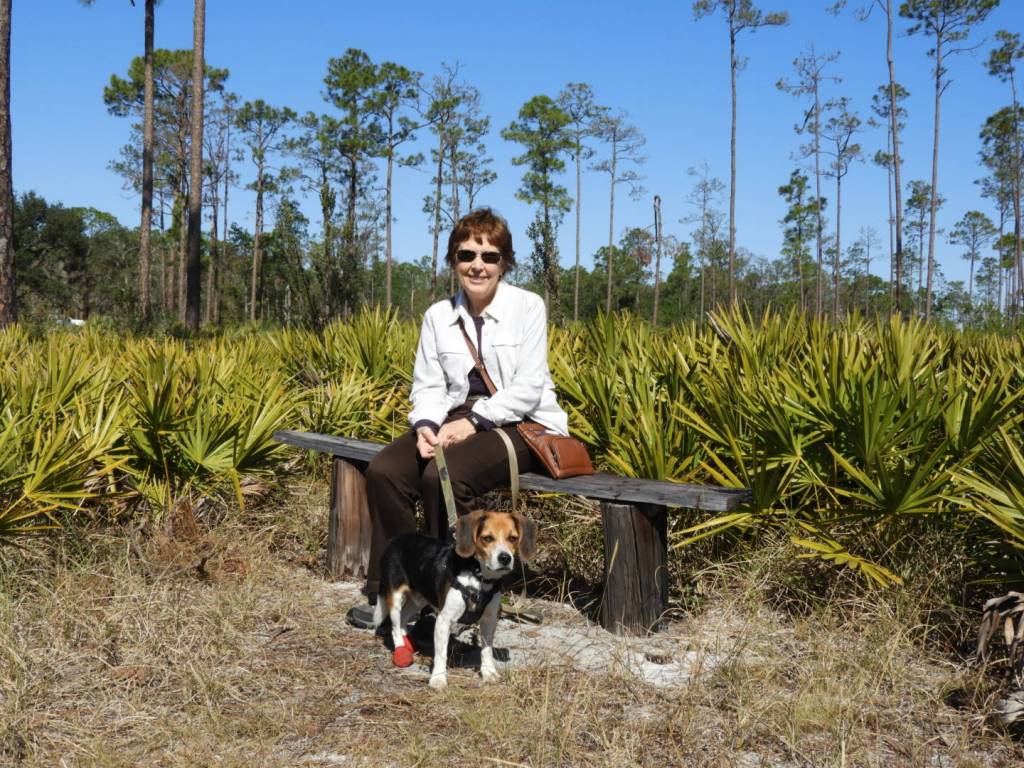
According to botany professor, Barry Tomlinson, palms may be the longest living trees if you consider the age of actively dividing cells in their trunks.  In most long-lived trees the trunk is composed of rings of woody tissue, but only the cells of the inner ring actively divide. Each year these active cells are replaced with new cells and another ring is added to the tree. That’s why oak trees not only grow taller, they grow wider too. An  oak tree might be one thousand years old, but its active cells are much younger.

In contrast, the tissues in the trunk of a palm are laid down in vascular bundles with the oldest cells in the trunk and the youngest in the top. However, the oldest cells flourish at full capacity throughout the life of a palm tree, continuing to transport water and nutrients to the top leaves for centuries.

This reminded me of Psalm 92:12 which states:

The righteous (faithful) will flourish like the palm tree.

Good food for thought.  Compared to other trees, palms are unique because all of their cells are flourishing throughout their old age. I’m delighted when science confirms the word of God. How did the psalmist know that the cells of palm trees flourish?

Like all baby-boomers, we have more years behind us than ahead. As we approach our “golden years”,  don’t we still desire to flourish like the palm tree?

IMG_2556


Sharing Books with Kindred Spirits

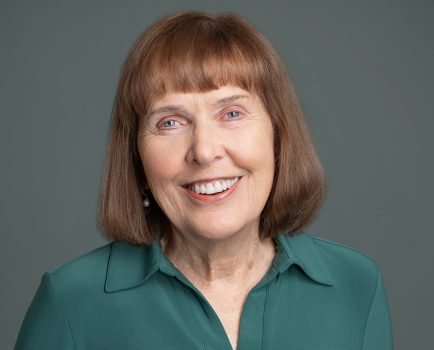
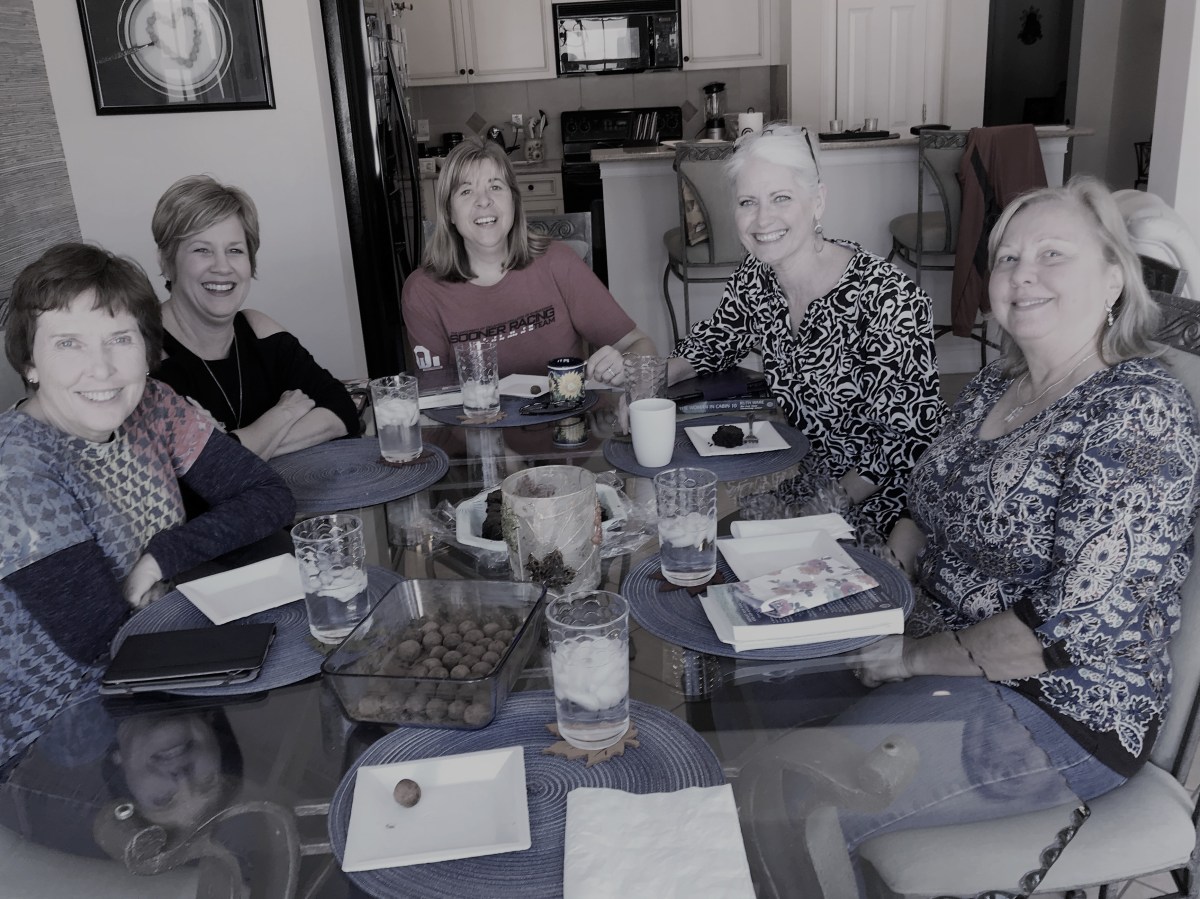
During the past year I’ve written several posts about camping. I’m not always out in the wilderness with Herb and Buddy. At home, I like to read and hang out with friends. Here I am with my Kindred Spirits Book Club.

Our book club celebrated its third anniversary this month. Some of the members, myself included, are retired teachers. We spent most of our careers teaching children to read. Now we have time to read for our own enjoyment. We’ve discovered that books are much more interesting and memorable if shared with friends. We chose our name from Anne of Green Gables by L.M. Montgomery. In the book, Anne referred to her closest friend, Diana, as a “kindred spirit.”  Together, they shared similar interests.

Our group meets monthly for lunch, usually at one of the members homes. Before the book discussion, we chat about our personal lives. After the dishes are cleared away, we conduct our “business.” During the business meeting we make decisions about future books we plan to read, and set dates to meet. Our group is very accommodating of each other’s suggestions. A member will suggest a book title and author, then tell something about it. We bat the idea around a few minutes, and come to a consensus.

Unlike some book clubs I’ve heard about, we actually do read and discuss our book of the month. After all, teachers are very responsible regarding their homework.  Whoever is leading the discussion drafts specific questions and emails them to the group a few days in advance of our meeting. We’re a serious book club.

I love hearing the members reaction to some of the books we’ve read. Here is a snippet of one discussion.

“Why do so many books seem to be about dysfunctional families?”

“Because if everything was hunky-dory you wouldn’t have a story.”

Over the past three years we’ve read thirty-one books.  At our last meeting I asked the group to share their favorites.

Our number one book is A Land Remembered, by Patrick D. Smith…. The story of three generations of a pioneer family in Florida.

The Nightingale by Kristen Hannah …  Two sisters struggle to resist the German occupation of France during World War II.

Take Me With You by Catherine Ryan Hyde …  A burned out teacher turned foster parent travels the country in an RV.

Same Kind of Different as Me by Ron Hall and Denver Moore…  The true story of a friendship between a homeless man and an international art dealer.

Redeeming Love by Francine Rivers …   Retells the biblical love story of Gomer and Hosea in the times of the California Gold Rush.

Life From Scratch by Sasha Martin … a memoir of food, family, and forgiveness.

The All-Girl Filling Station’s Last Reunion by Fannie Flagg … A comical novel of two women who gather their courage to learn to fly, each in their own way.

Lay That Trumpet in Our Hands by Susan Carol McCarthy ….Historical fiction based on true events of racial violence set in Florida.

The Giver by Louis Lowry … Young adult dystopian novel.

Red Midnight by Ben Mikaelsen … Two children make a daring escape from war-torn Guatamala.

As you can see we love fiction, and our favorite books are those which inspire. Many of these works feature admirable characters who overcome poverty, war, and racism.  A good book is one that you want to read again. Even if you read it as a young adult, and pick it up later in life, you still learn something from it.

Life From Scratch is Sasha Martin’s memoir.  The court declared the author’s mother unfit, and terminated her custody of her children.  Sasha lived away from her mother for most of her teen years. Cooking provided a way for her to remember the family she lost. She includes recipes from her culinary journey around the world in this book.  During the Christmas season our group met to share our own family recipes and memories associated with each dish.

If you enjoy reading inspirational books, and can recommend any titles or authors, leave a comment below.

“Kindred spirits are not so scarce as I used to think. It’s splendid to find out there are so many of them in the world.”      L. M. Montgomery, Anne of Green Gables.

IMG_7252 (2)
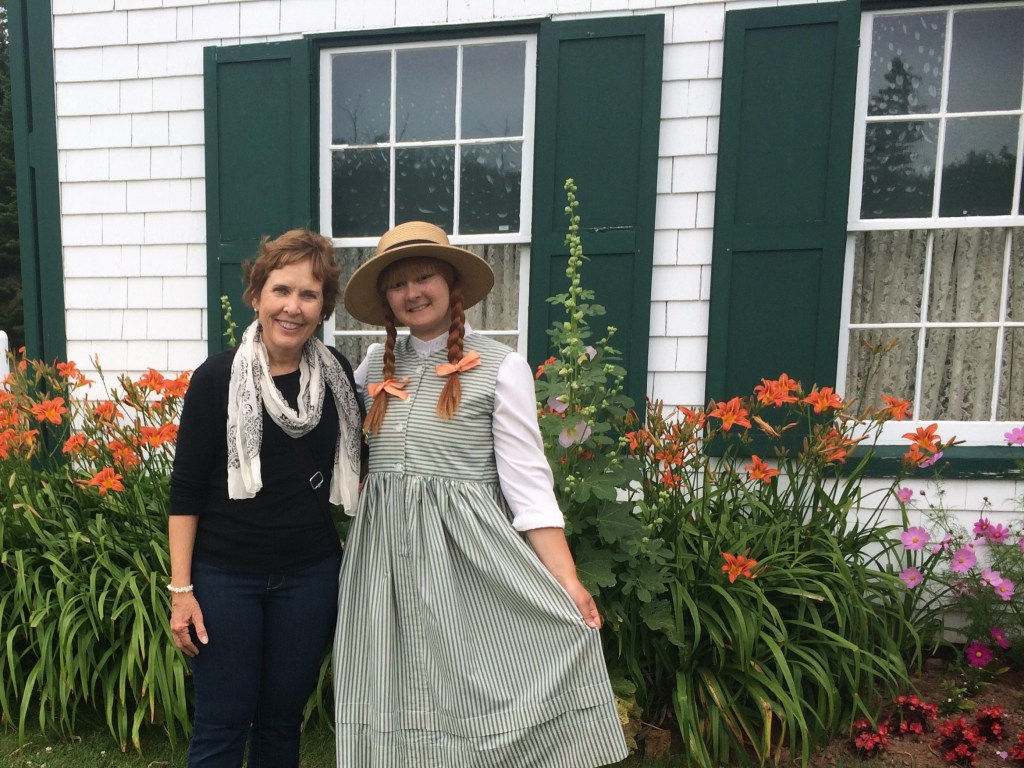
Posing with “Anne” at Green Gables, Cavendish, PEI


Florida Caverns: A Refuge for All Seasons

We pulled into Florida Caverns State Park at dusk, checked in at the gate and drove a couple more miles to the campground. Great, we need to set up camp in the dark. I turned on my flashlight and guided Herb as he backed the trailer close to the hookups. Now it was dark, very dark.  There were few lights or campfires in the area. After all, it was a Wednesday in December, with temperatures expected to dip into the forties that night.  The distant sound of dogs barking added to my apprehension.

Fortunately, we brought an extra light which Herb attached to the side of the trailer. He could see well enough to unhitch and level the Viking. We were tired after six hours of driving from Orlando to Marianna, located in the Florida panhandle. Our mission: experience the only caves which exist in Florida.

That’s right, there are caves in Florida. Millions of years ago Florida was submerged under saltwater. During that time shells, corals, and sediments accumulated on the sea floor. As the sea retreated, all of these materials hardened into limestone. Groundwater eventually dissolved crevices in the rock and shazaam! Caves were born.

Our first night in the park was eventful. Herb stepped in dog poop in the dark. By the way, it wasn’t Buddy’s. Later, I forgot to turn on the overhead stove fan when I cooked dinner and set off the smoke alarm. Buddy responded with a panic attack and tried to run out the open trailer door. After everything calmed down, and Herb left his shoes outside, we relaxed in our warm trailer with a hot meal.

The next morning Herb gave Buddy some anti-anxiety medication, and made him comfortable inside the trailer. We met a guide at the mouth of the caverns for a tour.

IMG_1968


During the tour we learned the Civilian Conservation Corps enlarged the passageways during the 1930’s. Known as the Gopher Gang, these young men worked for a dollar a day to dig out trails and chisel tunnels through solid limestone. They also wired the caves with electricity.  Without light, none of the calcite formations would be visible.


IMG_1977
It takes one hundred years for one cubic inch of calcite to develop. These stalagmites formed from water dripping year after year in the same place on the cave floor.

Colored lighting in several of the rooms created unique special effects.


IMG_2008
The Christmas Room


IMG_1993
The “Heart” of the Cave

The temperature inside the caverns is a constant sixty-eight degrees. With fifty degree temperatures outside, we enjoyed the warmth the rooms provided. In the summer, tourists visit to take refuge from the heat. However, during the summer rainy season, some passageways are flooded. The caverns do contain animal life. Bats flew over our heads. Blind crayfish scurried about in pools of water near our feet. After five p.m. a guide leads flashlight tours. When the lights are off, the rooms appear like they did to early explorers.

Herb and I have traveled all over the country to experience areas with different elevations and climate. Now we know we can drive six hours and feel like we are in the foothills of Appalachia.IMG_2021

When Britain ruled Florida between 1763 and 1783, this area was called West Florida and extended all the way to the Mississippi River. The Apalachicola River, located east of Marianna, divided East and West Florida. The river still marks the division between Eastern and Central Time zones. Florida Caverns is on Central Time.

The park is located in a temperate hardwood forest. Unlike most of Florida, this area is far enough north, and high enough up (two hundred feet above sea level) for the plants and animals to expect chilly winters. The forest experiences four distinct seasons and many of the trees lose their leaves in winter. We enjoyed seeing the fall colors as we hiked through groves of beech and maple trees.

IMG_2173

IMG_2077

We stayed at the campground for five nights. As the weekend approached more campers arrived. A special note: Unlike other Florida State park we’ve visited, the shower house has central heating, which we appreciated on these cold December mornings. The campground also features sewage hookups at each campsite.

IMG_1966
Buddy in his “exercise pen”.

Florida Caverns, a refuge for all seasons, and an experience to remember.

IMG_2010


Trailers, Trash, and the Black Bears of Wekiva

Wekiva State Park is only a thirty minute drive from our home in Orlando. Although we’ve canoed the beautiful Wekiva River, we hesitated to reserve a campsite because of the park’s reputation as a black bear habitat. Part of our concern involved our beagle, Buddy. When we discovered dogs are permitted on the trails, we decided to go after all. If it was very dangerous, surely the park wouldn’t allow pets.

A friendly ranger greeted us at the entrance. “Be aware, the bears are very active right now.” My husband, Herb, nodded his head and we continued to the campground to set up camp. “What does that mean?” I asked. “Are bears roaming through the campground?” Herb didn’t answer.

After we parked our trailer, my husband drove less than a mile to the nearest Publix to buy firewood. I walked Buddy around the campground, and met a lady on the road with her pet.

“Hey, what’s going on with the bears around here?” I asked.

She kept a tight grip on her dog. “Last week a bear approached the campground dumpster. The rangers killed it.”

I sighed. “Oh, that’s too bad.” It seemed like I should feel sorry for the bear. After all it was probably just looking for food. I walked over to the dumpster to judge its location in relation to our campsite.  It was not a pretty sight. Have you ever seen a pretty dumpster?

IMG_1795

As you can see both dumpsters have secure latches on the side to deter bears.  It does look like a bear tried to raise the lid off the top.

IMG_1793

I read the rules on the sign. Between the hours of 8 p.m. and 8 a.m. the dumpster is closed. I wondered if the ranger padlocked the opening to keep people from bringing their trash. Then I realized someone must have left their garbage outside the dumpster when it was “closed.” Talk about ringing the dinner bell for the bears. “Come and get it bears, I’m going to make it easy for you. And hopefully, you won’t eat me!”

I was very glad the dumpster wasn’t close to our campsite.

When Herb returned with the firewood, I told him everything I’d learned about the dumpster. He stayed outside with Buddy and I went in the trailer to make dinner. Later, while we were relaxing around the campfire, Herb casually mentioned that a neighbor came by with some news. Earlier that day, two pygmy rattlesnakes were crawling right where we were sitting.

I immediately lifted my feet off the ground. “This place has more wildlife than anywhere else we’ve camped so far. And we’re practically in our own backyard!”

I’m happy to report that we didn’t encounter any bears or snakes during the four wonderful days we camped at Wekiva.

IMG_1722

We did meet a wild turkey!

After we returned home, I researched a few facts about the Florida black bear.  Forty years ago they were endangered, with a population of only three hundred.  Today there are estimated to be 4,350, and they are no longer considered threatened. This fact surprised me. I thought the development of Florida’s urban areas would have the opposite effect. During the era of the black bear’s decline it was legal to hunt them. Now they can only be hunted during specific times designated by the Florida Wildlife Commission. In 2016 an authorized bear hunt lasted two days. During that time 306 bears were killed. Bears are more likely to be seen in forested wetlands, but can be found anywhere in Florida.

DSC_0092