

“Science couldn’t explain it… but there it was, alive in the deep waters of the Amazon. A throwback to a creature that existed one hundred million years ago.” So begins the opening remarks from the trailer, The Creature of the Black Lagoon.
When My husband was growing up he loved to watch the horror movies of the 1950’s. Even today his eyes seem to light up whenever he talks about the time his parents brought him to Florida for a vacation. They visited Marineland in 1962. Back then two of his favorites movies were The Creature of the Black Lagoon (1954) and it’s sequel, Revenge of the Creature (1955). He couldn’t believe he was seeing the studios where scenes from both of his favorite movies were filmed. It’s something he will never forget.
This summer we made a return trip to Marineland. We learned the attraction first opened as Marine Studios in 1938. It was designed to be a location for Hollywood filmmakers to shoot underwater footage for movies and TV shows, including Sea Hunt (1958)
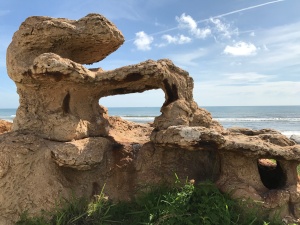
Naturally underwater movies call for animal actors. In addition to making films, Marine Studios wanted to give the public an opportunity to see and learn about bottlenose dolphins. During the 1940’s public dolphin feedings evolved into dolphin performances. Keepers discovered how high a dolphin can jump.
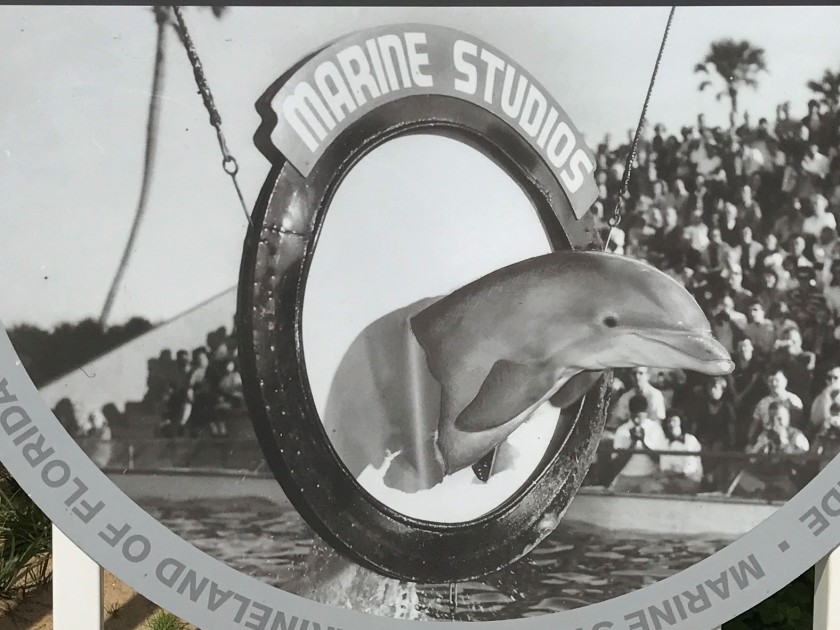
During the 1950’s and 60’s the dolphin performances drew crowds of adoring fans. A favorite celebrity, Nelly, starred in TV shows. Nelly was born at Marine Studios in 1953 and lived under human care for sixty-one years. As dolphin performances continued to grow in popularity during the decades of the fifties and sixties, the focus of Marine Studios changed. It became more of an animal theme park with a new name, Marineland.
As we strolled through the present day facility I was taken by its beautiful location. The dolphin pool is located in close proximity to the beach. Over the years Marineland staff have rescued hundreds of stranded whales and injured marine animals.
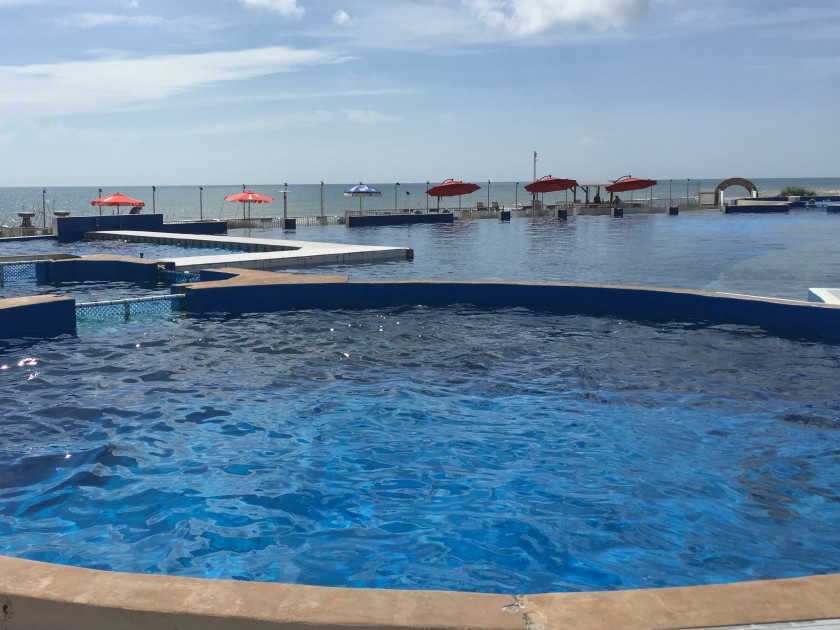
However, Marineland’s location also contributed to its demise. As the decades passed, salty air eroded the buildings. Destruction from two hurricanes made it necessary to close the park in 2004. In addition, Marineland experienced a decline in admissions after Sea World of Orlando opened in the late seventies.
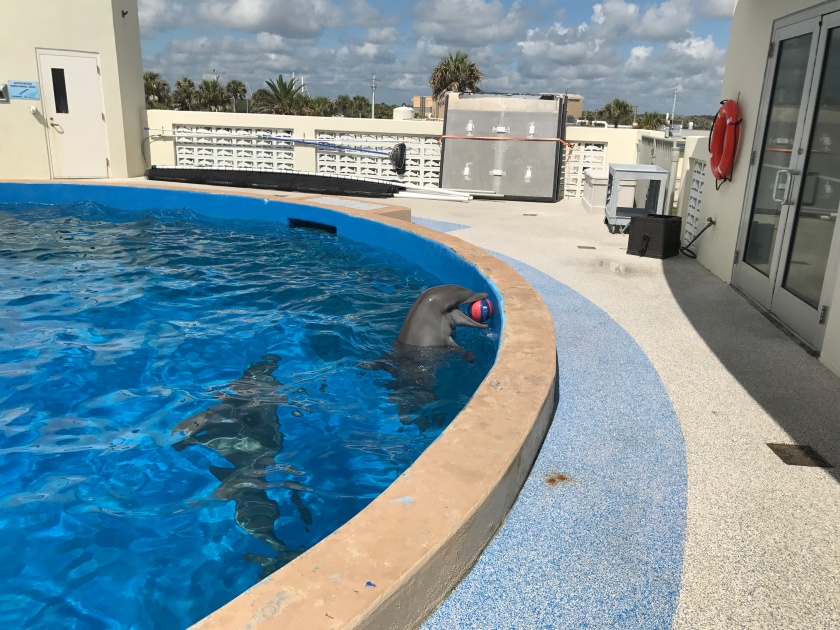
During the next two years Marineland constructed a new facility dedicated to education and human/animal interaction instead of animal performance. In 2011 Marineland was acquired by the Georgia Aquarium and renamed Marine and Dolphin Adventure. The attraction offers dolphin encounters, summer camps, and field trips for school groups. The Behind the Stage Tour takes visitors below deck where they can view historical exhibits from their years as a film studio. We were surprised to discover the attraction sells a wedding package for avid dolphin loving couples.
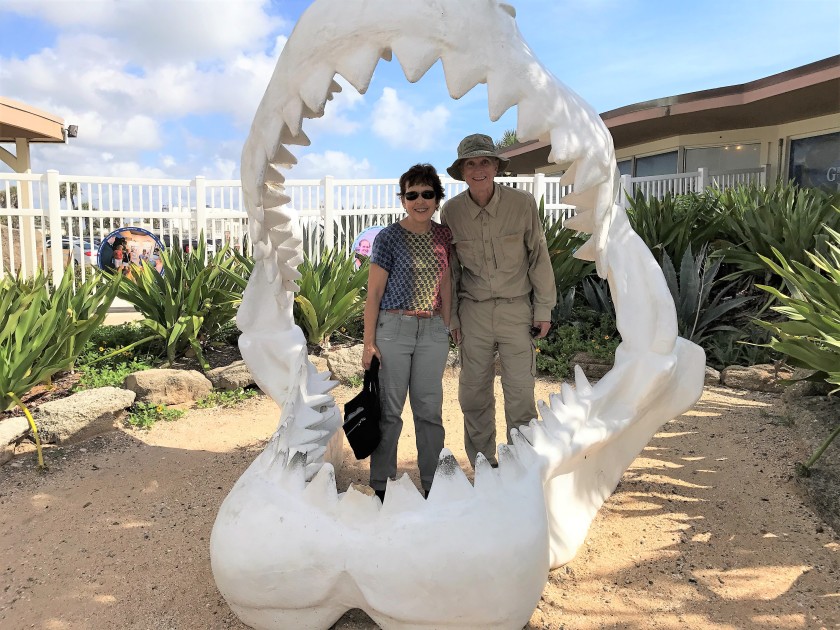
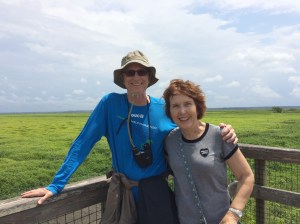
We concluded our visit with this snapshot taken at a photo spot, a memento of our return to the hallowed ground of childhood memories.
My previous blog about the Florida Citrus Tower shares another piece of Florida history.


 If you visit the Citrus Tower be sure to see the




 Last week my husband and I camped at the
  The Florida Federation of Music Clubs admired Foster and obtained contributions of land in White Springs. Later a commission formed to direct the building of a 97-bell carillon on property which plays Foster’s music. The park opened in 1950, almost one hundred years after Old Folks at Home was published. Did you know Stephen Foster is considered the pioneer of American pop music? He wrote two hundred songs between 1850 and 1864. Old Susanna and Camptown Races are two of my favorites. These melodies are catchy. Once you start humming them, you can’t stop!
 During our stay we learned of the park’s mission to support folk art. What is folk art? Art that’s created by nonprofessionals. In America, folk art might be considered blue-collar or rural art. It can be self taught, and is often functional. Quilting, sewing, and knitting are all examples of folk art. Folk art also includes music which expresses a community’s values and identity. At the park I enjoyed meeting several folk artists who demonstrate their talent in the Craft Square.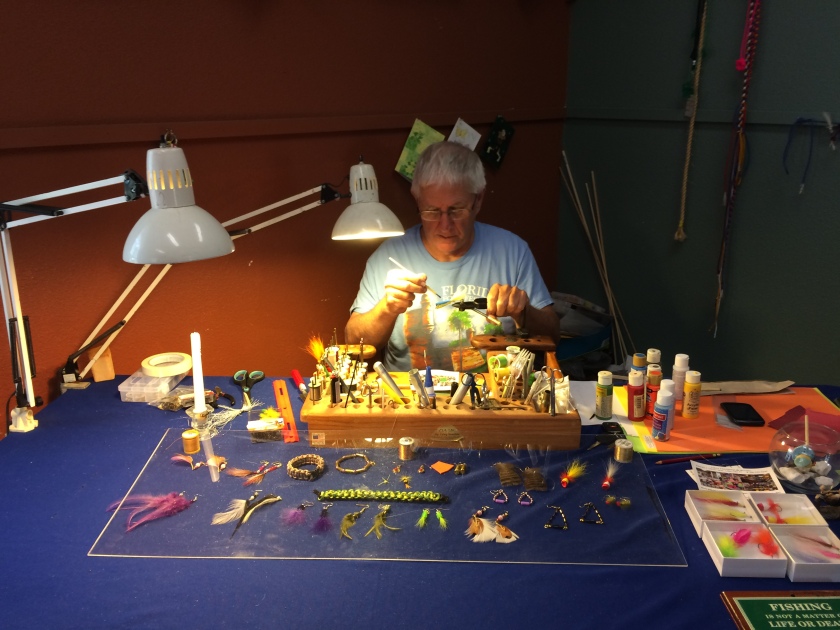
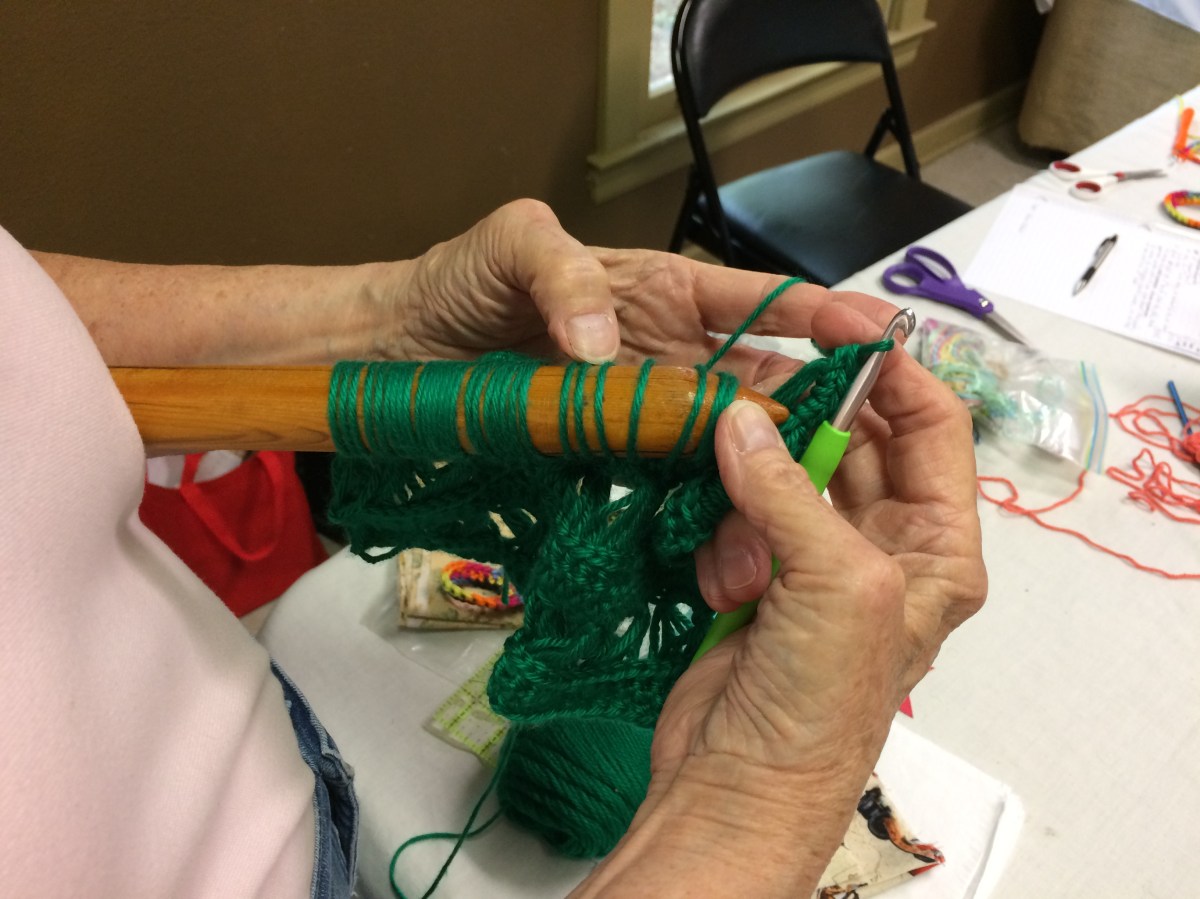
 Chris Jacobs from Miami crochets broomstick lace which can be worn as a scarf.
 Marie Longo sews baby quilts for the Pregnancy Care Center of White Springs.
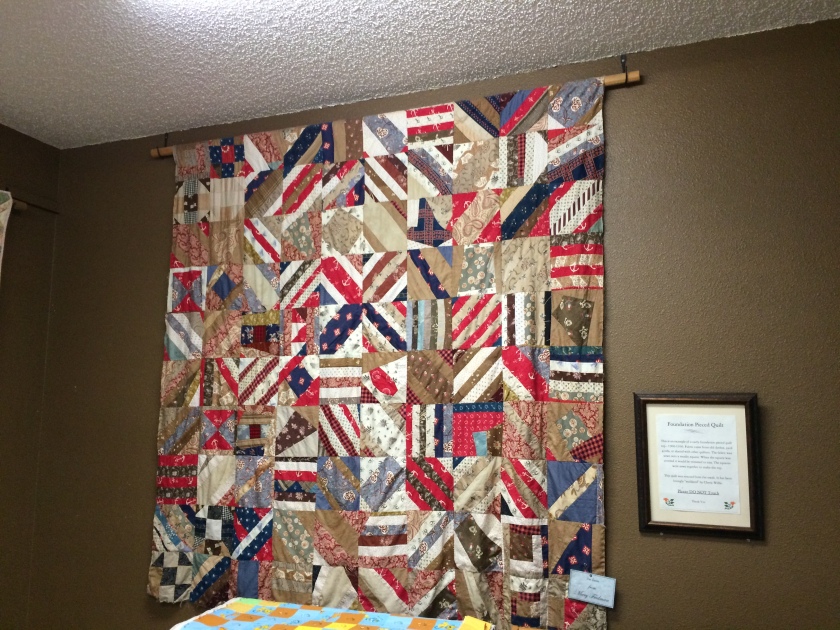 A quilt top hangs on the wall of the fabric arts cottage. Someone rescued it from a dumpster in Live Oak. This quilt top was sewn from remnants of old clothing thought to be over one hundred years old.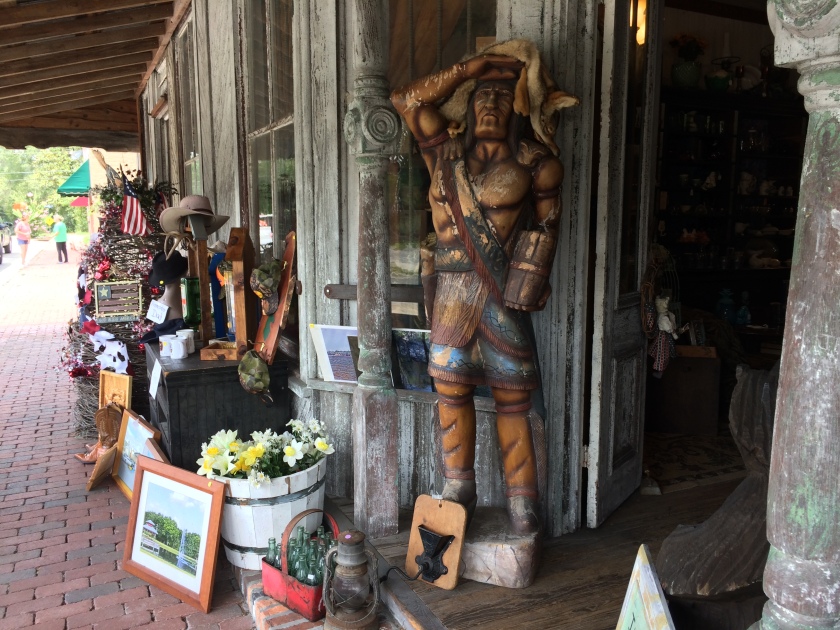
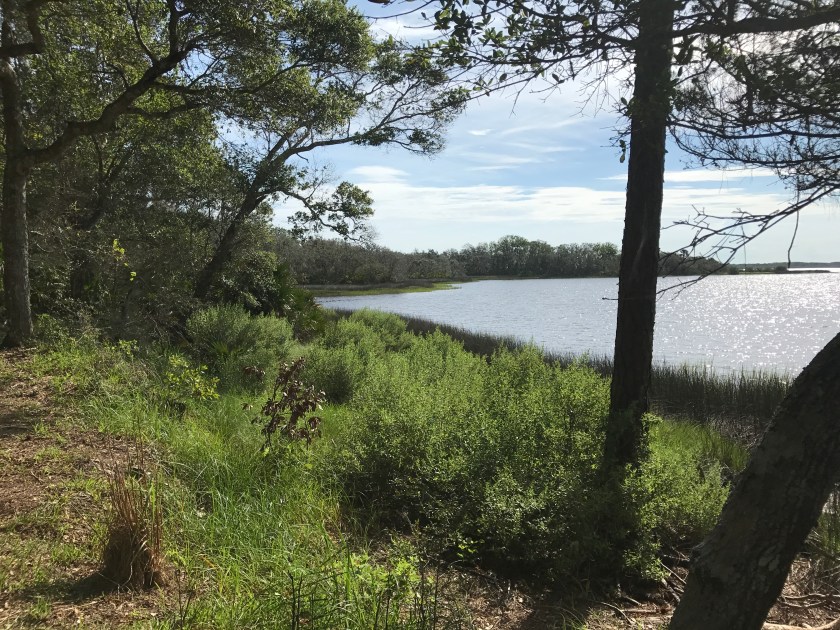
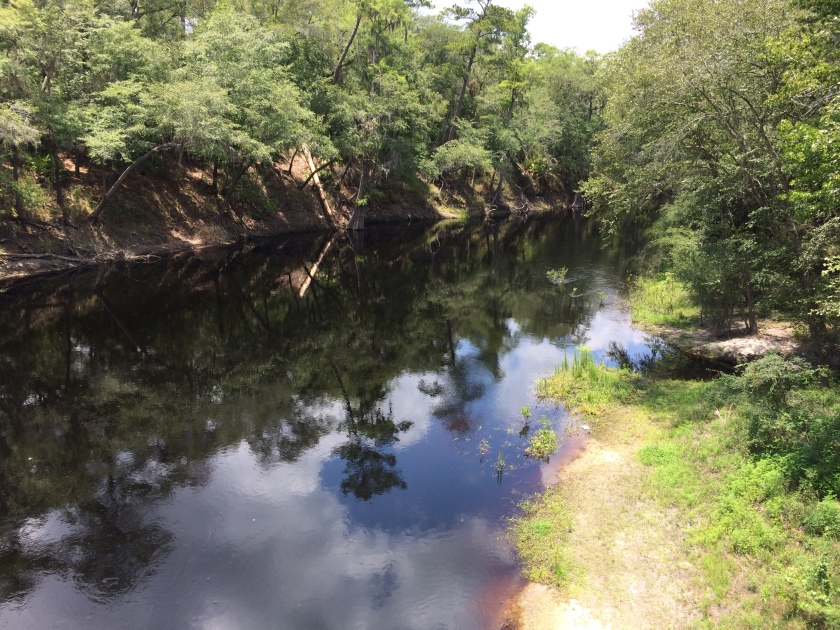 The Suwannee is considered a black water river. Originating in Georgia, the river flows south through forested swamps. Decayed vegetation stains the water the color of coffee. At Big Shoals, located outside of White Springs, a nine foot drop in elevation creates class three rapids. Here, the natural brown color of the water is more evident.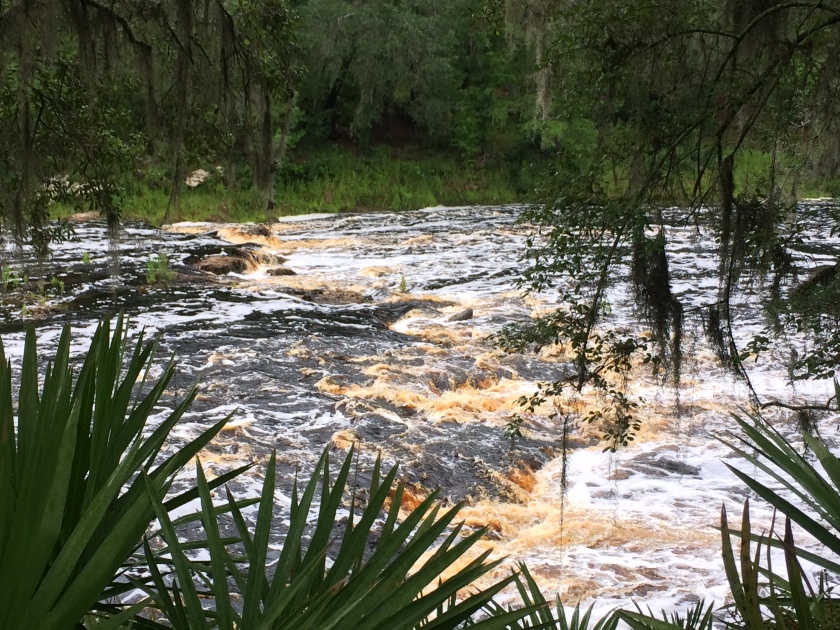







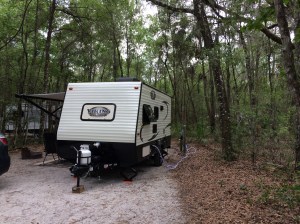 The three of us worked as a team and followed our procedures for setting up camp. Buddy supervised from inside his crate. Herb performed most of the physical work. I walked around looking important with my clipboard and pen. My job entailed checking off each task as Herb completed it. At this point we still need to consult written directions for hitching and unhitching the trailer, but the process is taking less time. This was our third trip. Click on the link to read about our
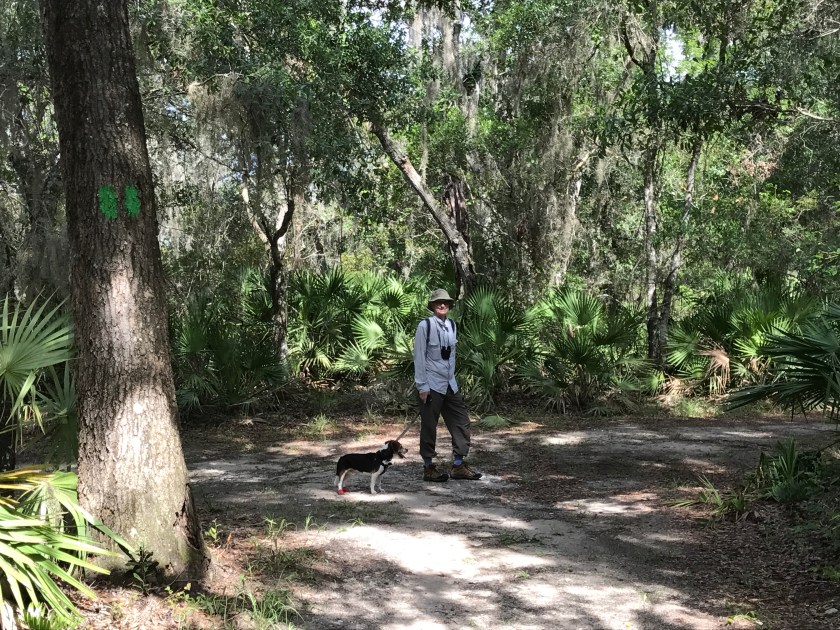
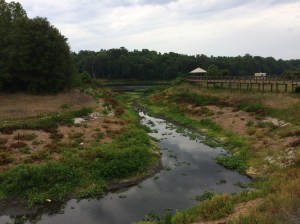
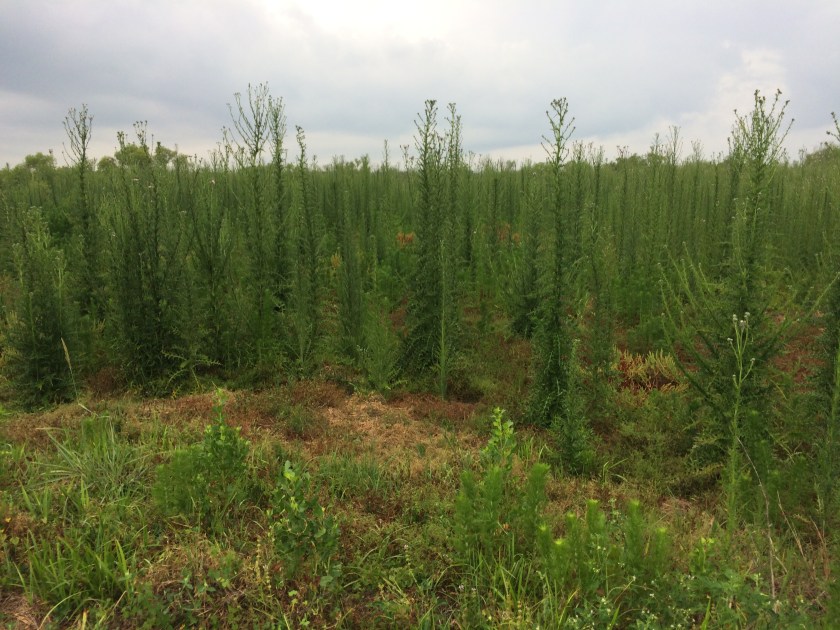
 There are many trails at Paynes Prairie. Most do not allow pets. On Friday afternoon we walked the Lake Trail with Buddy. I think dogs are permitted on the Lake Trail because it’s boring. We walked for quite awhile without seeing any wildlife until Buddy located and started to eat the remains of a dead bat. Herb is an expert at fishing things out of Buddy’s mouth. Whew! I can get along without that kind of excitement.




 debbieburton.blog