

Like many writers, my motivation ebbs and flows according to my mood. When I feel a lack of drive to persevere in my craft, I like to read historical fiction novels which include characters who overcame challenges.
I am on my third reading of A Land Remembered by Patrick D. Smith. The main character, Tobias MacIvey, is a failed Georgia sharecropper who moved to the Florida scrub with his wife Emma and their young son Zech in 1858. The family lived in a lean-to made of pine limbs and palmetto thatch for a year until Tobias finished building their cabin.
Since wild animals were plentiful, Tobias managed to feed his family by hunting. When shotgun shells became scarce due to the Civil War, the MacIvey’s were desperate for food and money. Wild cattle freely roamed the state ever since the Spanish brought them to Florida. When Tobias learned of the demand for cattle in Cuba, he became a Florida cowboy, a.k.a. “cracker.” He rode a horse and cracked a whip to direct the cattle into a corral where he branded them. After branding hundreds of cattle, he hired a couple of men to help him drive the herd to Punta Rassa where the animals could be sold and shipped to Cuba.
Tobias lived in the Kissimmee area and didn’t really know how to reach Punta Rassa. Imagine no roads, no maps and no GPS! The location of the sun, rivers, and lakes provided signs of direction. Once he had to backtrack around a swamp filled with hungry alligators. The trip was full of dangers including violent storms and fierce wolves.
My favorite part of the story is the night before Tobias delivers the cattle to be sold. He felt as if all the work he had done was hanging by a thread and suspended in time. He stayed up all night wondering if he would find a buyer. What would happen if he didn’t?
Reading about Tobias reminds me of my own experience trying to overcome the challenges associated with writing and publishing. Like most writers, my initial experiences with the world of publishing were difficult. My first book, Buddy the Beagle on Blueberry Street, was initially written as a rhyming picture book. The manuscript was rejected because the editors I talked with were looking for children’s chapter books instead. So I wrote a manuscript for a children’s chapter book. When I pitched the chapter book to an agent, I was turned down by someone who said, “Clearly you know how to write, but nobody wants to read about dogs.”
I put the book aside for a year until the next Florida Christian Writer’s Conference came around. This time I had an appointment with Deb Haggerty of Elk Lake Publishing. The morning of the appointment I paced my hotel room dreading the meeting. I honestly couldn’t take one more rejection. Like Tobias I felt suspended in time. I wondered if I could land a contract. What would happen if I didn’t? Should I quit writing?
God met me that morning. The Holy Spirit entered my thoughts with his still small voice. This time he said, “Do you trust me?”
“Yes, Lord. I trust you.”
That blessing was all I needed to give me the courage to meet with Deb. I think you already know the outcome of that meeting. Buddy the Beagle on Blueberry Street came under contract with Elk Lake and I became an author.
Henry Ford once said, “Obstacles are those frightful things you see when you take your eyes off your goal.” As writers, the obstacles standing before us are not life-threatening. But the motivation to continue to work can disappear if we allow our obstacles to loom larger than our goals. The worst thing a writer can ever do is to stop trying. Your break-through might be just around the corner. Remember God’s timing is never too late.

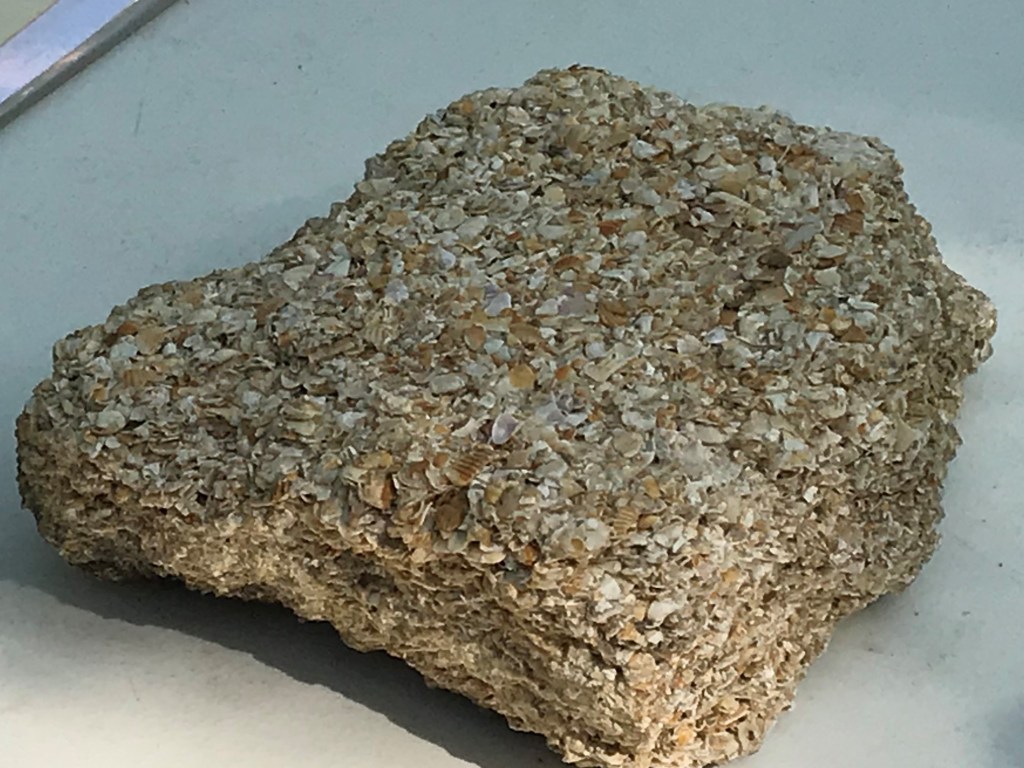 Looking at a piece of coquina, it’s hard to believe a rock comprised mostly of shells would be very strong. The Spanish learned that although coquina is soft when first quarried, the stone hardens as it dries. Construction of the Castillo began in 1672. There are over 400,000 blocks of coquina in the fort, all cut and set by hand. The people of St. Augustine weren’t playing around this time. They had one goal: survival.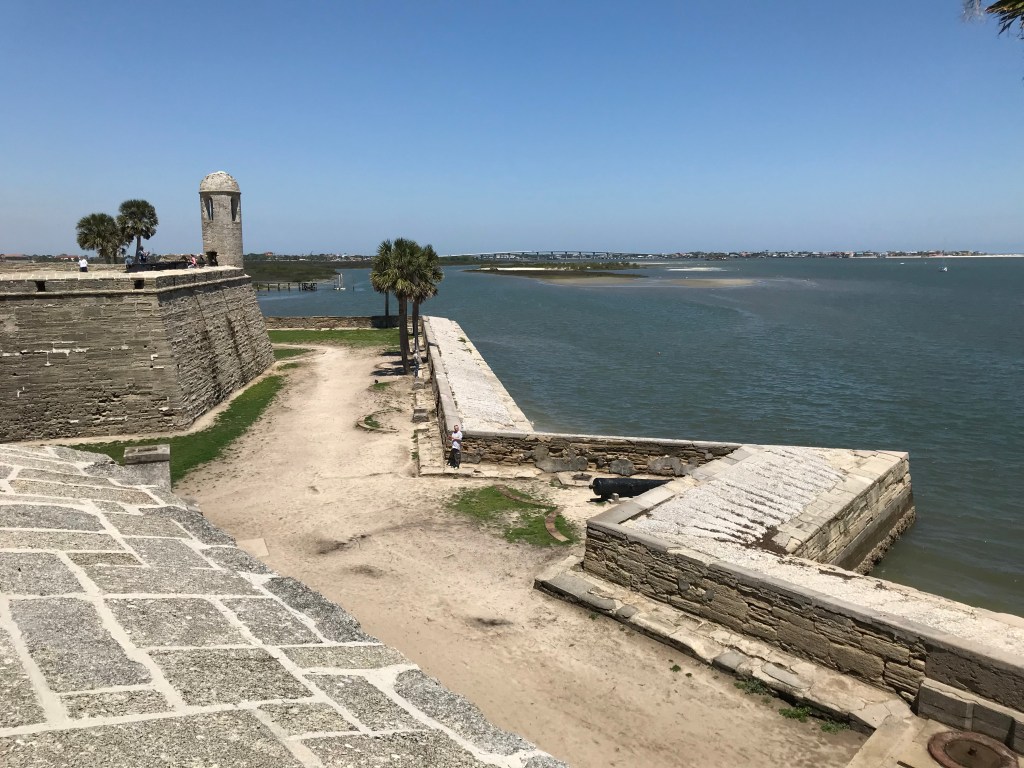
 A drawbridge provides the only entry. Standing on the bridge, a person might think it once crossed a moat filled with alligators. Not so, the low ground around the fort was used to graze animals. The Castillo was built as a place of refuge for the townspeople of St. Augustine. Most Spanish soldiers lived in town and shared guard duty. In a sense, the Castillo was a castle, built to protect the community in times of war.
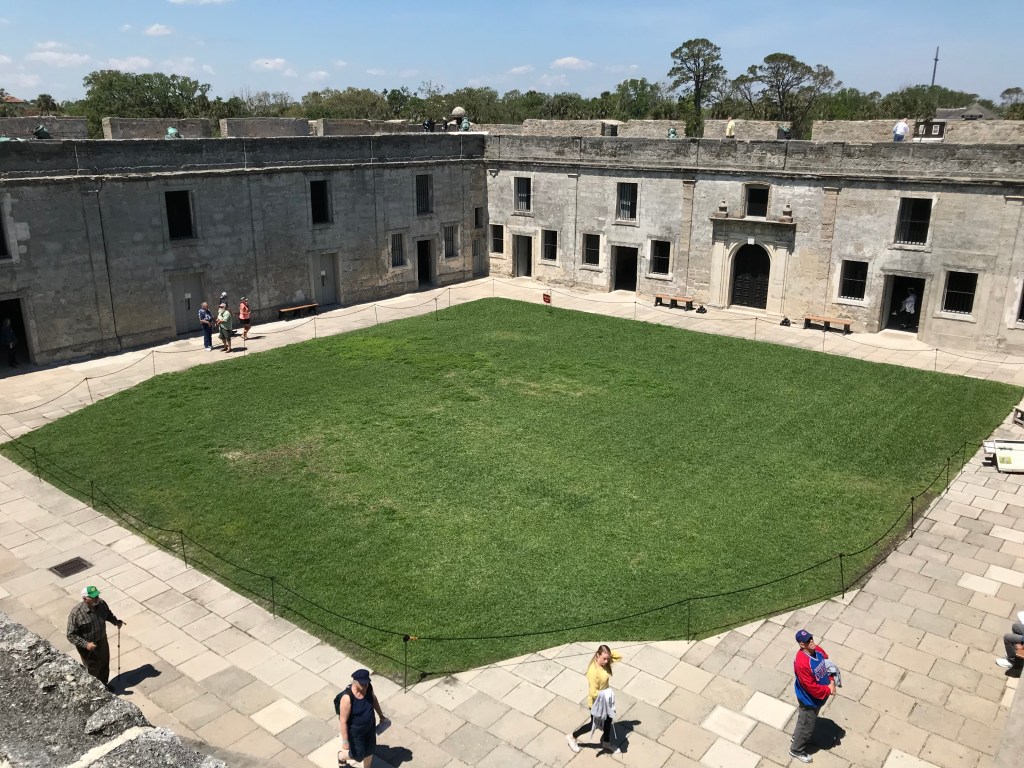 It’s amazing to think that the small courtyard housed 1,500 soldiers and civilians for fifty-one days when the English attacked St. Augustine in 1702. The rooms around the courtyard housed food and military supplies. Enemy cannonballs bounced off or got stuck in the coquina without breaking it. Their defense plan worked.
 debbieburton.blog