Going Batty in Baldwin Park

Floridians love the sunshine and the beach, but we all know there are trade-offs to living here. In the summer we not only endure humidity and storms—we also endure living with bats. As someone who has lived in the Orlando neighborhood of Baldwin Park, I have first hand knowledge of these flying furry animals.

Bats are drawn to the natural environment around Lake Baldwin. Animals migrate to find food, and bats take no exception. Summer temperatures in the mid-nineties and frequent rainstorms make Florida the perfect environment for mosquitos, and bats love to eat mosquitos. That’s a good thing right?

It’s good until bats take up residence in your house. The pitched roofs of many Baldwin Park homes invite bats to roost in the attic by squeezing through any opening they might find. Recently a Baldwin Park homeowner told me he heard a strange sound in his living room. The next morning he discovered a bat on the floor of the dining room. It was still alive, but could not raise itself to fly. Quick thinking, he captured the animal in a pool net and released it outside before any harm was done.

Later the homeowner contacted a “bat specialist” for advice, and set up an appointment for a home inspection. The specialist said it’s uncommon for a bat to enter the living area of a home, but it’s not impossible. The inspection revealed there was a colony of bats living in the attic. Since they are a protected species, it’s illegal to disturb their “roost” until August 15!

Attic Nurseries

Hearing about my neighbor’s experience prompted me to know more. My internet research informed me the Brazillian free-tailed bat is the main species found in Orlando. Their maternity season begins April 15 and ends August 15. The female bats gather in dark enclosed spaces (often in an attic) to give birth and nurse their babies. I was surprised to learn that bats are mammals. They even have a belly-button! The babies are very dependent upon their mothers until they are around eight weeks old. Then the juveniles start to find food for themselves.

August 15—Eviction Day

A few years ago bats roosted in our Baldwin Park townhome. Once I was walking our dog at sunrise, and I saw dozens of bats enter a tiny opening in the dormer above our front porch. Their guano (feces) made a nasty mess of our front steps. Throughout the month of July my husband cleaned the porch daily. On August 15, a professional installed a one-way door in the dormer, so the bats could fly out but not return. This is a humane way to eradicate bats from a building without harming them.

Are Bats Dangerous?

According to the U.S. Geological Survey, healthy bats avoid humans. Less than one percent of the bat population contracts rabies. Even so, bats should not be handled—especially those that are active during daylight hours. All bat bites should be washed immediately with soap and water and a physician should be consulted.

Bat guano is a serious health risk for homeowners. When guano exists in an attic or crawlspace, the microscopic spores can be inhaled by humans and cause a serious respiratory infection called histoplasmosis. If they eat the guano, Pets can also become infected.

Why are Bats Protected?

Over half of bat species are in serious decline due to habitat loss, climate change, and a fungal infection called white-nose syndrome. Even though bats cause problems for homeowners, we need them. They pollinate plants and devour their body weight in insects every night. Without bats we wouldn’t have bananas, avocados, and mangos. These heroes of the night are more helpful than harmful.

A Common-Sense Solution

If homeowners want to evict bats from their attics, but not leave them homeless, a bat house might work. Homeowners need to contact their HOA to learn the regulations for their neighborhood.

August 15 is almost two months from now. Until then, my neighbor will need to keep his pool net handy!
If You Build It—They Will Come.

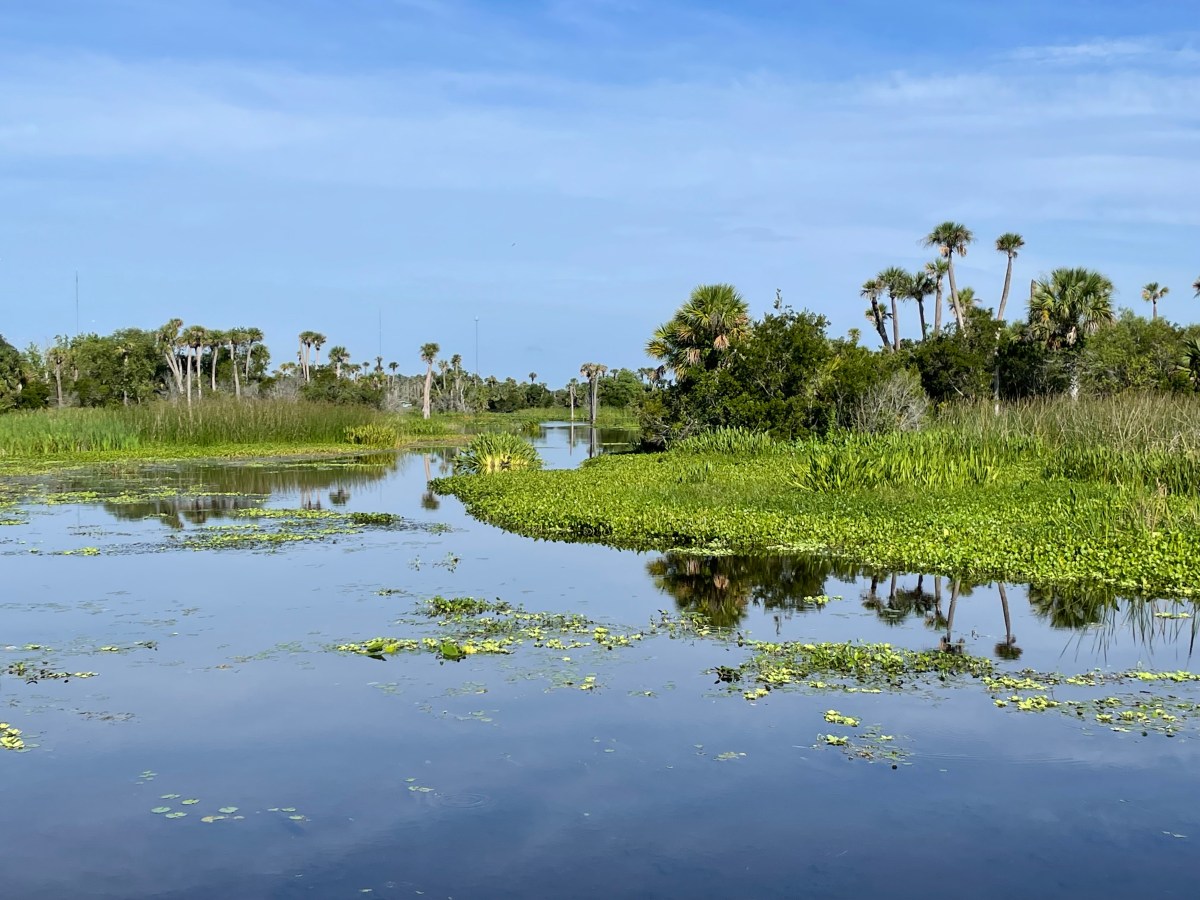
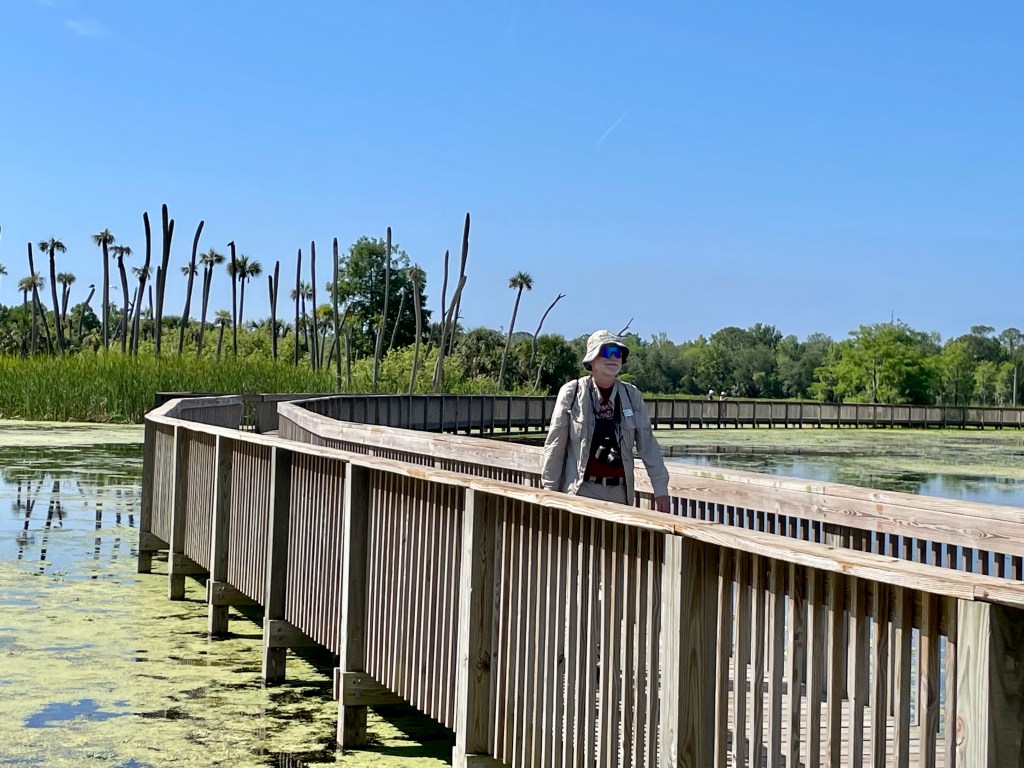
Orlando Wetlands Park provides a habitat for 220 species of birds.

Remember the 1989 movie Field of Dreams? An Iowa farmer named Ray Kinsella walks through his cornfield and hears a “voice” which says, “If you build it— he will come.” Ray responds by turning his cornfield into a baseball diamond, and creates a place for deceased players to redeem their lost opportunities to play baseball. By doing so, Kinsella sacrifices a profit from the sale of corn in order to fulfill a higher calling.

Connections can be made between this movie and other situations. The growth and development of central Florida is one example. After the Civil War, the early settlers drained the wet prairie for agricultural purposes and cattle grazing. During the 1900s the population of Orlando continued to grow, and the construction of more housing developments meant that more wetlands were drained.

The loss of Florida wetlands has had a major effect on water quality, flood control, and wildlife habitats. Wetlands filter pollutants, and play a crucial role in recharging the aquifer, a vital source of drinking water.

In 1986 city of Orlando officials heard the “voice” of the environment when they came up with an innovative solution for the disposal of reclaimed sewer water. The city purchased 1,650 acres of former pasture land and converted it to a man-made wetland near Fort Christmas. Orlando Wetlands was designed to further purify treated sewage water discharged from the Iron Bridge Water Reclamation Facility. The reclaimed water enters the southwestern edge of the property, and over a period of forty days meanders through various marshes, swamps, and Lake Searcy, before flowing into the St. Johns River.

So what does all this have to do with the Field of Dreams? Instead of attracting the ghosts of former baseball players, Orlando Wetlands attracts an abundance of living creatures. The wetlands provide a habitat for numerous animal species including otter, bobcat, deer, turtles, snakes, alligators, and over 220 species of birds. Eighteen of these species are listed as threatened, endangered, or protected. I like to think of it as an opportunity for animals to live in a place they had once been evicted from.

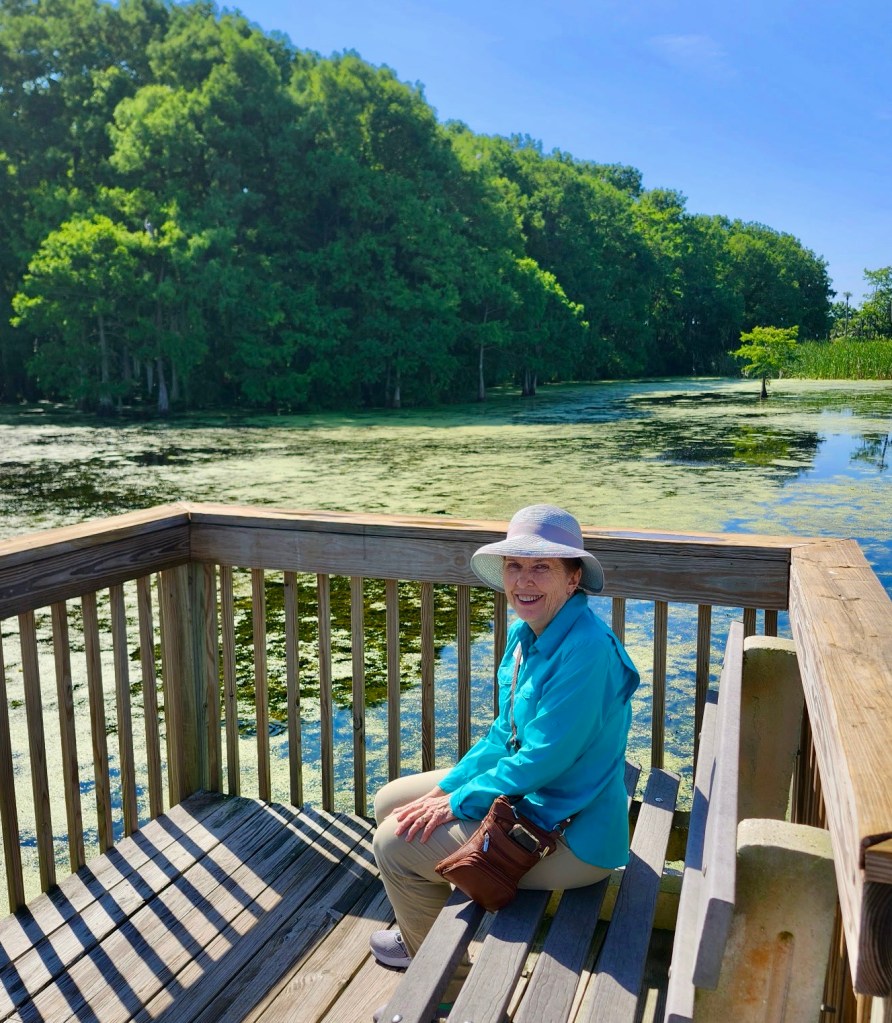
Orlando Wetlands is open to the public and admission is free. My husband, Herb, and I visited the park and walked the half-mile Cypress Boardwalk which affords close-up views of aquatic wildlife.

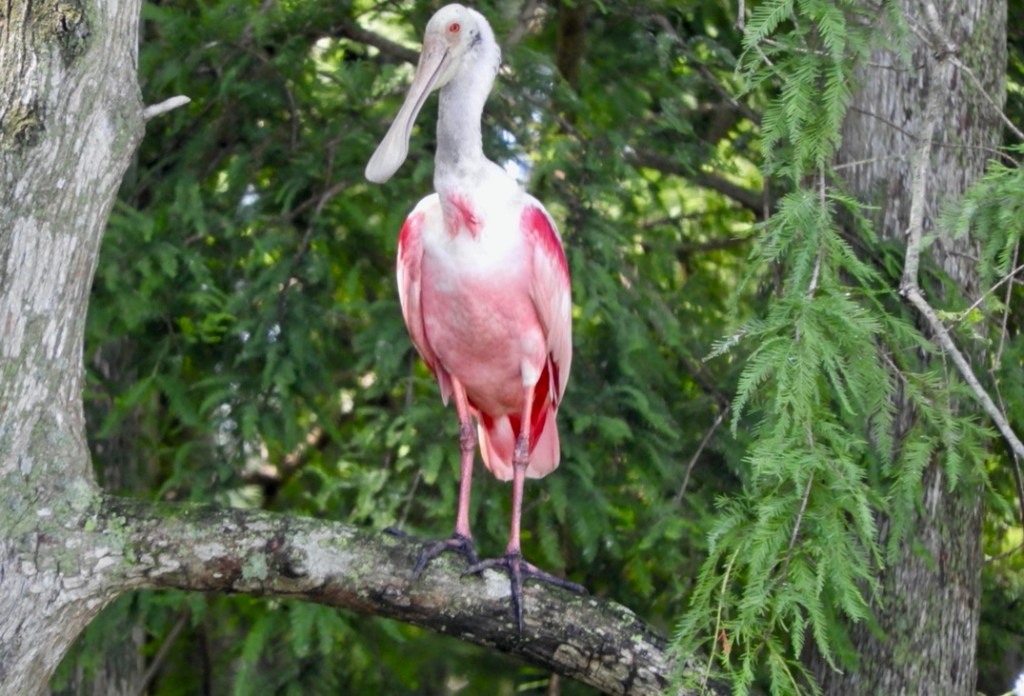
Beautiful Roseate Spoonbills roost in a grove of bald cypress trees near the boardwalk. Herb snapped this photo with his zoom lens. Did you know a baby spoonbill is called a teaspoon?

I can’t say this species is endangered. The Florida Fish and Wildlife Commission estimates there are over 1.3 million alligators in Florida.

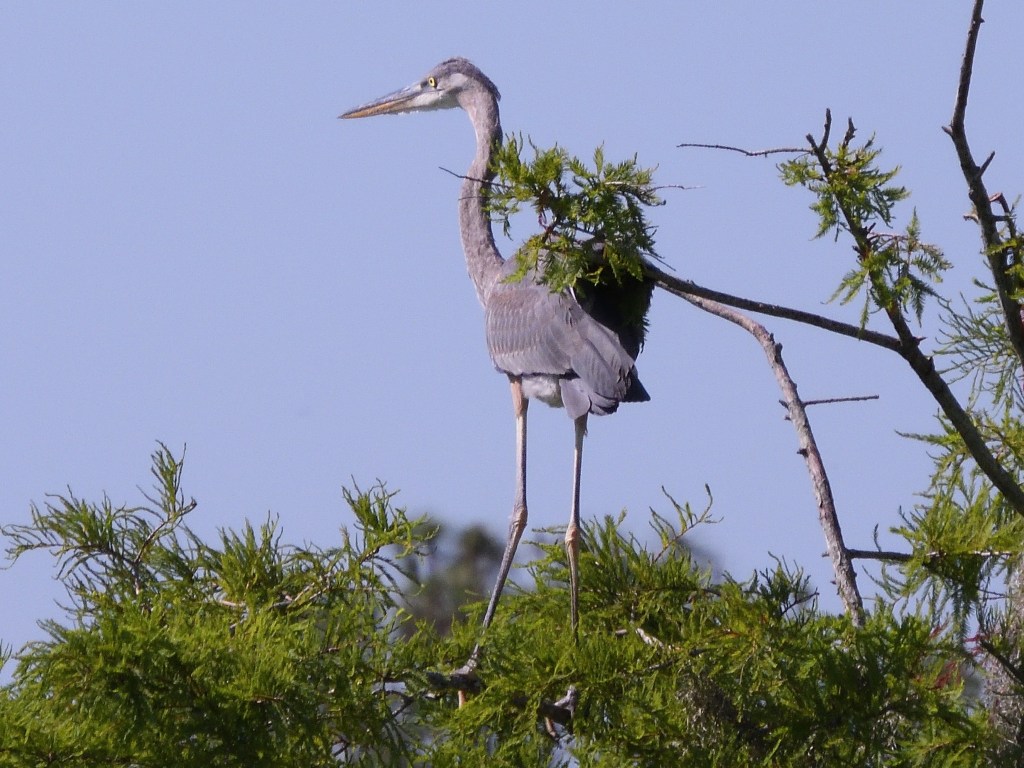
This tree top provides a place to rest for the Great Blue Heron, while allowing the bird to focus on what’s happening in the marsh below.

I’m not sure what kind of bird this is. If you can identify it, leave a comment. It makes a lot noise!

Summer is a challenging time to explore the outdoors in Florida. Wear a hat, carry water, and take breaks often. Follow the link for more information about visiting Orlando Wetlands.

Lessons from Lake Louisa State Park

Change is a fact of life, and everyone experiences loss. With that said, I will tell you my story. For several years during the fall and winter months Herb and I camped in Florida’s State Parks. We pulled a Viking camper with our Grand Cherokee, and always took Buddy, our beagle along.

In 2022 the jeep started having mechanical problems, which seemed impossible for any mechanic to diagnose. Herb didn’t think it would be safe to pull the camper, so we decided to sell it and the jeep, and buy a new SUV.

Since then, I’ve really missed going camping, especially when the temperatures drop in the fall. One day I remembered some of the parks have cabins for rent. The cabins have a “no pet policy,” so we hadn’t entertained the idea until now. Sadly, Buddy is no longer with us—which had the effect of plunging me into a no writing zone for the last two months.

When I discovered a cabin was available at Lake Louisa State Park, I booked it. The park is located only thirty miles west of Orlando.

Our cabin included a large living room, and a full kitchen. Everything was clean and comfortable. I could sit on the front porch overlooking the lake and write. What a delight to see the sun’s rays glisten upon every blade and leaf. I loved hearing squirrels chatter in a nearby tree, and birds squawk in the grass below me. What a gift to be in God’s creation again!

This was a different trip, without a camper or a dog, but it taught me God has the power to redeem my losses. I am reminded of the story of Naomi in the Old Testament. While living in a foreign land called Moab, Naomi had lost her husband, and both of her sons. She decided to return back home to Bethlehem. Although her daughter-in-law, Ruth, was a Moabite, she insisted on going with Naomi. Ruth denied her own culture when she said, “Where you go I will go, and where you stay, I will stay. Your people will be my people, and your God my God.” (Ruth 1:16 NIV)

After Ruth arrived in Judah, she met and later married Boaz, who was one of Naomi’s in-laws. Boaz and Ruth conceived a child and blessed Naomi with a grandson, Obed. He became the father of Jesse, who became the father of King David.

Yes, God has a way of redeeming our losses and turning sadness into joy. As Herb and I hiked the trails in the park and relaxed around the campfire at night, I felt renewed in my spirit. The great outdoors is always there, and I felt so good to be in it again.

Take heart reader, if you are living with a loss, God will restore your joy in his timing.

Happy Thanksgiving!

Leaping Lizards!

“Ugh! Another lizard entered the house.” I pulled our sliding glass door shut, but it was too late. Herb and I live on the first floor of our apartment building, and every time we open the patio door, we invite the natural world inside.

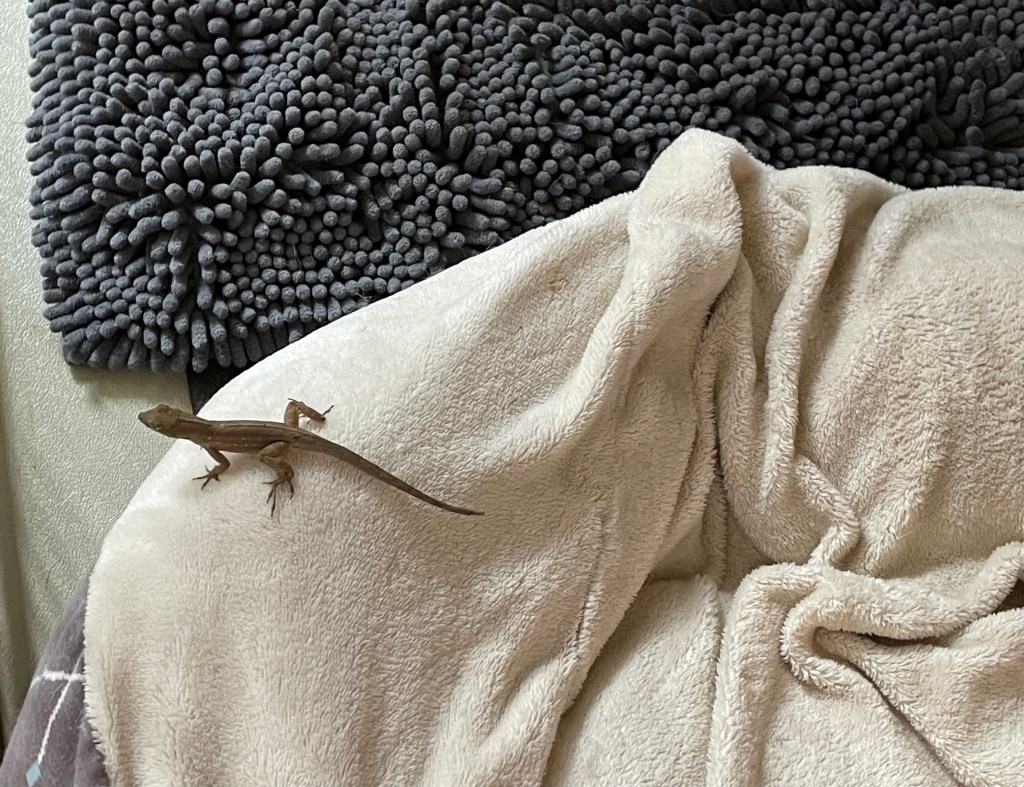
Welcome to Florida, the epicenter of nonnative reptiles. I recognized our new guest as a brown anole. According to the University of Florida, this type of lizard hitched a ride on a shipment of cargo originating from Cuba during the late 1800’s.

Due to Florida’s warm and moist climate, the invasion of the brown anoles has expanded to every county of the peninsula. They are most common in areas dominated by humans. The little lizards can be found in school yards, gas stations, grocery stores and suburban neighborhood yards. People frequently see them on the ground and perched on tree trunks, fences, and the walls of buildings.

Our little invader jumped into Buddy’s dog bed which gave me an opportunity for a photo.

Isn’t he cute? I think I’ll name him Fred. My usual way of dealing with a lizard is to pick it up in a light-weight towel and release the animal outside. Unfortunately Fred was so fearful, the second I dropped the towel over him, he escaped. After ten minutes of chasing him around our apartment, I gave up.

The next morning, I spotted Fred on the floor between our sofa and end table.

I felt like he was taunting me, bobbing his head and doing little push ups with his upper body. Herb is usually able to grasp these guys with his bare hands. Fred was different. He was the fastest lizard we’d ever seen. A regular Houdini, who flattened his little body enough to slide under the couch.

When Herb and I inched the sofa away from the wall, Fred raced to the other side of the room. The chase began anew whenever we glimpsed him outside of his sofa hideout. Once we opened the patio door and tried to shoo him outside. He would have none of it. What can you do with animal who apparently has a death wish?

I read that anoles can live for a month without food but they can only live three days without water. Why was Fred still alive one week after entering our home? We could only imagine he was sneaking into the shower to lap up whatever moisture might be available.

After ten days Fred disappeared. He no longer came out from under the sofa to greet us. Someday we’ll find his dried up remains under a piece of furniture. What really killed Fred? Curiosity? Fear? Stupidity?

Not to worry. Brown anoles breed during the summer and a female lays one egg every one to two weeks. The eggs hatch about one month later. There will be plenty of Fred Juniors to carry on their invasion.

When You’re Stuck in the Cone of Uncertainty

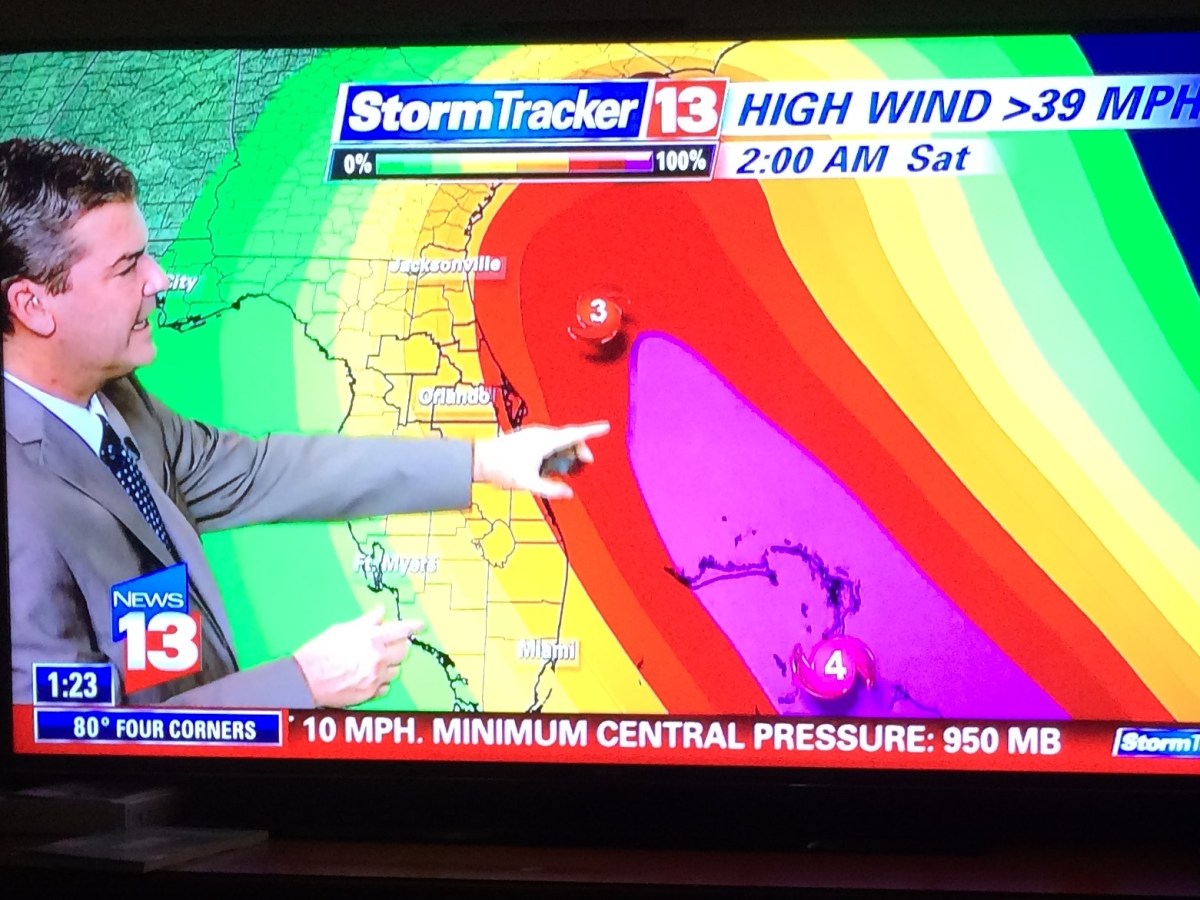
Like many Floridians, I am waiting and watching to see where Hurricane Dorian might make landfall. At the moment the storm could come onshore anywhere on the east coast between Jacksonville and Miami. Some weather forecasters call this the cone of uncertainty.

Sometimes I think the days prior to a hurricane are worse than the storm itself. Every storm season the same scenario unfolds. People do a lot of panic buying this time of year. We all rush to buy bottled water, batteries, and non-perishable food items. The grocery stores are crowded with anxious people wearing confused expressions. Hmm…don’t we still have a few cans of beans from last year, or have they expired?

After I moved to Orlando in 1989, I kept all of my supplies in a box for the purpose of always being ready. Over the years my supplies have dwindled, but I still have an emergency cooking kit complete with sterno. In thirty years, I’ve experienced four significant storms. Not a bad record. I’ve never had to light up my emergency kit.

So everyone wonders…how bad will it get? Is this our year for the “big one,” or is Dorian going to have a deadly effect on some other community? No one wishes trouble on residents of another state, but everyone breathes a sigh of relief if their hometown manages to escape the worst.

Anxiety hangs over most people in my town. I feel sorry for those who have to continue to perform their normal routines while they are under the cone of uncertainty. On the other hand, maybe the best way to deal with the stress is to concentrate on something else.

I ask myself, why do I feel anxious? The answer is always the same…because I have no control over what might happen in the future. Then I’m reminded, do I ever have control? When the weather is calm, do I have control? I act like the cone of uncertainty is something new, but don’t I always live under a cone of uncertainty?

Once again my spirit is convicted. Everyday I make plans for tomorrow, or next week, or next month, assuming everything will be the same. How foolish of me to forget, ultimately God is in control.

Proverbs 19:21 reads “Many are the plans in a man’s heart, but it is the Lord’s purpose that prevails.”

Right now I’m taking a deep breath, and leaving tomorrow to HIm.

Finding Refuge

Barren boughs scrape against the cloudy sky.

Lonely limbs ache for summer days gone by.

Little birds peck the frozen field for grains.

Day after day the chilly air remains.

Tiny mice huddle in lifeless leaves below.

Sleeping lilies lay in beds concealed by snow.

Hungry deer strip the brittle bark from trees.

Kindly ants share their tunnels with queen bees.

Home provides a refuge from winter’s icy grip

Gathered ’round the table in sweet companionship.

In my process of evaluating the recent frigid temperatures I can only think of one good thing about winter. I like the feeling of coming in from the cold and warming up with hot tea or cocoa. My husband and I moved our family to Florida in 1989 to escape Ohio winters.

Everyone says a person’s blood thins after they live in Florida for a number of years. For us, fifty degree temperatures are practically unbearable. My northern friends shake their heads and remark, “you don’t remember what cold is.”

Do you like winter? Some people do. Leave a comment and let me know your views on the subject. Maybe you can change my opinion.

A Cruel Joke of Nature

First of all fellow Floridians, do not fear. The sun is shining today and no hurricane warnings are upon us. But it’s August, and we all know the next two months can be dicey at times. Dangerous weather damages Florida communities every year. As an Orlando resident, I’m fortunate to live in an area that hasn’t experienced the wrath of very many  hurricanes. The worst storm I can remember happened in 2004 when Charley came through.

Still, I’m aware of the tough times communities encounter when their power is out for days. This poem, entitled A Cruel Joke of Nature is dedicated to you.

When Charley came to town

the city lost all power.

The stagnant, stifling air

Weighs heavy every hour.

Mornings with no coffee

No bacon, no warm toast.

Yet, inside the kitchen…

the smell of rotten roast.

The radio is silent.

My phone is out of juice.

The TV screen is blank

and Google sheds no truth.

I snuff the candles out

to rest upon my bed,

Swatting at mosquitos

Which whine around my head.

A Cruel Joke of Nature

this taunting serenade.

Escaping to the shower,

I think I’ve got it made.

My triumph is short-lived

Icy water hits my side

The bugs attack my legs

There’s nowhere left to hide.

Illuminated world

Advanced technology

Unequal to the storm

which brought me to my knees.


River of Inspiration

Moving metaphor below,

without one thought you flow

over stone

and I see

life’s not hard like land at all

but a living river of possibility

whatever you might be.

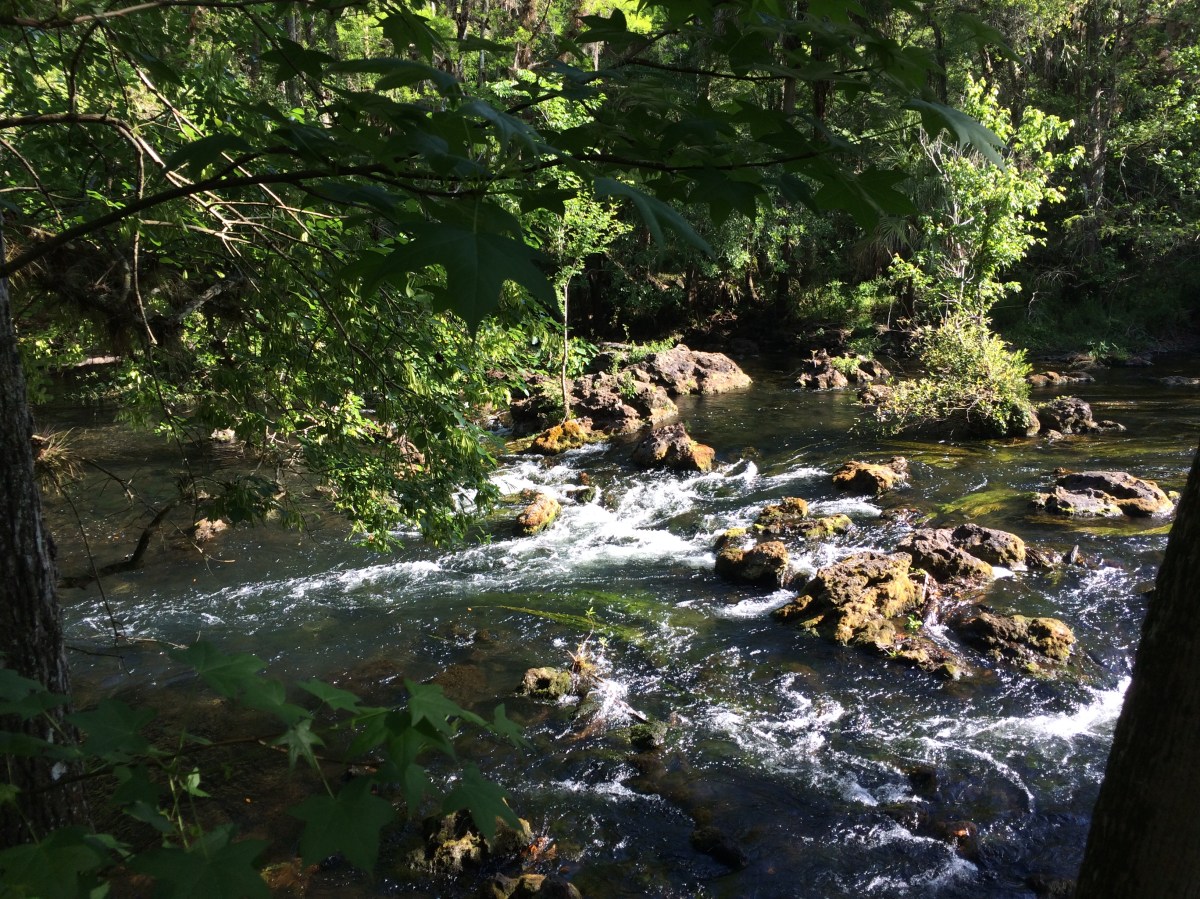
A River Poem is displayed on a plaque above the Hillsborough River. The author is anonymous.  From this spot people can see rapids as they bubble around outcroppings of Suwannee Limestone.  I love the depth of meaning in the poem’s simplicity. Life’s not hard for a river. It creates beauty in the process of overcoming obstacles.

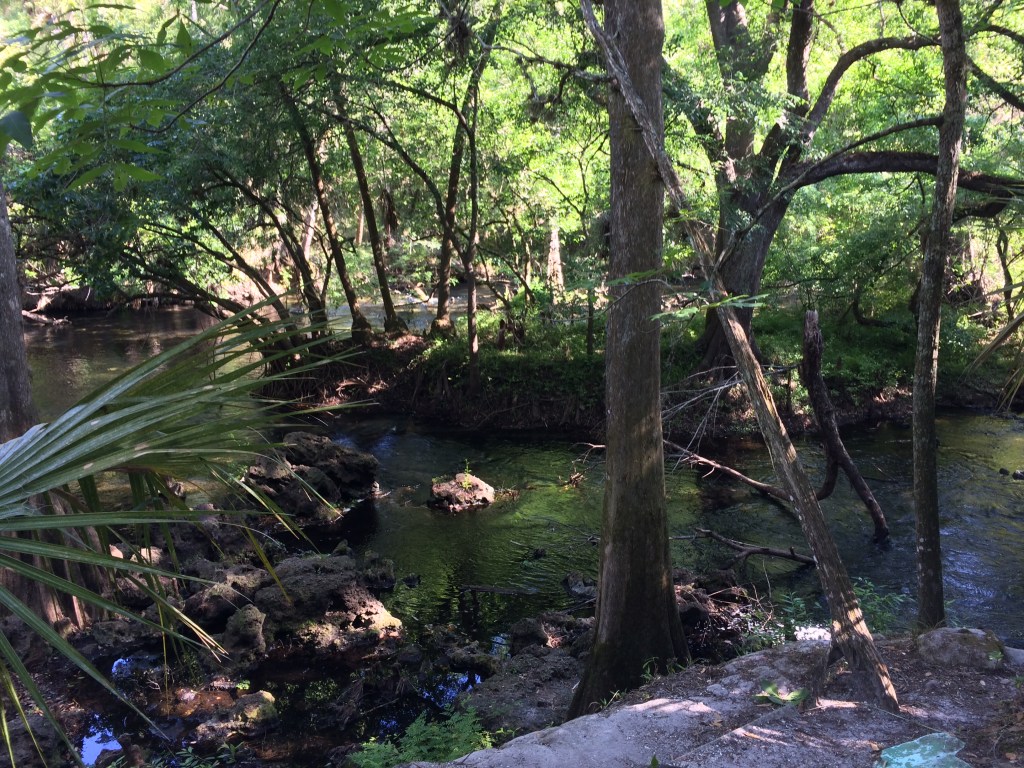
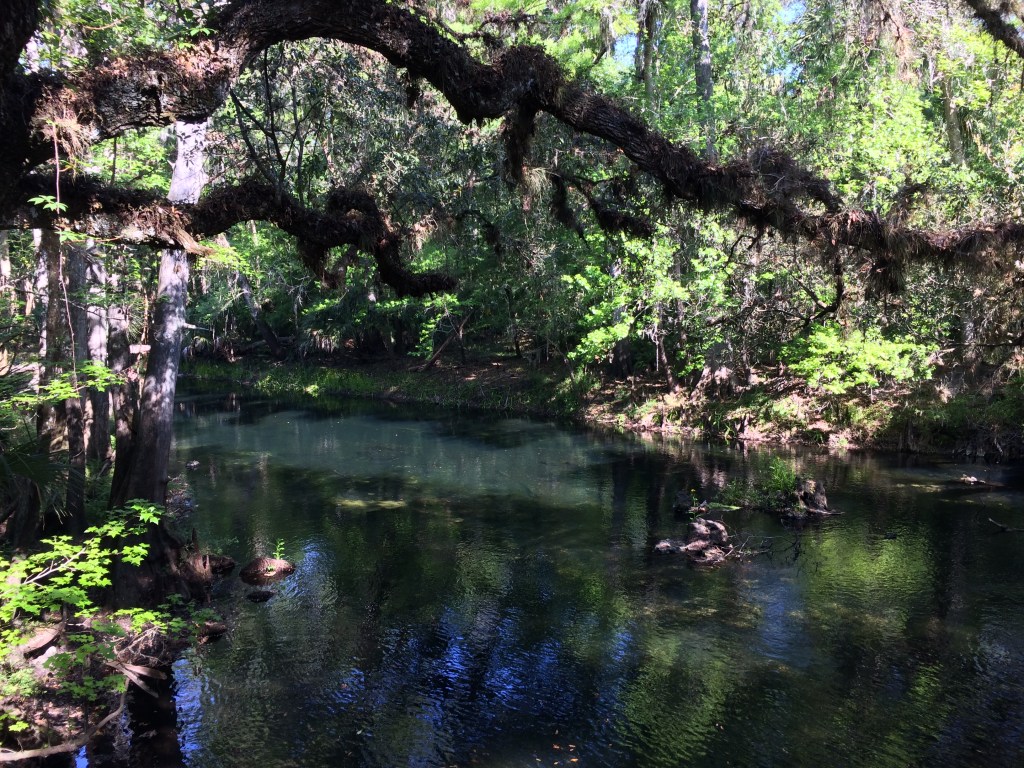
The Hillsborough River flows through Hillsborough State Park on its course to the Gulf of Mexico. Recently Herb and I walked the River Rapids Trail with our dog, Buddy. The scenery is quite beautiful.

IMG_8837

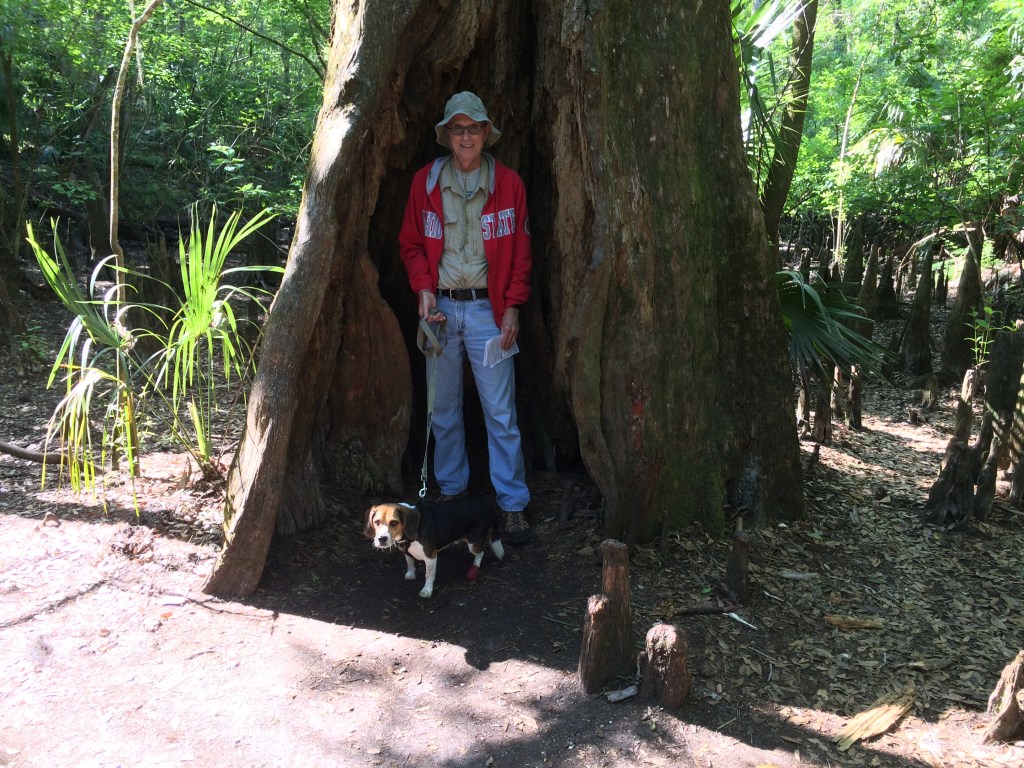
The path meanders along the river bank through forests of ancient cypress trees. The tree pictured below is estimated to be four hundred years old.

IMG_8859

Although its base is hollow, the tree is still alive.  Some scientists think the stumpy looking knees around a Cypress tree serve as anchors in soft muddy soil. The knees also carry oxygen to the roots. I’ve heard the taller the knees, the higher the water has risen around the tree. The base of this tree is probably underwater during the rainy season.

On our walk I noticed a significant amount of poison ivy on both sides of the trail.

IMG_8864

Doesn’t it look pretty? These leaves of green terrify me! I’m very allergic to this wicked weed and suffer for weeks if the oil gets  on my skin. So not only did I need to keep my eyes on the path, I needed to make sure our dog wasn’t walking through it. So far so good. Whew!

Unfortunately, I was so focused on watching my feet, I missed something. Herb sighted a bobcat running across the path ahead. I think I’d like to see a bobcat, but on second thought I might get scared and try to escape by running through poison ivy. Out of the frying pan and into the fire!

Back to the peaceful river… further down the path we noticed a couple kayaking.

IMG_8867

As they paddled closer, instead of looking calm and relaxed, they seemed anxious. They had good reason to be.

IMG_8892

The river provides a wonderful habitat for alligators. I photographed this fine specimen basking in the sun on the opposite bank. Once I saw the gator, I realized I was not brave enough to kayak or canoe here. I could appreciate the river better from where I was standing. As long as I wasn’t standing in poison ivy, of course.

Since we were camping at Hillsborough State Park, we had another day to explore. We visited Fort Foster. This historic site is a replica of the original fort which was built to  house supplies for  U.S. soldiers during the Second Seminole War, 1835-1842.

IMG_8929

The fort also protected the only bridge in the area that crossed the Hillsborough River. One thing the government didn’t consider, the bridge also made it easier for the Seminoles to cross the river from their camps on the opposite bank.  A few skirmishes happened here, but more casualties occurred from insect related diseases.

Inside the stockade fence, the fort contained a canon, an officers quarters, an infirmary, and a supply building.

The fort could not accommodate the 305 soldiers assigned to the post. Most of them camped outside the fence in palmetto sheds. During the summer of 1836 the fort was abandoned due to unhealthy living conditions. The troops returned in October, to guard the supplies kept at the fort. Eventually the Seminoles were pushed further south to the Everglades.

IMG_8841

The Hillsborough River… an inspiration for poets, a habitat for plants and animals, and a source of history. Like the poem states… “a living river of possibility.”


Scrub-Jay Way

I like the last week of December.  The stress of the Christmas season is winding down. The resolutions of the new year have not yet begun. It’s a good time to slow down, reflect, and revisit memories.

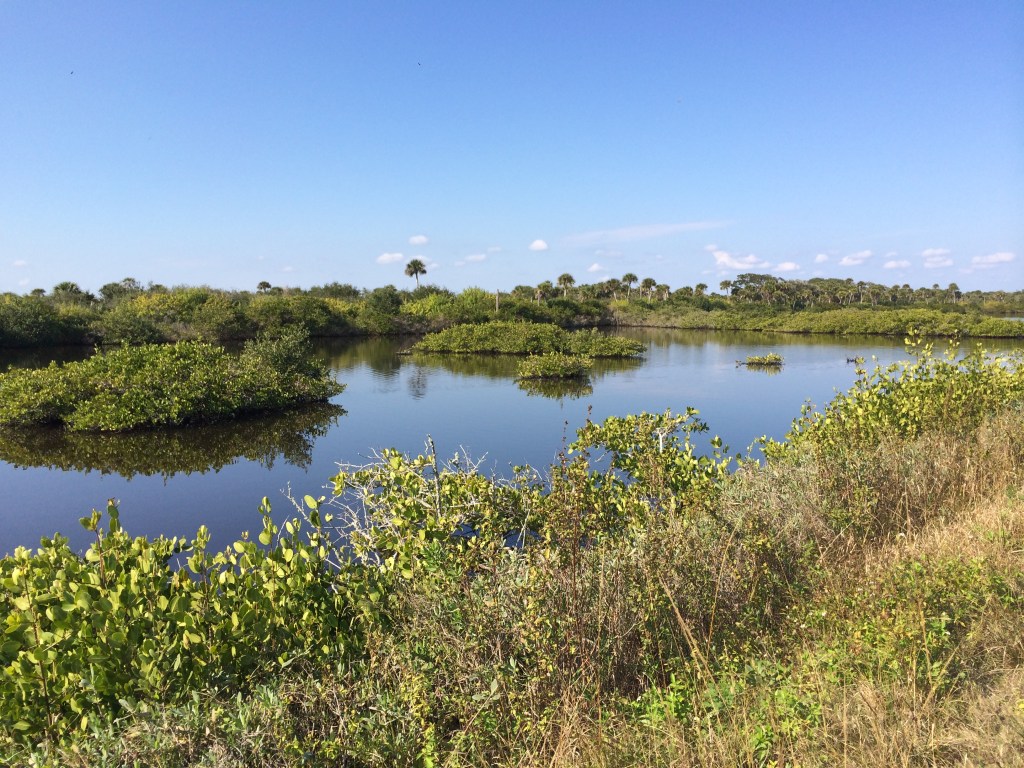
One of my favorite December memories took place during a trip I made to Merritt Island National Wildlife Refuge. Located near the Kennedy Space Center, the refuge was established for the protection of migratory birds. Fifteen hundred different species of plants and animals inhabit this wilderness of 140,000 acres. The land features coastal dunes, marshes, scrub pines, and hardwood hammocks.

img_2262

The best time to visit Merritt Island is in the winter. If you drive on the Black Point Wildlife Drive you can see waterfowl, wading birds, alligators, bobcats, snakes, and raptors. The drive is seven miles one way. Make sure you have gas in your tank, and plenty of time to explore. We got out of the car frequently to photograph the locals.

img_4805


The refuge features several hiking trails. My favorite is the Pine Flatwoods Trail. It’s a mile round trip through a rare community of oak scrubs. This area is home to the threatened Florida Scrub-Jay.  Their survival is threatened due to a loss of habitat. Fewer than eight thousand Scrub-Jays remain in the world.

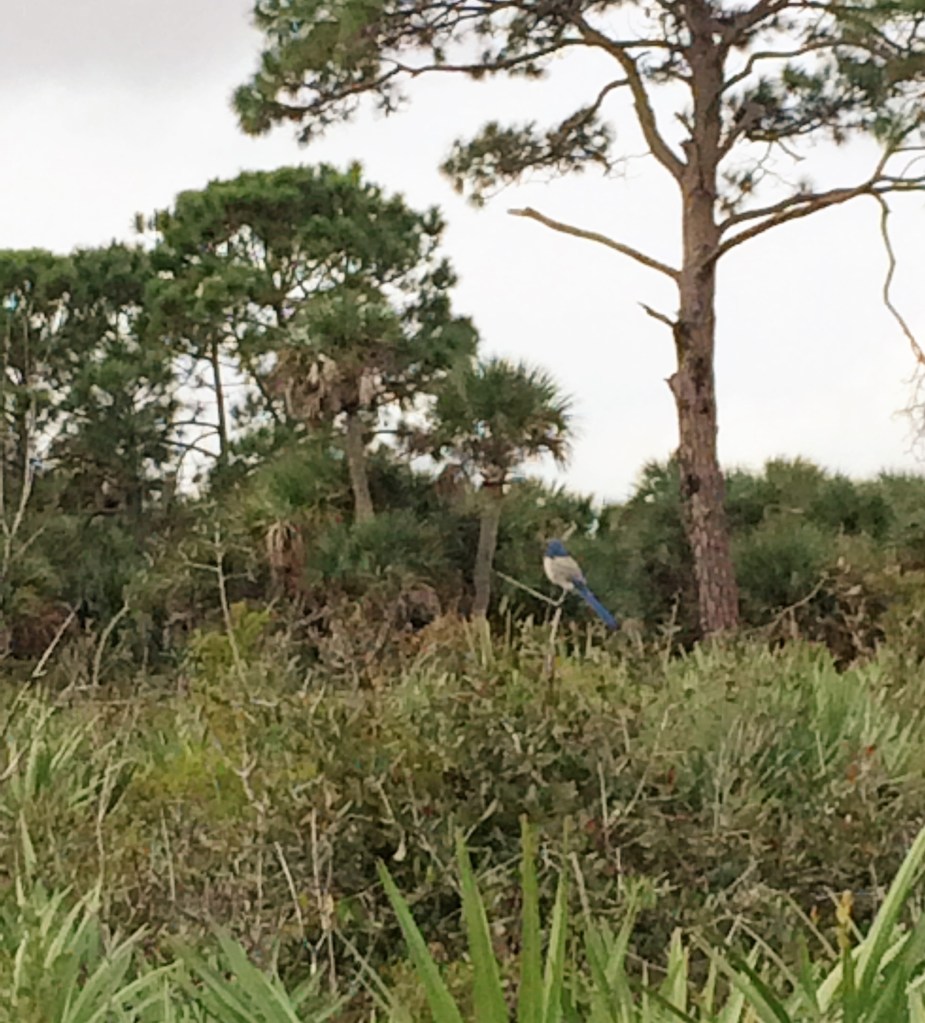
Scrub-Jays can become hand-tame if they have contact with people. A fellow hiker shared that once we found a family of Scrub-Jays, we should stand still with our arms outstretched and see what happens. About half way through the hike, I came across a bunch of scrubby looking plants. Sitting on top of a branch was a pretty blue bird. That’s it, I thought, the Florida Scrub-Jay! 

img_4771-2

I signaled the rest of my family members to freeze. We looked at the grass around our feet and saw several peanut shells laying on the ground. Someone clearly had been feeding the birds, but we didn’t want to actually feed the wildlife. (It’s against the rules.)  Still, we were very curious about the rumors we’d heard.

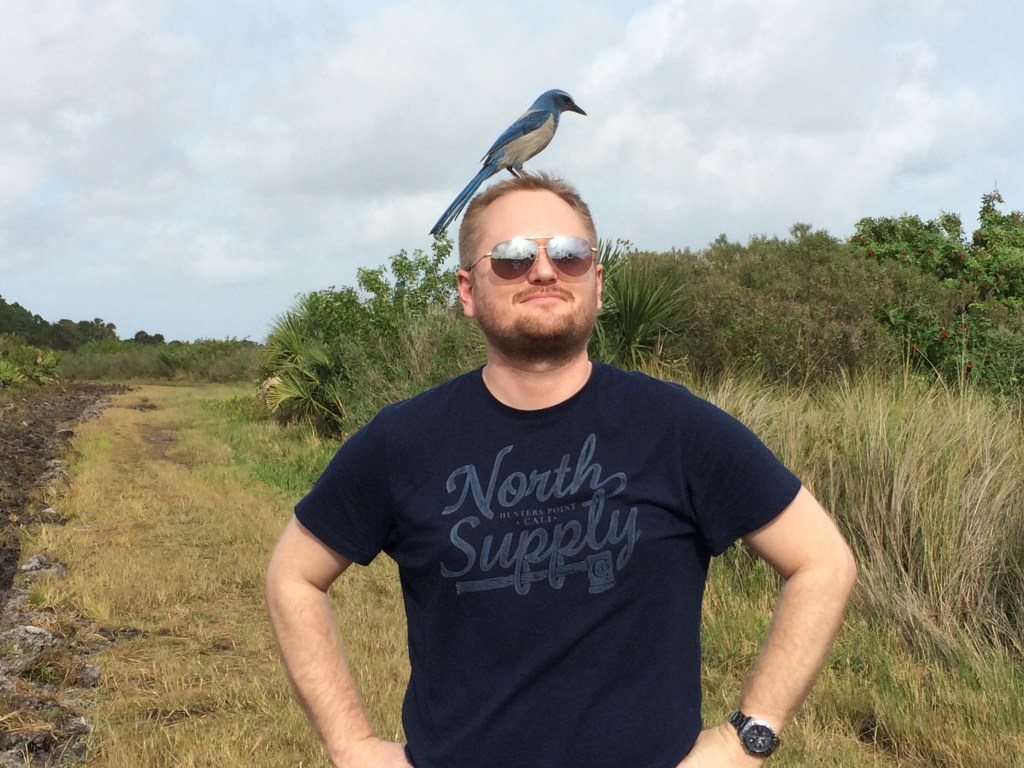
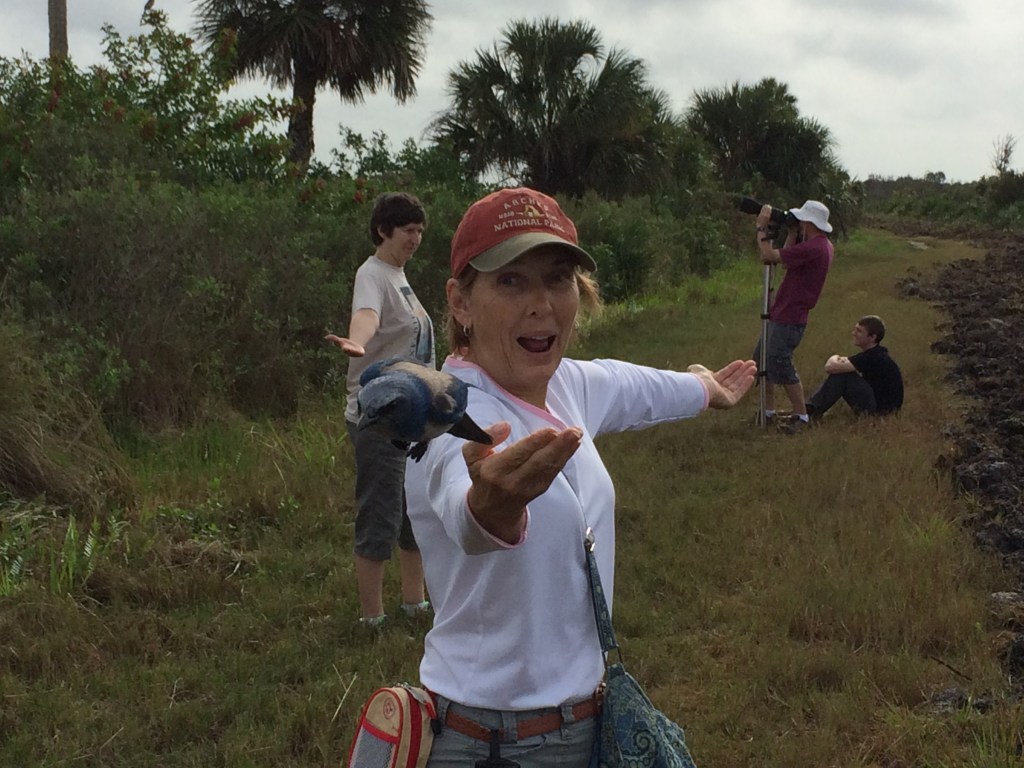
I whispered to my son,  “Let’s stand with our arms outstretched to see what might happen.” As an extra enticement, we put an empty peanut shell in each palm. Wow! I was amazed. The Scrub-Jays didn’t hesitate to light on our palms. One even sat on my son’s head!

img_4776img_4781

Each Scrub-Jay didn’t sit for long. It was clear to them that we didn’t really have any food. My husband shot this amazing photo of a Scrub-Jay leaving my hand. I laugh every time I look at it.

Fellow Floridians, we live in a unique state with more to explore than the space between Mickey’s ears. If you are interested, visit Merritt Island and see the real Florida.


Web of Wonder


img_7696-2

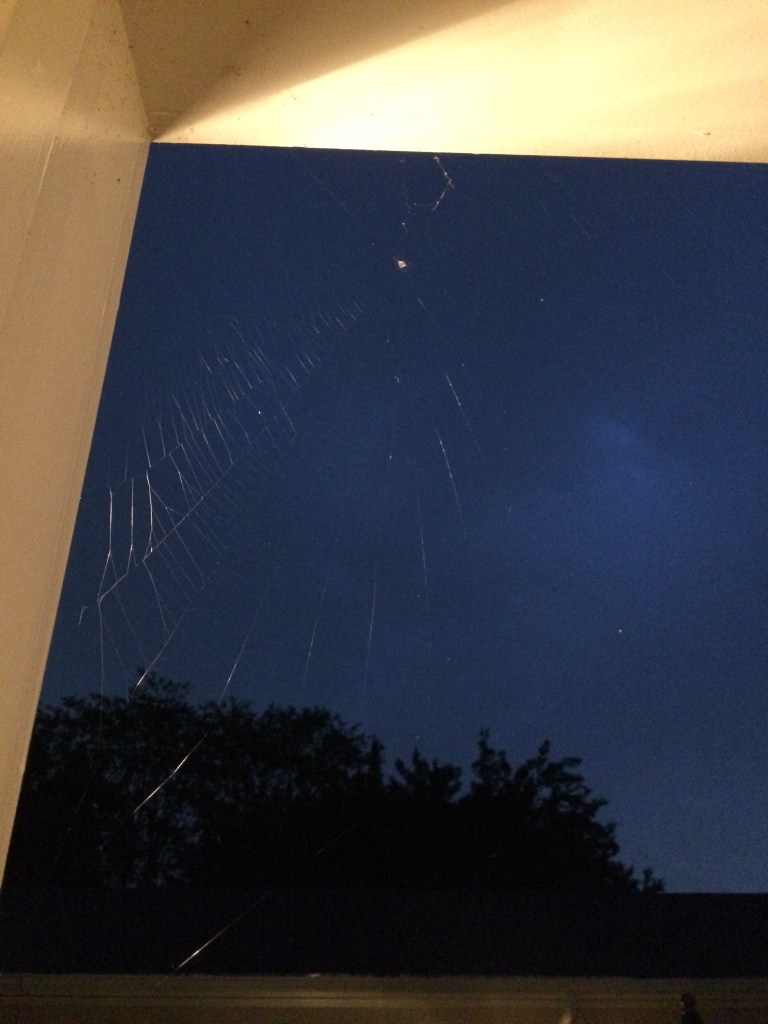
One September night I noticed this spider web above our back door. The web looked scary. What if the architect dropped in my hair when I walked through the door?  As I looked closer, I appreciated the beautiful way it glistened under our porch light. The spider worked  hard to create a masterpiece. Why should I tear it down? After all, the web snared flying insects before they entered the house.

I strained my eyes to try and find the spider. The web hung several feet above my head. In the center I made out a small orange fuzzy looking ball. If that was the spider, it looked harmless.

I asked my family to take a look. Our daughter was visiting at the time. She knew  the spider was  a spotted orb weaver. “I had one build a web on my balcony,” she said. “I didn’t tear it down because it built an amazing web. It died after a few months.”

For her sake I didn’t disturb the web that night. But after a few more days, I wondered how big this web could get. What if I can no longer get through the door without feeling its sticky threads on my face?

I had an idea.  I’ll gently sweep out the web. The spider will probably stick to the broom. I’ll place the broom in the alley overnight and give the orb weaver a chance to escape without killing it. Then my daughter won’t think  I’m a murderer. I’ll be rid of this problem. I grabbed the broom and quickly carried out my plan before I could change my mind.

The next day I discovered the web was back in the same place. I couldn’t believe it. The spider must have hidden behind the porch light when I swept the web away. In twenty- four hours it rebuilt its web.  Then I saw it. I realized the orange fuzzy ball really did have legs and was scurrying down toward me. Yikes!


img_7718-2

I took a deep breath and my fear slowly dissipated. The spotted orb weaver was definitely a master builder. My plan to get rid of it failed.  Why don’t  I just let it be?  So I did for another week…

Until the exterminator came for his routine visit. “How are things?” he asked.

“I only saw one roach this month, and it was lying on its back.” I replied. “But there is a large spider web above the back door.”

The exterminator smiled, “I’ll take care of that.”

After his visit, I didn’t see a trace of the web above the door. I kind of missed the spotted orb, but after all, it was only a spider.

During the first week of October we prepared for the arrival of Hurricane Matthew. We expected the worst, and were relieved when Matthew did not make a direct hit on the Florida coast.  Orlando experienced winds strong enough to down trees in the area.

The day after the storm I noticed our porch light tilted sideways. As I looked closer I saw a smaller web hanging between the light and the side of the house.

Unbelievable, I thought. This spider is some escape artist. Its web was swept down. The door frame where it made its home was sprayed with poison. Somehow the spotted orb weaver built another web that withstood forty mph winds.  It will not leave until its ready. So now I wait. Maybe I’ll wear a hat when I go out.img_7704