Are You Viewing the Canyon From the Rim?

Several years ago my husband asked me to join him for a two-day guided mule ride to the bottom of the Grand Canyon. At first, I hesitated to give him an answer. I have no riding skills and I’m fearful of heights.

Even so, I began to entertain his suggestion. I’ve always wanted the experience of of being inside the canyon, instead of standing at the rim, so I agreed to go. Once he made our flight arrangements, there was no turning back. In the meantime, I focused on trying to think positive thoughts about what might await us.

Have you ever allowed fear to stop you from experiencing more in life? A few weeks ago one of my friends commented she wants to write more, but is fearful her work will be rejected by others. She avoids writing by busying herself with other activities until she no longer has time available. Her fear has become a source of self-protection. I appreciate her honesty. The first step to overcoming fear is acknowledging it.

I will never forget something I heard author Tosca Lee say at a conference. “Write like no one will see this.” Her advice helped me chase away fear and give myself permission to create. I believe we need to banish the self-critic in order to let our thoughts flow onto paper. Until we engage in our art, we will not move forward.

Maybe what you write will only be read by you. Perhaps it will be shared with close friends or family. Not all of our creative works are worthy of publication. Rejection goes with the territory, whether it be from an editor, a friend, or a spouse. Sometimes my husband proofs my work and says, “I’m not getting this.” Then I know I haven’t made myself clear. Time for another revision. Rejection can make us better writers.

Accept the reality that there are people who can write better than you. Comparing ourselves to others chokes our creativity. Our culture demands instant success. But how do people achieve success? First they decide to start. Then they decide to continue. Most marathon runners begin by competing in a 5K. Slowly, they continue to build their stamina by participating in longer races.

We can receive encouragement from Scripture when facing fearful situations. One of my “go to” verses is Proverbs 29:25. “Fear of man will prove to be a snare, but whoever trusts in the Lord is kept safe.”

Just like a snare traps a small animal, fear traps us from pursuing our dreams. Pray for courage to throw off fear and trust God to take you where He wants you to go.

When I first descended into the Grand Canyon, I was afraid to look to the right or left of the trail. I kept my focus straight ahead on Olga, my mule. I realized she had traveled the path many times before. As Olga continued to steadily plod along, I began to relax and enjoy the beautiful landscape around me.

Ask yourself what really matters in life. Are you content to stay in your comfort zone, or is it time to stop viewing the canyon from the rim?

Lessons from Lake Louisa State Park

Change is a fact of life, and everyone experiences loss. With that said, I will tell you my story. For several years during the fall and winter months Herb and I camped in Florida’s State Parks. We pulled a Viking camper with our Grand Cherokee, and always took Buddy, our beagle along.

In 2022 the jeep started having mechanical problems, which seemed impossible for any mechanic to diagnose. Herb didn’t think it would be safe to pull the camper, so we decided to sell it and the jeep, and buy a new SUV.

Since then, I’ve really missed going camping, especially when the temperatures drop in the fall. One day I remembered some of the parks have cabins for rent. The cabins have a “no pet policy,” so we hadn’t entertained the idea until now. Sadly, Buddy is no longer with us—which had the effect of plunging me into a no writing zone for the last two months.

When I discovered a cabin was available at Lake Louisa State Park, I booked it. The park is located only thirty miles west of Orlando.

Our cabin included a large living room, and a full kitchen. Everything was clean and comfortable. I could sit on the front porch overlooking the lake and write. What a delight to see the sun’s rays glisten upon every blade and leaf. I loved hearing squirrels chatter in a nearby tree, and birds squawk in the grass below me. What a gift to be in God’s creation again!

This was a different trip, without a camper or a dog, but it taught me God has the power to redeem my losses. I am reminded of the story of Naomi in the Old Testament. While living in a foreign land called Moab, Naomi had lost her husband, and both of her sons. She decided to return back home to Bethlehem. Although her daughter-in-law, Ruth, was a Moabite, she insisted on going with Naomi. Ruth denied her own culture when she said, “Where you go I will go, and where you stay, I will stay. Your people will be my people, and your God my God.” (Ruth 1:16 NIV)

After Ruth arrived in Judah, she met and later married Boaz, who was one of Naomi’s in-laws. Boaz and Ruth conceived a child and blessed Naomi with a grandson, Obed. He became the father of Jesse, who became the father of King David.

Yes, God has a way of redeeming our losses and turning sadness into joy. As Herb and I hiked the trails in the park and relaxed around the campfire at night, I felt renewed in my spirit. The great outdoors is always there, and I felt so good to be in it again.

Take heart reader, if you are living with a loss, God will restore your joy in his timing.

Happy Thanksgiving!

God’s Timing

“Abraham was 100 years old when his son Isaac was born to him.” (Genesis 21:5)

When specific verses of the Bible seem to jump off the page, I feel like God wants me to pay attention. It’s almost as if He is speaking to me directly. Genesis 21:5 can be taken two ways. On  the surface, Abraham waited a long time for his wife to give birth to their promised child. On a deeper level, Abraham lived long enough to see God’s purpose for his life become reality.

Some people think once we reach our retirement years, our best days are behind us. I retired from teaching at age 60 and published my first book at 66. I’m a firm believer God’s timing is never too late! But sometimes our creative projects remain on the back burner for years.

I’ve had a picture book idea, Manatee School, in various stages of development for ten years. I’d bring the manuscript out—toss around the words, and make more revisions than I can count. In 2015 I pitched Manatee School to several editors, only to be turned down because they were looking for other genres. Eventually I rewrote the rhyming picture book into a Clubhouse Junior Magazine nonfiction article, Counting Manatees. Last year I entered my Manatee School  picture book manuscript in the 2023 Florida Tapestry Awards and won honorable mention.

Since then, the idea of publishing another book filled me with dread. I did not want to experience any more rejections, nor did I want the stress which accompanies launching another book.  That was until God spoke to me through Abraham’s story.

Abraham was 100 years old when his son Isaac was born. Biblical research shares that the “waiting” period was necessary to test Abraham’s and Sarah’s faith. When Abraham was 75, God promised him that his descendants would be a great nation. At that time Sarah was in her sixties and barren. She was well beyond child-bearing age, and laughed at the thought of being a mother.

After ten more years of waiting, Sarah decided to speed up God’s timing by making her own plan. She encouraged Abraham to sleep with her Egyptian servant, Haggai, who conceived Ishmael. But Ishmael was not the child God had promised Abraham.

When Sarah rushed ahead with her own plans, God could see the couple’s faith had not grown enough to warrant His miracle child, the one to be the carrier of the covenant. So He added another fifteen years to Sarah’s barrenness. God did not doubt himself or his promise. He knew His words would come to pass in His timing. “For the gifts and the calling of God are irrevocable.” Romans 11:29 (NASB)

God had a timeline which involved Abraham and Sarah fully trusting in Him rather than relying on human possibilities. Their faith is noted in Hebrews 11:12, “And so from this one man, and he as good as dead, came descendants as numerous as the stars in the sky and as countless as the sand on the seashore.” God wants everyone to know He is still in the miracle working business!

God sees the big picture of my life, and Manatee School is my promised child.  Like Abraham and Sarah, I have experienced a delay. Perhaps God is waiting for me to be more faithful to the work. Maybe He wants me to add something to the story to make it more relatable to children. The day after I read about Abraham and Sarah, I wrote new characters (a child and her grandfather) into the plot. I have a feeling God has not “closed the book” regarding the publication of Manatee School. Remembering Abraham helps me trust God’s timing.

If you are in the waiting stage of finishing a creative work, don’t lose sight of the finish line. Pray and ask God if you need to make any changes. Trust Him to give you the ideas and discipline you need to bring your project to fulfillment.

Unfailing Hope

Like most people I’ve had my share of ups and downs. Last year a fractured metatarsal in my left foot impaired my ability to walk for several months. During my recovery I spent a lot of time reading and discovered a volume of Emily Dickinson Collected Poems published by Fall River Press. Since poetry invites interpretation by the reader, I want to share my thoughts about one of my favorites, “Hope is a Thing with Feathers.” Emily Dickinson penned this work in 1861.

Hope is a thing with feathers

That perches in the soul

And sings the tune without the words,

And never stops at all,

And sweetest in the gale is heard;

And sore must be the storm

That could abash the little bird

That kept so many warm.

I’ve heard it in the chillest land,

And on the strangest sea,

Yet never in extremity,

It asked a crumb of me.

This poem encouraged me to never lose hope that I would someday walk again without pain. Today I’ve recovered from my injury, and Emily Dickinson’s words still speak to my spirit. As an optimist, I connect with the theme of hope. But her words also challenge me to think.

I wonder why she chose a little bird as a metaphor for hope. Birds take flight when they sense danger. They migrate to avoid harsh weather. Birds seem unsettled and fragile in comparison with other animals. But the bird in the poem is not flying. Instead it’s perched in a person’s soul singing a tune which never ends. Could its song be one of praise to its creator?

The bird’s song of hope warms those who live in cold and lonely places. Although the little bird is fragile, its tune can keep people alive during the fiercest storm. Since I live in Florida, I think of hurricane survivors who rebuild their community after a storm. They hear the song of hope which renders a power of resiliency not easy to understand.

The Oxford Language Dictionary defines hope as a feeling of expectation and desire for a certain thing to happen. The Bible goes beyond the dictionary and describes hope as what people look for God to do. Hope goes beyond a wish, to a confident expectation in God’s ability to meet a need.

Dickinson describes the little bird as asking for nothing, not even a crumb. It doesn’t cost a penny to be optimistic. Hope holds much value to people who rely on its power because it lifts their spirits. We’ve all heard stories of people who have survived unsurmountable circumstances because they did not give up. Their stories encourages us, no matter what obstacles we’re facing.

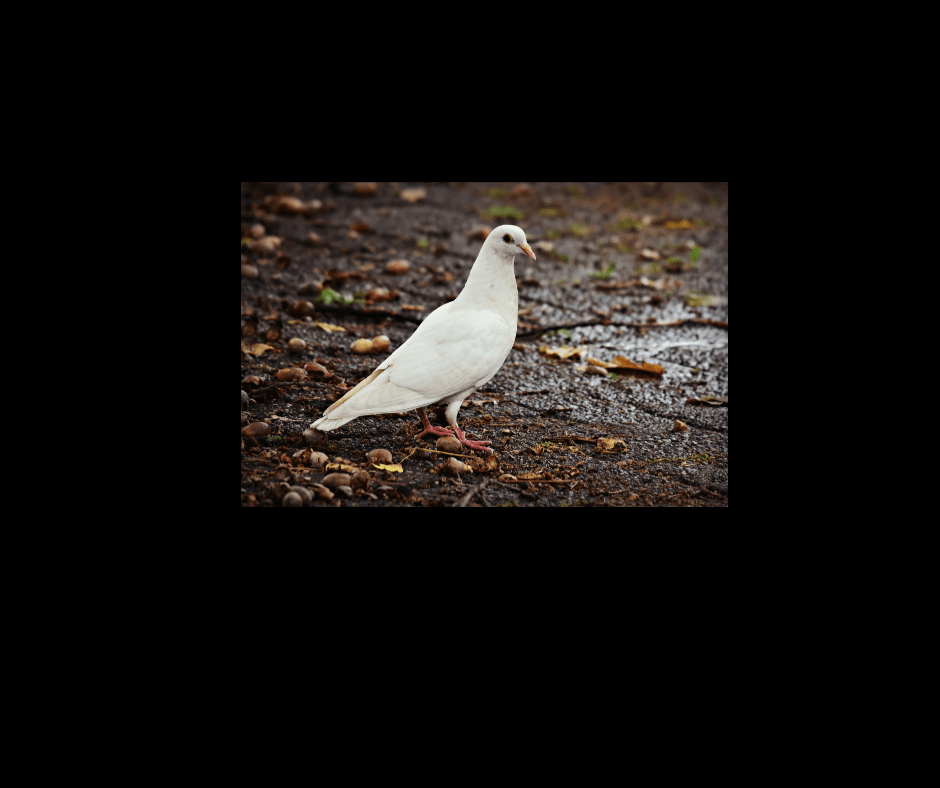
Let’s come back to the little bird in the poem. Could the bird be a dove? The Old Testament relates that after the Flood, Noah sent a dove from the ark to find land. The dove returned with an olive branch in its beak. Then Noah knew the water had receded from the earth. (Genesis 8:10-12 NIV) Can you imagine the hopefulness Noah must have felt?

The dove appears again in the New Testament. All four gospels communicate that the Holy Spirit took the form of a dove and was seen at Jesus’ baptism. Here the dove symbolizes the holiness with which Jesus was endowed. His sacrificial death for our sins brought reconciliation with God to everyone who believes.

When Jesus sent his disciples into various towns he said, “Behold, I send you out as sheep in the midst of wolves. Therefore be wise as serpents and harmless as doves.” (Matthew 10:16 NKJV) Like the feathered thing in Dickinson’s poem, doves are harmless creatures. When housed in a soul however, the dove emanates courageous hope.

Hope is a gift from God to those who seek HIm. Perhaps hope does make one demand. It asks us to trust in God. “May the God of hope fill you with all joy and peace as you trust in him, so that you may overflow with hope, by the power of the Holy Spirit.” (Romans 15:13 NIV)

Bees, Busyness, and the Bible

“Hello, how are you?”

“Busier than I’d like to be.”

Is this your response when you meet a friend? Everyone’s busy. In fact, our culture becomes busier every day. We’ve become a nation of multitaskers who find it difficult to wait at a stoplight without looking at our phones.

I have been busy for most of my life. Mastering the ability to multitask helped me survive the demands of my day. As an elementary teacher, I became a pro at taking attendance, listening to morning announcements, and monitoring the students simultaneously. When I arrived home from work, I helped my kids with their homework while preparing dinner. On Sunday mornings, after I sang with the worship team, I raced to help with children’s church. Sadly, I had linked my self-importance to my level of activity. The thought of too many blank spaces on my calendar made me feel unneeded. I was beyond busy…and eventually I burned out.

Retirement ushered in a major lifestyle change for me. After considering several creative interests, I decided to pursue one hobby—writing. I also decided to cut back on my volunteer work. In this season of my life, my old self tries to make me feel guilty about how happy I am.

Is all busyness bad?

Bees are busy. They work all day flitting from flower to flower collecting pollen in order to fulfill God’s plan for their lives. I’ve never seen a stressed out bee. Like the bees, each one of us has God-given talents which He purposed for us to use. When we stray from our destiny, we flounder.

“The busyness that’s bad is not the busyness of work, but the business that works hard at the wrong things.”

—Kevin DeYoung, author of Crazy Busy.

In addition to working hard at the wrong thing, we can work for the wrong reason. In my case, compliments from others about “what a good job I was doing” encouraged me to work harder, and take on my more responsibilities. I was trying to please man more than God.

A familiar story comes to mind from Scripture. Jesus came to visit Mary and Martha. Upon his arrival, Martha was “distracted by all the preparations that had to be made.” She complained about Mary not helping her.

Jesus answered, “Martha, you are worried and upset about many things, but only one thing is needed. Mary has chosen what is better, and it will not be taken from her.” Luke 10:41,42 (NIV)

Was Martha working hard at the wrong thing? Was she working for the wrong reason? Either way, Martha had not chosen what Jesus thought was best. She busied herself with what she thought was important, instead of asking Jesus what he might want her to do. As a result, she became stressed out and resented her sister.

Have you noticed when we involve ourselves in God’s plan for our lives, we are happier, and more at peace? Work becomes a joy. Is that why the bees seem so content, buzzing while they work?

I confess I have not completely overcome my struggle with busyness. I want to tune into God’s plan and act upon the “one thing” which is needed instead of multitasking. How about you?  

Quiet Time

Here I am Lord

ready to begin my day.

I confess you were not first in my routine,

never are.

First, the daily weigh-in,

before I consumed a bowl of cheerios with blueberries.

Then facebook

beckoned my attention.

I gave my friends the “likes” they deserved

before settling in my easy chair with my second cup of coffee.

After scanning a few Bible verses

and writing my requests in my “prayer journal,”

I thought I’d fulfilled my duty

and meandered outdoors for a walk.

Here at the pond

suddenly I see

in order to hear from you, I must listen.

Here I am Lord,

ready to begin our day.

To Everything There is a Season

Lately my mind takes road trips to the seasons of my youth. Sometimes I long for my “good old days ” filled with endless possibility. A time when many of life’s big decisions had not been made.

When I was seventeen, I hung out with other like-minded souls who thought it was up to us to change the world. I wanted to join the Peace Corps and make a difference.

Of course I listened to the popular songs of the time. I fell in love with the sounds of The Beatles, The Who, and Buffalo Springfield among others. Rock music energized me and fueled my day. Now, when I hear the music of my youth, I’m drawn into a world of nostalgia.

I remember late-night gatherings with friends which usually included music. We would sit around a “record player” and play the latest release of our favorite artists. The lyrics often appeared somewhere on the album cover. We passed the lyrics around and sang along to the tunes. Like many “boomers,” I reflect fondly upon those times.

But were the “good old days” really that good? In comparison, what makes me think the present is bad? There is a verse in Ecclesiastes which speaks to this:

“Say not, ‘Why were the former days better than these?’ For it is not from wisdom that you ask this.”

Eccl. 7:10

I’ve heard myself say, “Things are so different now, I miss the seventies.” What do I mean exactly? Do I miss the days when I was poorer? Days when I was immature? Days when I made some wrong choices? Every decade has its own set of social problems. And it was the problems of those years which inspired the music of my generation.

The author of Ecclesiastes, (Solomon) knew speaking this way is not wise and can lead to discontent with the present. Seniors risk the danger of viewing the current culture through a negative lens. As we age we can become gloomy and withdraw from the world around us.

With my head stuck in the past, I miss all the beauty of today. This morning a ding from my phone indicates a text from my son. I smile as I watch a video of my one-year-old granddaughter dancing with bubbles. Her enthusiasm about this new discovery fills me with joy. Then I realize life in the year 2024 isn’t so bad after all. In the seventies I didn’t have a son, a granddaughter, or an iphone!

Remember the song, “Turn Turn Turn?”

“To everything, turn turn turn. There is a season, turn turn turn.

And a time for every purpose under heaven.”

These words originated with Solomon in Ecclesiastes, chapter 3. They were put to music thousands of years later by Pete Seeger and eventually recorded by the Byrds. I wonder what Solomon would think if he knew his wisdom, and words, outlasted the test of time?

I’m glad I have good memories of the past, but NOW IS THE TIME to make even better memories with my children and grandchildren.

How about you? Leave a comment and let me know if you can relate to my post. Let’s talk.

A Love Story

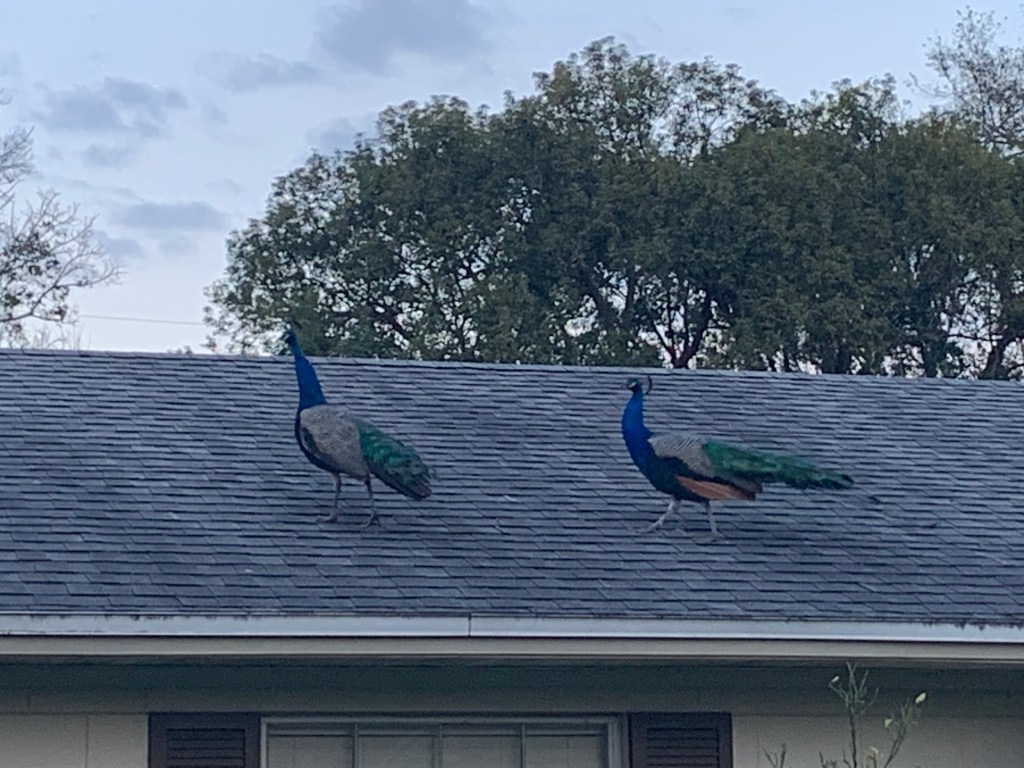
When you think of love, what comes to mind? I doubt if you think of the animal kingdom. My friend, Mary, lives in a suburban neighborhood inhabited by peacocks. No one can say for sure how the peacocks came to the area. Mary saw them when she moved in forty-five years ago. Although the flock fluctuates in numbers, she estimates there are over one hundred peacocks now. Mary’s neighbors have different opinions about the birds. Some folks love having them around. Others complain when the peacocks block neighborhood traffic or roost on their roofs.

One day, Mary’s daughter, Kim, discovered a peacock chick on the front lawn. The weakling had been abandoned by its mother. Kim scooped up the baby peacock and carried it to the backyard where her family raises chickens. She opened the coop and gently placed the young peacock inside. What do you think happened? Did the chickens raise a fuss? Did they attack the little peacock?

Quite the opposite. The young chickens welcomed the newcomer. In fact, they huddled around the the baby peacock like it was something they wanted to protect. They didn’t notice that the peacock was different.

The love the chickens demonstrated for the peacock reminds me of the Bible story, Ruth. Due to a devastating famine, an Israelite couple (Elimelech and Naomi) move to a foreign country called Moab. In summary, Naomi’s sons marry Moabite women (Orpah and Ruth.) Eventually, Naomi’s husband dies. After that, her two sons pass away. Naomi feels abandoned.

Word gets around that the famine in Naomi’s home town of Bethlehem has ended. Naomi packs her bag and prepares for the journey home. She urges her daughters-in-law to return to their mother’s homes because she has no more sons who can provide for them. Orpah follows Naomi’s advice, but Ruth refuses. “Don’t urge me to leave you or turn from back from you. Where you go I will go, and where you stay, I will stay. Your people will be my people and your God will be my God” (Ruth 1:16 NIV.)

Ruth’s declaration of love surprises Naomi. If Ruth moves to Bethlehem, she will leave behind her parents, her culture, and her god to go to a foreign land. Why? The only explanation is love. Like the chickens and the peacock, Ruth doesn’t see the differences between herself and Naomi. She only sees their similarities.

The two women set off together. Once they arrive in Bethlehem, Ruth gleans the leftover grain from the barley harvest and shares it with Naomi. Her commitment is rewarded. Soon she remarries and conceives a son.

Love is more than a feeling. It’s an action not hindered by cultural differences or appearance. Love means putting aside your needs in order to help someone else. I still believe love has the power to change lives for the better. Will you be like Ruth in a world which desperately needs love?

Do You Like Your Job?

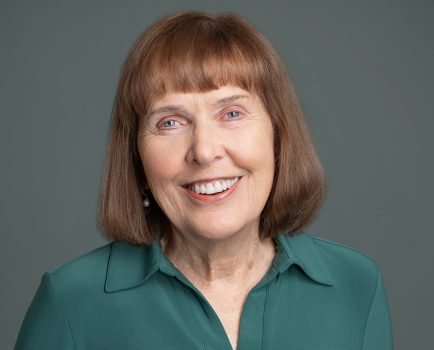
Most people would agree there are things they like and dislike about their job. In my featured photo I’m shown working at my desk when I taught third grade. I look happy. Maybe this was taken on a Friday after school dismissed!

Now that I’m retired, I look back on my career with amazement. How did I do it? How does any teacher manage to fulfill all the expectations of the position? The only way I survived was by learning how to multi-task. Somehow teachers take attendance, listen to morning announcements, and keep an eye on the class all at the same time. Like a jack of all trades, a teacher fulfills many roles.

On Labor Day, we pay tribute to the contributions and achievements of American workers. For most workers our jobs are the most important thing in our lives.  After years of working at the same job, we begin to identify ourselves by our career. When introduced to someone, we ask, “What do you do for a living?” This pattern continues during retirement, “What did you retire from?”

It’s difficult for people to retire because it’s hard to imagine a life without work. Some feel like life will have no purpose or meaning. I’m often asked, “So what do you do all day?”

“I fill my days in much the same way I did during summer vacation. The big difference is I never reach a date on the calendar when I start to feel anxious about school starting again.”

We confuse the value of our work with the amount of money we receive for it. When I stayed at home to care for my preschool children, I received no income, but the experiences we shared were invaluable. Our “self-worth” should not be dependent on our level of income.

Do you feel undervalued at work? Comedian George Carlin said, “The caterpillar does all the work, but the butterfly gets all the publicity.”

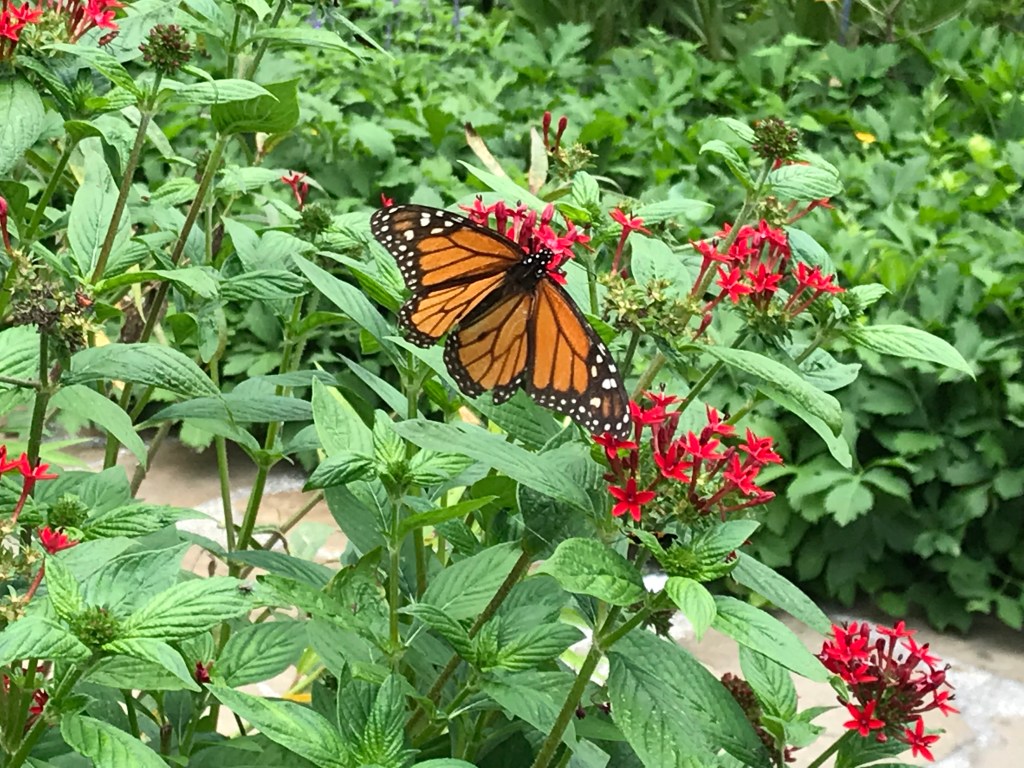
Too bad Mr. Carlin seems to have forgotten, the butterfly once was the caterpillar. If I work at something with all my heart, I feel content knowing I’ve done my best, even if no one else seems to notice.

One of my favorite scriptures reads, “Whatever you do, work at it with all your heart, as working for the Lord, not for men, since you know that you will receive an inheritance from the Lord as a reward. It is the Lord Christ you are serving. Colossians 3:23,24 NIV

IMG_4212

Engaging in our work changes us. Our “on the job experiences” teach us new skills. By trial and error we learn new ways of problem solving to accomplish our goals. Eventually we discover that like the monarch, we can fly!

Happy Labor Day!

If you’ve enjoyed my musings about work, please subscribe to be notified of future posts. Thanks!