blog

The Making of a Champion

“You may not succeed, but you will lose for sure if you don’t try.”

Meet my neighbor, Reed Zuehkle. Although he excels in several sports, he is known for his achievements as an international ski jumper. So what’s a ski jumper doing in Orlando? To to be truthful, I don’t know those details. But I’m excited to share a few details of his life as an overcomer. Here are a few of Reed’s accomplishments in the sport of ski jumping:

  • qualified for the U.S. Olympic team in 1980 and 1984.
  • won the U.S. National championship in 1982.
  • placed fourth in the World Cup in 1985.

Reed’s stats are impressive. But what’s more impressive to me are the challenges he overcame to accomplish his goals. When he was five years old Reed was stricken with polio. Night after night he woke up screaming with severe leg pains. The pain only lessened when his mother came to his bedside and massaged his legs.

Diagnosis and Treatment

After his parents consulted a doctor about his symptoms, Reed was hospitalized for tests. Eventually the family learned his pain resulted from a reaction to the oral polio vaccine. Unfortunately, the vaccine which was supposed to protect him contained the live virus.

The doctor prescribed orthopedic shoes. Reed thought the shoes were ugly and took them off whenever his mother wasn’t looking. His leg pains continued for a year. Polio weakens a person’s muscles. The doctors advised his parents to not expect much out of him physically. In fact he was advised to not exert himself. This news crushed his parents. Reed and his family lived in Wisconsin and most of their family life revolved around skiing. In fact his father, Keith Zeuhkle, won the National Ski Jump Championship in 1956.

Home Therapy

Reed’s parents refused to accept the doctor’s advice. They started a daily regiment of exercise to help strengthen his leg muscles. This involved making Reed sit on a shelf in a closet and lift sand bags with his legs. He started with one pound bags. As he got stronger, the weight increased. Reed still remembers his sisters standing outside the open closet door and cheering him on. Eventually he could lift heavier sandbags than any of his four siblings and his leg pains stopped.

Pursuing His Dream

When Reed’s father wasn’t working to support his family, he coached at the local ski club. As a kid, Reed always hung out with his family at the club. Skiing was their way of life. At age ten, he won his first local competition. During his adolescent years he advanced to national and international events. In 1982 Reed won the same national competition his father won in 1956.

Polio wasn’t the only physical challenge Reed overcame. In December of 1978 he tore a ligament in his left knee during the Four Hills competition in Germany. This condition required surgery. In those days patients were required to wear a full leg cast for eight weeks. Consequently, his knee joint froze and wouldn’t bend. Reed had another surgery on his right knee for torn cartilage soon after the cast on his left leg was removed. He spent another eight weeks in a full cast which resulted in another frozen knee joint.

Determined to jump again, Reed spent the summer and fall of 1979 training hard to regain the flexibility in his joints. He qualified for the U.S. Olympic team one year after his accident at Four Hills.

“Don’t Give Up”

I asked Reed what advice he might offer to anyone facing a challenge. He responded, “It’s easy to give up. Anybody can do that. Unless you buy a lottery ticket, you’re not even in the running. You may not succeed but you will lose for sure if you don’t try. If you really believe in something, don’t give up.”

Since his father worked a lot, Reed considers his mother the driving force behind his motivation to be an overcomer. He was glad his parents set high expectations for his recovery. He knew sitting on the sidelines wasn’t for him. Reed knew what is was like “to be put on the shelf,” and he sure didn’t want to stay there.

Most of us will never become Olympic athletes but we all have challenges in our lives. Reed’s story helps me remember to persevere. Success might be right around the corner.

A Life Illustration

Hope is one of the principal springs that keeps mankind in motion.—Thomas Fuller

Take a close look at these blooms. What do you see? Three colors of flowers on the same shrub? Is that possible?

I met the Yesterday, Today, and Tomorrow plant at Leu Gardens in Orlando last week. I’d never seen this shrub before and I couldn’t believe it produced violet, lavender, and white blooms. I thought my eyes were playing tricks on me.

What’s the deal?

My research led me to the following information about this romantic plant.

  • Native to the Brazilian rainforest.
  • Grows well in tropical climates with filtered shade.
  • Average size: eight feet tall and five feet wide.
  • Blooms in spring and summer.
  • Scientific name: Brunfelsia Grandiflora
  • Sweet smelling flowers.
  • Extremely toxic to cats, dogs, and small children.

So, it’s beautiful, yet dangerous and one plant I will never grow in my backyard garden. But let’s not discount the philosophical side of the Yesterday, Today, and Tomorrow shrub.

I love it’s name.

What could be a more appropriate name than Yesterday, Today, and Tomorrow? For you see, each flower goes through three stages. On the first day the flower is violet, by the second day it fades to lavender, and finally changes to white on the third day. Everyday this shrub contains flowers in different stages. Wow! As far as which day represents which color, I think that’s open to interpretation.

So now for my philosophical take away… The three colors are a visual about life. Violet represents yesterday’s memories. Lavender expresses today’s challenges, and white tomorrow’s hope. Here’s a great quote:

“Hope is a renewable option: If you run out of it at the end of the day you get to start over in the morning.” —Barbara Kingsolver

The Yesterday, Today, and Tomorrow shrub starts over every morning in a constant cycle of perpetual change. Likewise no matter what stage we are in the journey of life, we still have hope that tomorrow will be better. The challenges of today become hope for tomorrow.

Thanks for taking the time to read my post. You might have a different take-away about the blooms. I’d love to hear your thoughts. Until next time…

Don’t Drain This Swamp!

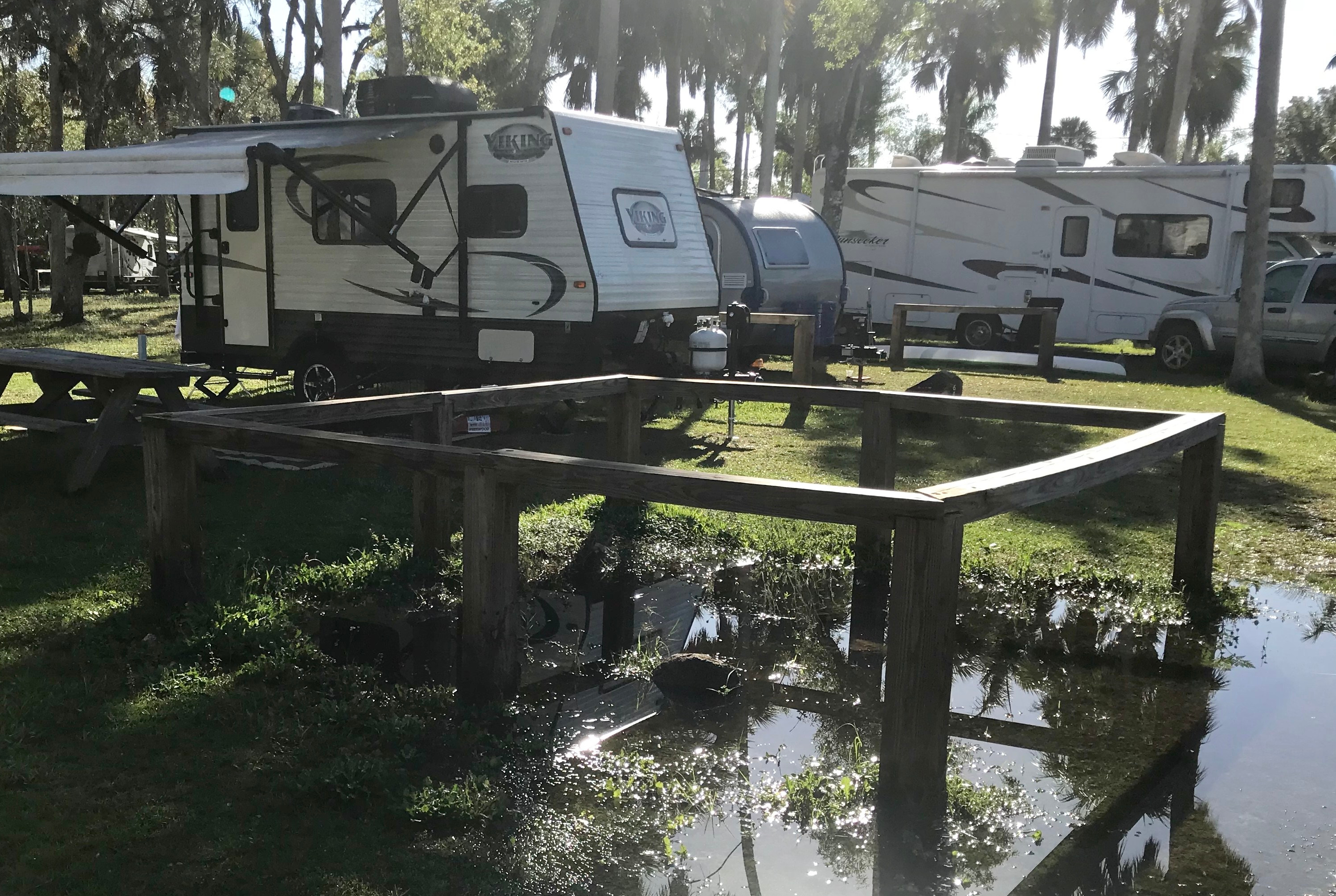
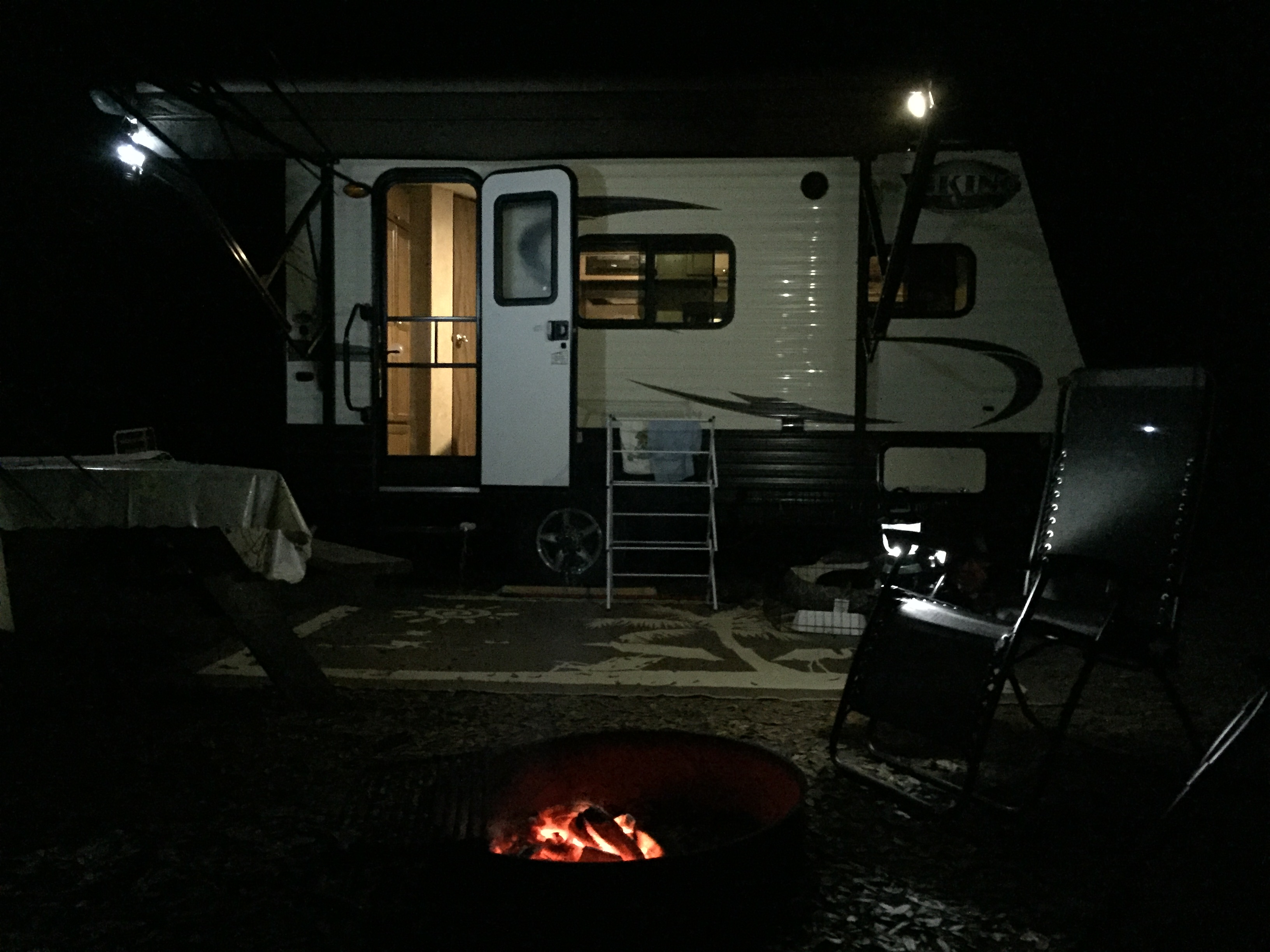
Some swamps are just meant to be swamps. Such is the case with the Everglades. Last week we hitched up our Viking trailer and explored the wilds of South Florida. Herb, Buddy, (our beagle) and I camped at Collier-Seminole State Park, located south of Naples and west of Everglades National Park. In this post I want to give a brief review of the places we visited.

Collier-Seminole

Our campsite

I have to say this was the least scenic campsite we’ve ever encountered. It rained for several days before we arrived. I laughed and referred to our site as “lakefront property.” Luckily it didn’t rain anymore during our four night stay. The pond dried by our last day. Herb and I decided to take the campsite and the mosquitos in stride. After all, the park lies within one of the largest mangrove swamps in the world.

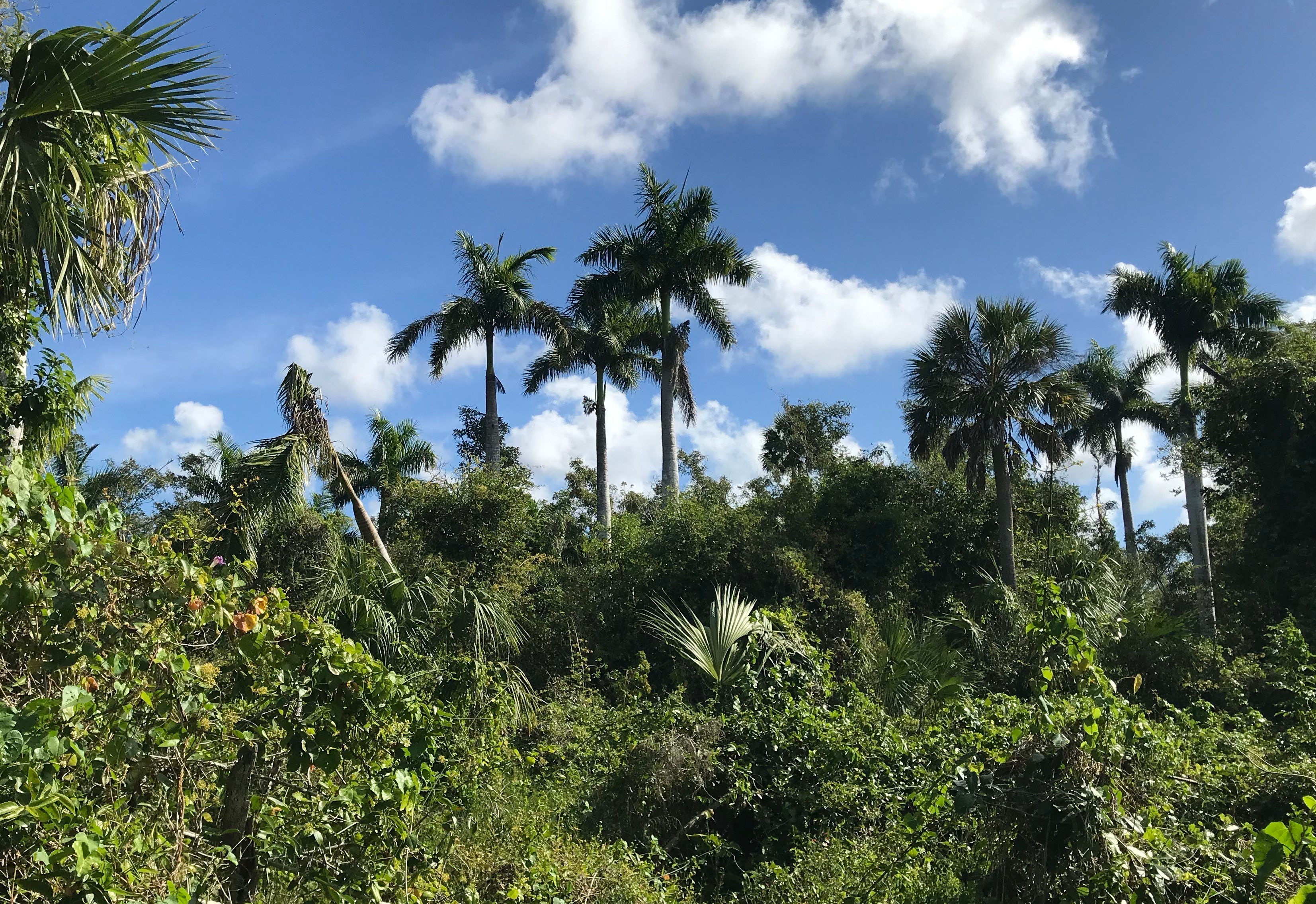
In all fairness, Collier-Seminole is scenic. The park contains one of three original stands of royal palms in Florida. I snapped this photo on the pet friendly Royal Palm Hammock Trail. Buddy enjoyed all the sights, sounds, and smells along the one mile path through the jungle.

Royal Palms can grow to a height of one hundred feet.

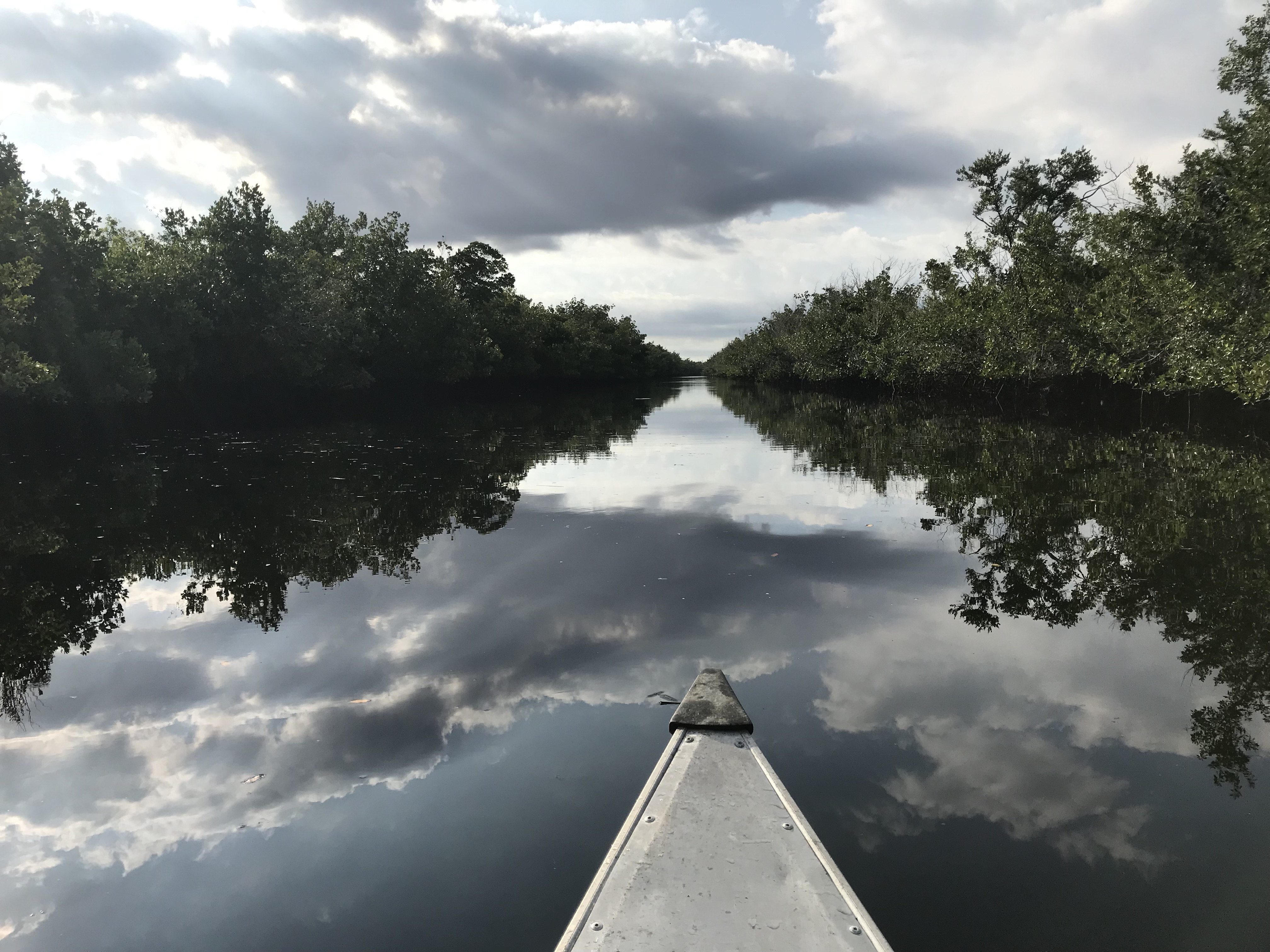
I highly recommend renting a canoe and paddling the Blackwater River. The tidal river system hosts a variety of birds and other wildlife.

The scenic Blackwater River at its widest point.
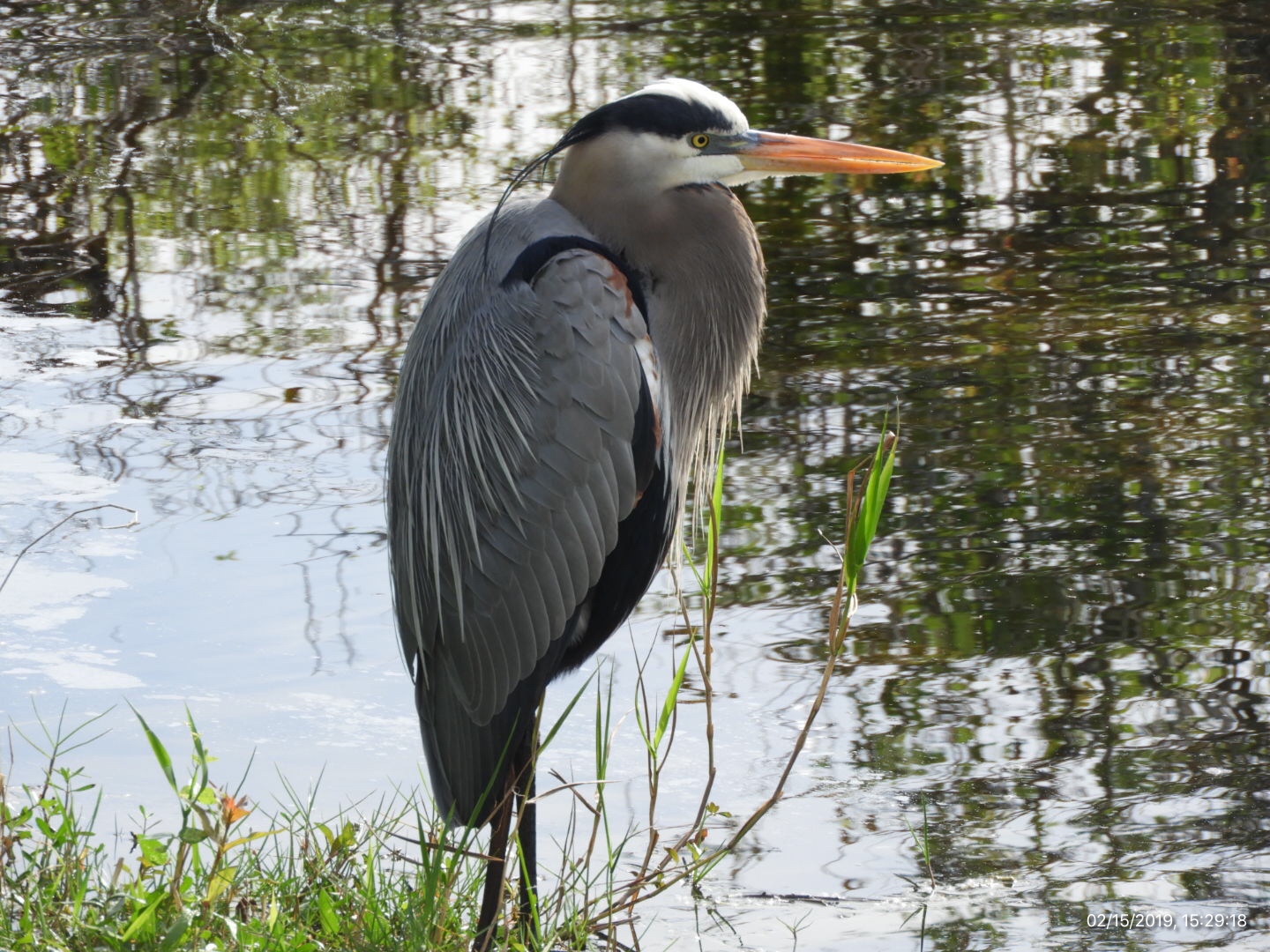
A Great Blue Heron in flight.

Everglades National Park

It’s about an hour drive to the Shark Valley Visitor Center from Collier-Seminole. We arrived late in the afternoon, only to learn that Buddy was not permitted anywhere but the parking lot. Alligators love little dogs!

Herb and I took turns sitting on this bench with Buddy. That way each of us could do a little exploring.

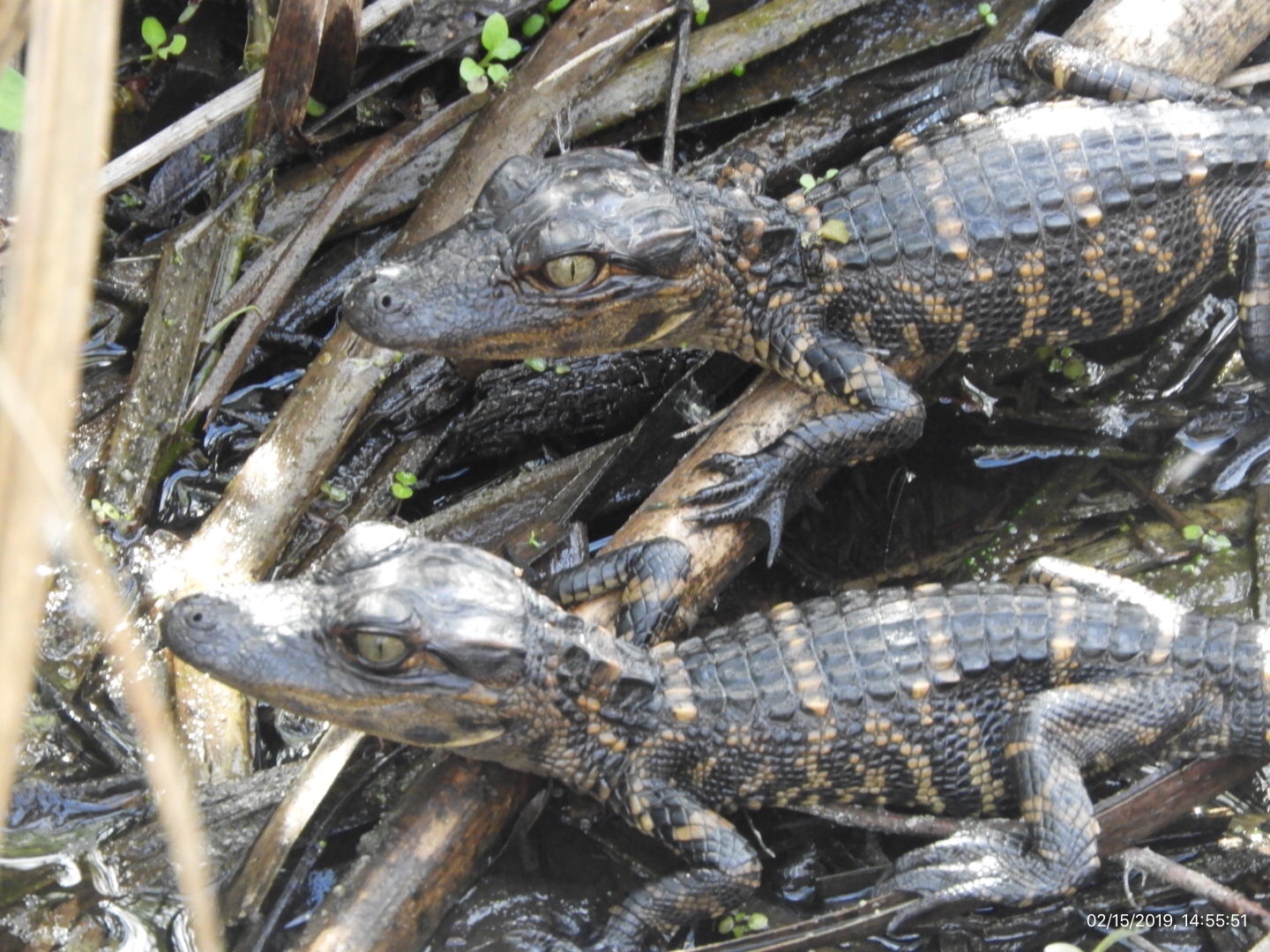
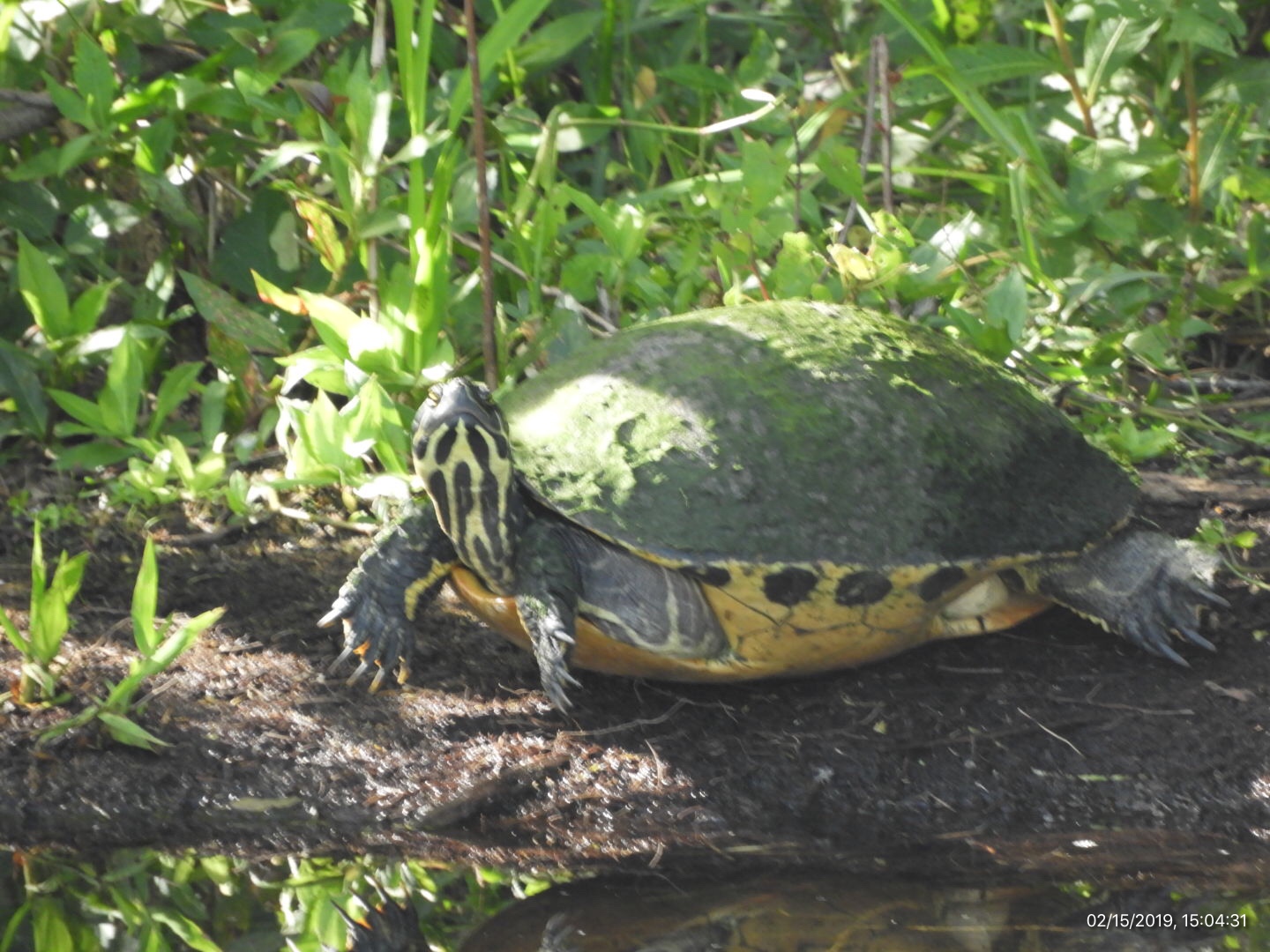
A visit to Everglades National Park never disappoints. In the span of twenty minutes, Herb encountered and photographed many animals. Here are a few images he snapped with with his Nikon telescopic camera.

Water is the lifeblood of the Everglades. Today the Comprehensive Everglades Restoration Plan is working to restore the natural flow of water to this area. The results are encouraging and the wildlife is returning.

Fakahatchee Strand Preserve State Park

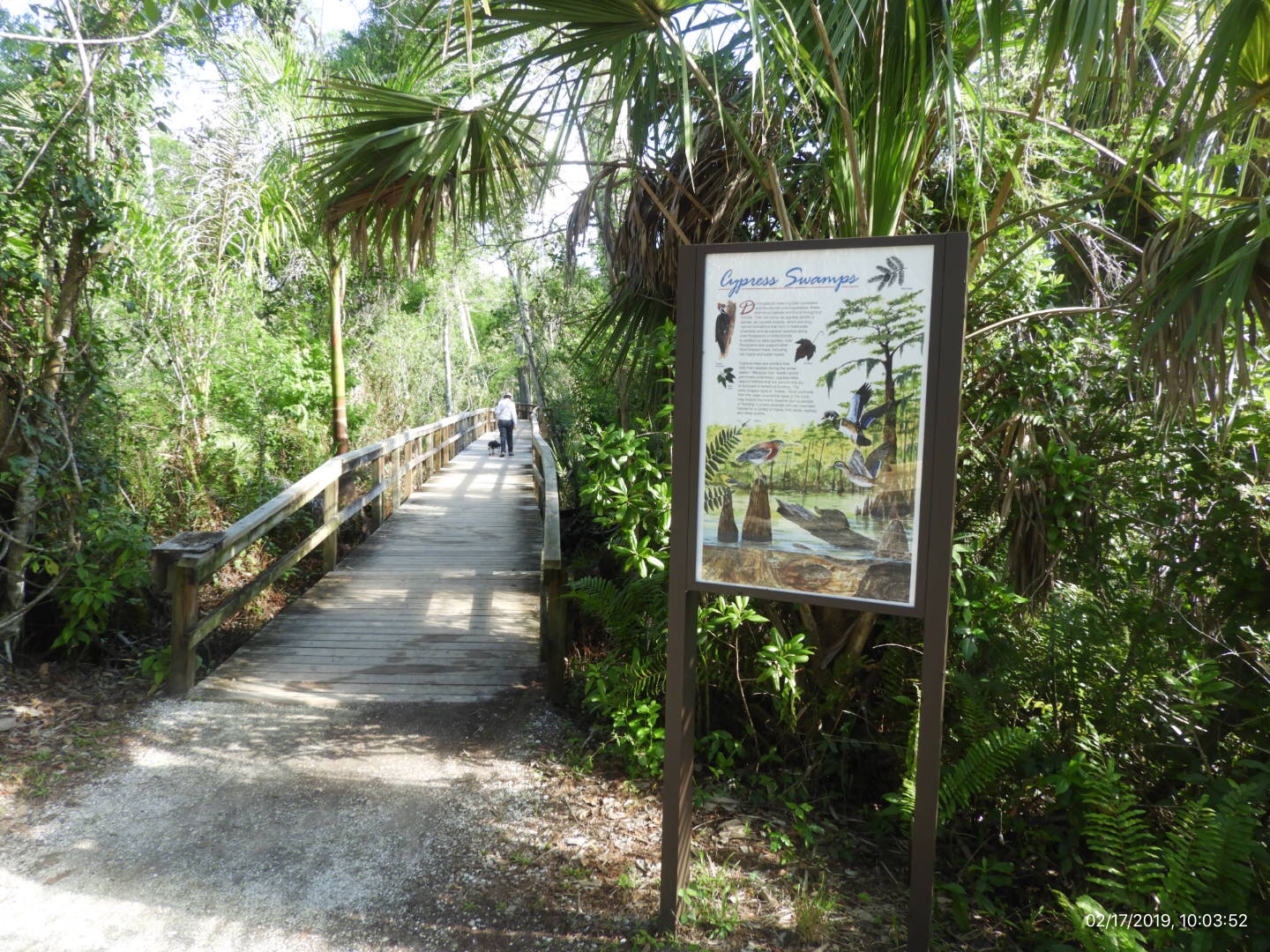
In between Collier-Seminole and Everglades National Park lies 85,000 acres of wetland wilderness. We walked the Big Cypress Bend boardwalk with Buddy. We kept a close eye out for gators and stayed ready to pick up our pet at a moment’s notice. The 2300 foot long boardwalk is sheltered by bald cypress trees, many of them hundreds of years old.

The Big Cypress Bend Boardwalk opened up onto a beautiful pond.

We were told an eagle nest existed somewhere along the boardwalk. I became so interested in looking up, I forgot to look look down.

Yikes!

I almost missed this big guy who was not far from where I was standing. So much for staying alert.

After our walk on the boardwalk we drove Jane’s Scenic Drive through miles of wilderness. I could still see parts of the swamp from the comfort of an air conditioned vehicle. I felt happy and safe.

The landscape of the Everglades is like no other. It is the largest subtropical wilderness in the United States. A place teeming with life which depends on the delicate balance of nature. From the tiny mosquito to the Florida panther, all sizes of animals coexist in this wonderful place.

Grassy Arrowhead

The Lunch Box

Cobwebs brushed across my face

As I cracked the cellar door

Hiding somewhere in this place

My childhood past was stored.

There upon a table

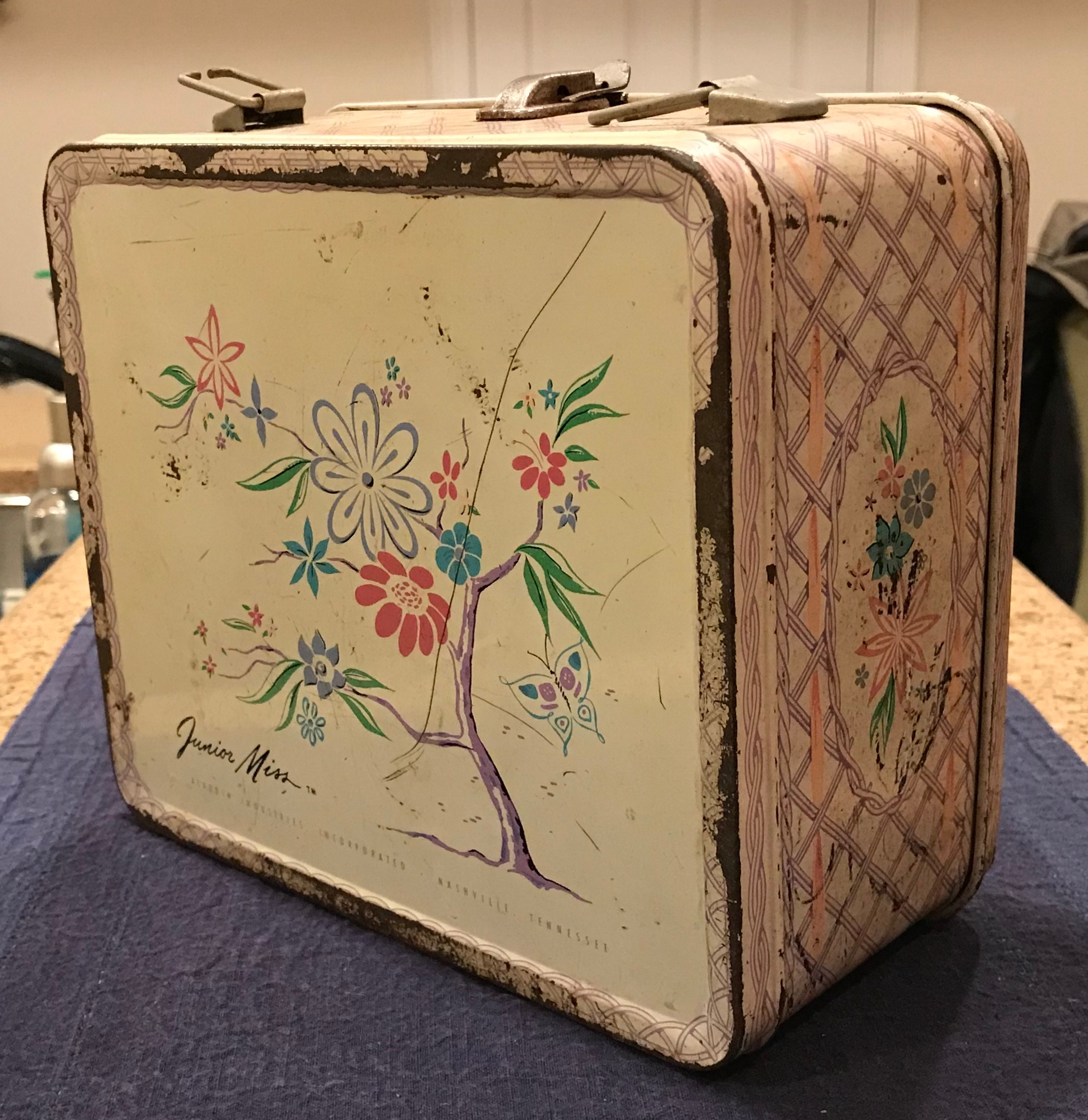
Sat a white box brown with rust.

The letters on its label

Spelled my name beneath the dust.

This was the lunch box I loathed,

Ashamed to carry each day.

Its trim of flowers and bows,

Couldn’t hide what it conveyed.

I was a girl of humble means

Whose parents were simple and poor.

School-bought lunch, a luxury,

That I could never afford.

The box now empty, thermos gone

Scenes of my childhood arose

Mother rising before the dawn

To warm my soup on the stove.

I know my parents worked so hard

And gave all they could to me.

This homely box, I can’t discard

Stored deep like the memories.

Valentine’s Day usually brings with it sentiments about love. I decided to share “The Lunch Box” this week because it expresses my feelings about my parents, my past, and how something so ugly and despised, could change into something beautiful. I still have my Junior Miss lunch box from 1960. Of course, beauty is in the eye of the beholder.

I keep my old lunch box because it reminds me that no matter how ugly I might feel, I am loved by God and beautiful in his sight. By the way, God feels the same about you!

Happy Valentine’s Day! Do you keep any relics from your childhood? Leave a comment.

Inspiration from a Sand Dune

I’ll never forget our visit to Great Sand Dunes National Park in southeast Colorado. Let me begin by saying I didn’t know this park existed until My hubby and I planned a trip to Pike’s Peak last year. When I visited the park website I became intrigued. How in the world did the tallest sand dunes in North America come to be in Colorado? As is the case with many geologic formations, the answer involves water and wind.

Water is the lifeblood of the Great Sand Dunes. Located in a valley between two mountain ranges, particles of sand were deposited by stream runoff. The sand washed into a huge lake covering the valley floor. Eventually the lake dried up, and the wind gradually moved the sand to the base of the Sangre de Cristo Mountains.

Strong winds funnel through three surrounding mountain passes from opposing directions, making the dunes grow vertically. Star Dune, the tallest, stands at 750 feet.

I experienced the power of the wind on our first night in the park. During our first dune walk, blowing sand blasted our faces and we had to turn back after twenty minutes. In hindsight, I realized how dangerous it is to walk out on the dunes at night. A person could fall into a deep pit without a good flashlight.

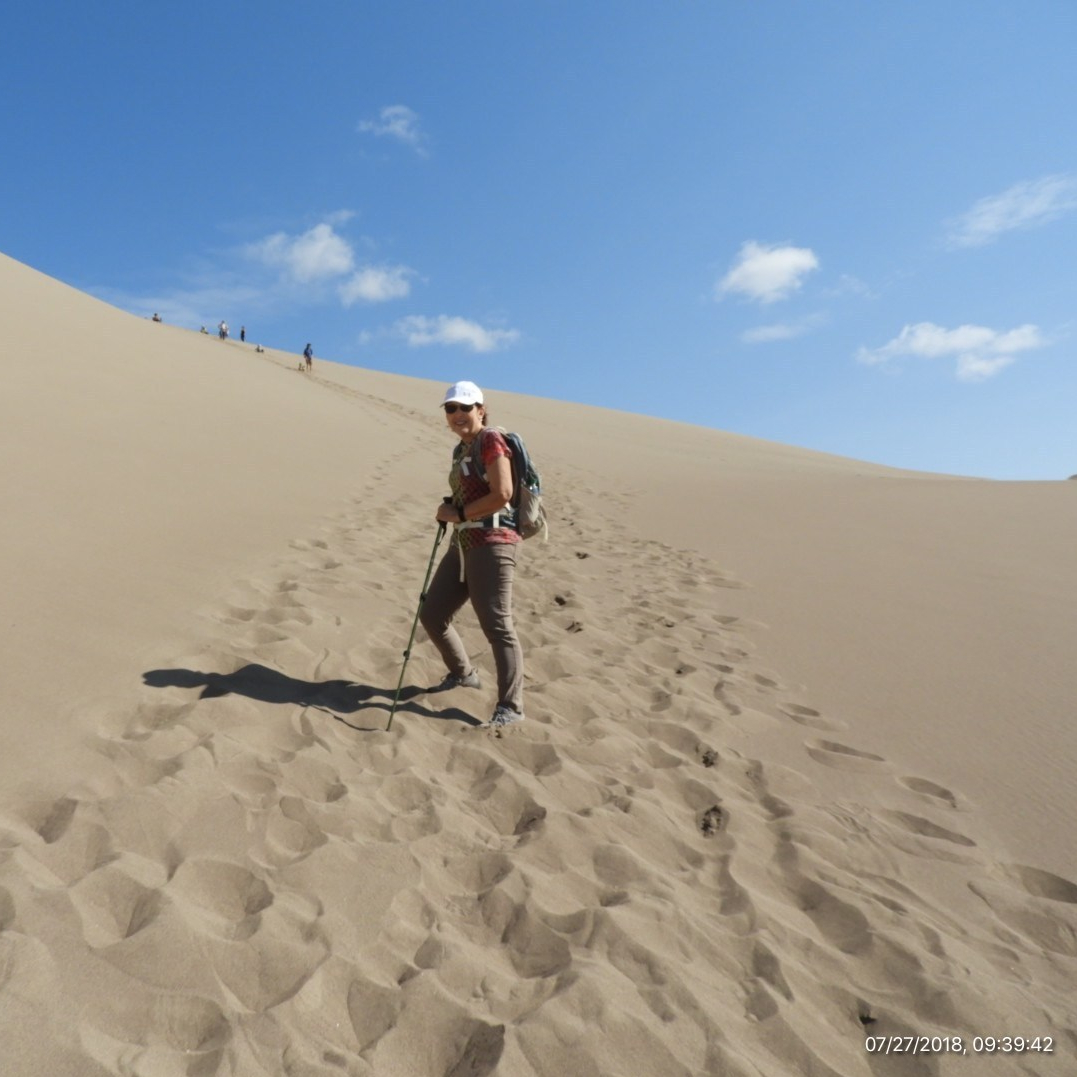
The next day the wind died down and we determined to hike to High Dune, a distance of 1.25 miles. We were told that on summer afternoons, the sand heats to a surface temperature of 150 degrees F. We started early, but the the walk was extremely difficult due to shifting sand. It seemed like we moved one step backward for every two steps forward.

Half way up, stopping to rest after every twenty steps.

Needless to say it took us over an hour to go one mile. I definitely recommend using trekking poles to help with balance. We experienced a 450 foot elevation gain. Although we scaled the highest dune we could see from the parking lot, we were disappointed to discover the top was not the top. This was just one ridge in a sea of ridges.

I was a tiny speck upon a vast wilderness of sand.

As the sun rose higher in the sky, the sand felt hotter under our feet. Time to head back down. Along the way I admired the beautiful lines and shapes sculpted by the wind, many of them uniquely different. This was the art of God.

“Chinese Walls” created by two opposing winds.

In reflection I’m reminded of an old saying, “bloom where you are planted.” Grains of sand, trapped in a basin with no way out, are continually pressed on every side by wind. Yet they have risen to create a natural wonder of the world.

“Ah, Sovereign Lord, you have made the heavens and the earth by your great power and outstretched arm. Nothing is too hard for you.” Jeremiah 32:17. NIV

Finding Refuge

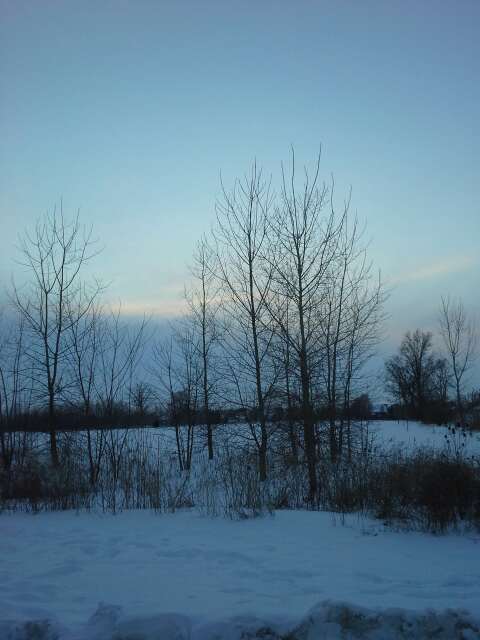
Barren boughs scrape against the cloudy sky.

Lonely limbs ache for summer days gone by.

Little birds peck the frozen field for grains.

Day after day the chilly air remains.

Tiny mice huddle in lifeless leaves below.

Sleeping lilies lay in beds concealed by snow.

Hungry deer strip the brittle bark from trees.

Kindly ants share their tunnels with queen bees.

Home provides a refuge from winter’s icy grip

Gathered ’round the table in sweet companionship.

In my process of evaluating the recent frigid temperatures I can only think of one good thing about winter. I like the feeling of coming in from the cold and warming up with hot tea or cocoa. My husband and I moved our family to Florida in 1989 to escape Ohio winters.

Everyone says a person’s blood thins after they live in Florida for a number of years. For us, fifty degree temperatures are practically unbearable. My northern friends shake their heads and remark, “you don’t remember what cold is.”

Do you like winter? Some people do. Leave a comment and let me know your views on the subject. Maybe you can change my opinion.

A Poem for Non-Runners

I don’t run.

Nowhere to go.

Why should I hurry?

I want to know.

I don’t run.

Don’t want to sweat.

And if it rains,

I might get wet.

I don’t run.

Like many do.

Who says running is good for you?

Tendonitus

Causes pain

Shin splints, muscle pulls, ankle sprains.

I don’t run.

Since I’ve heard

Scientists say we should conserve.

Yes, my body,

Like a car

Loses its value when driven far.

Last summer Herb and I visited Pike’s Peak. Our guide took this photo of us pretending to run from Big Foot. I doubt if I could outrun Big Foot because I don’t run.

On the other hand, Herb is a runner. He’s competed in four marathons and done well for his age. He finished his last marathon at 65, and trains regularly.

I used to feel guilty about not running.

Dirty Harry said, “a man’s got to know his limitations.”

I’ve accepted mine. Running is not my thing. There’s joy in accepting yourself for who you are. I like my age. As a senior citizen, I think I’ve earned the right to say no to anything I don’t want to do.

Don’t get me wrong. I believe in staying active, choosing instead to walk or bike. We all know exercise is important, and I’m glad for alternatives. In the meantime, I ‘ll keep looking over my shoulder to see if Big Foot is closing in on me.

Thanks for reading my blog. If you like poetry, check out some of my more serious poems by clicking on the menu bar and selecting my poetry page. More poems and the stories behind them can be found under Categories in the sidebar. Remember, to like, follow, and share!

One Campground That’s Gone to the Dogs

This week I learned something about people who camp. In addition to bringing their bikes, kayaks, and fishing equipment, they usually make room for Fido.

Since Herb and I normally include our beagle with us on our campouts, we fit right in at Myakka River State Park. This was our first excursion with Buddy for 2019, and we were ready to explore more of the “real Florida.” Located in the southwestern part of the state, Myakka is the largest state park and the most visited. The beautiful Myakka River flows through vast unspoiled wetlands, palm hammocks, and natural prairies. Visitors enjoy photographing the numerous birds and alligators along the scenic Park Drive.

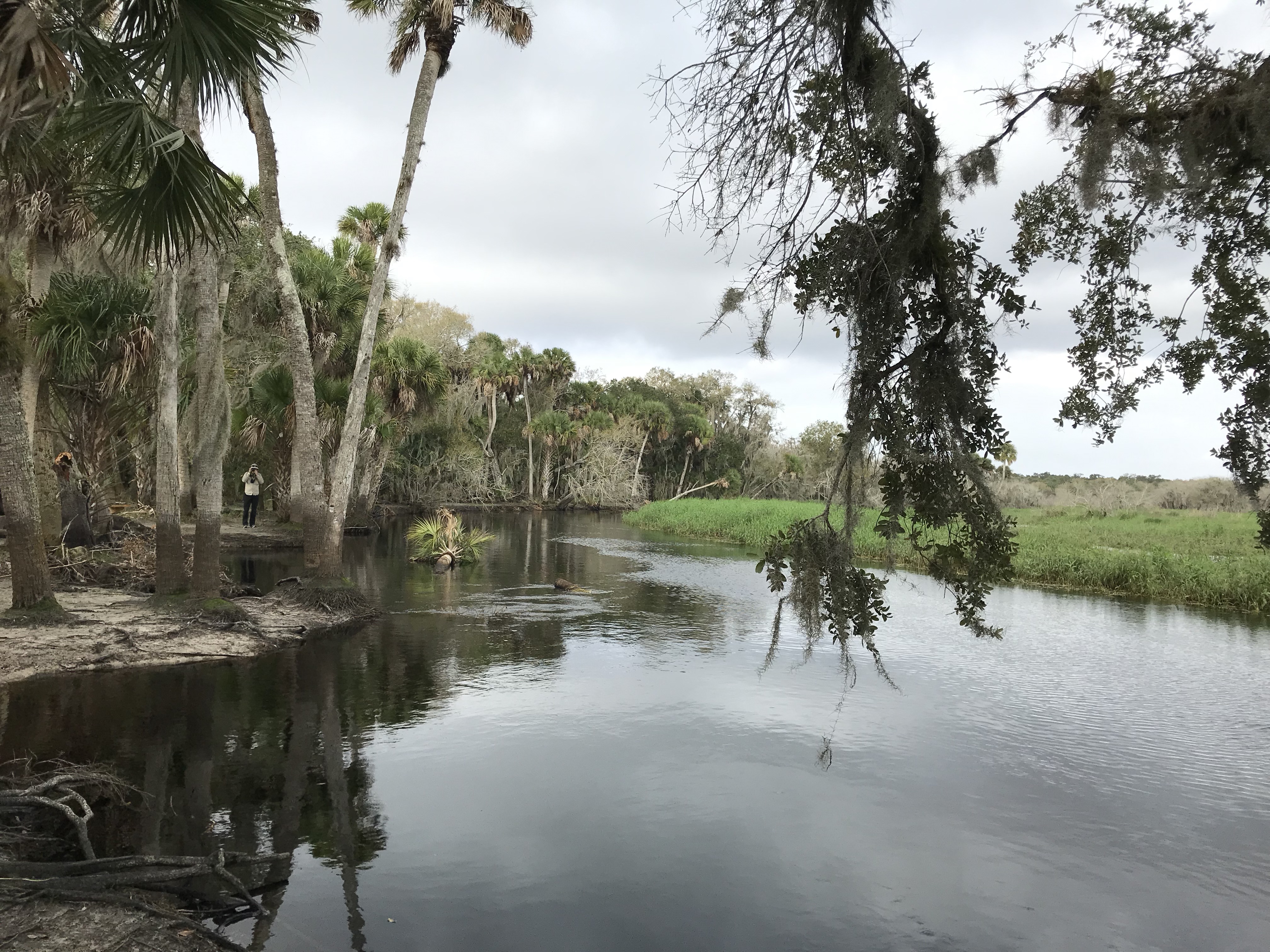
A view of the Myakka River at Fisherman’s Loop

One morning during our stay we attended the camper’s coffee. Since the event was located at an outdoor pavilion, I thought it would be fun to include Buddy. We were prepared to bring him back to the campsite in case dogs weren’t allowed. Buddy was not only welcomed, he became the center of attention. Upon our arrival, we were greeted by Leeann and Dan Brown, snowbirds temporarily volunteering this winter with the Friends of Myakka. They were excited to meet Buddy and wanted to know all about the red booties he wears on his back feet.

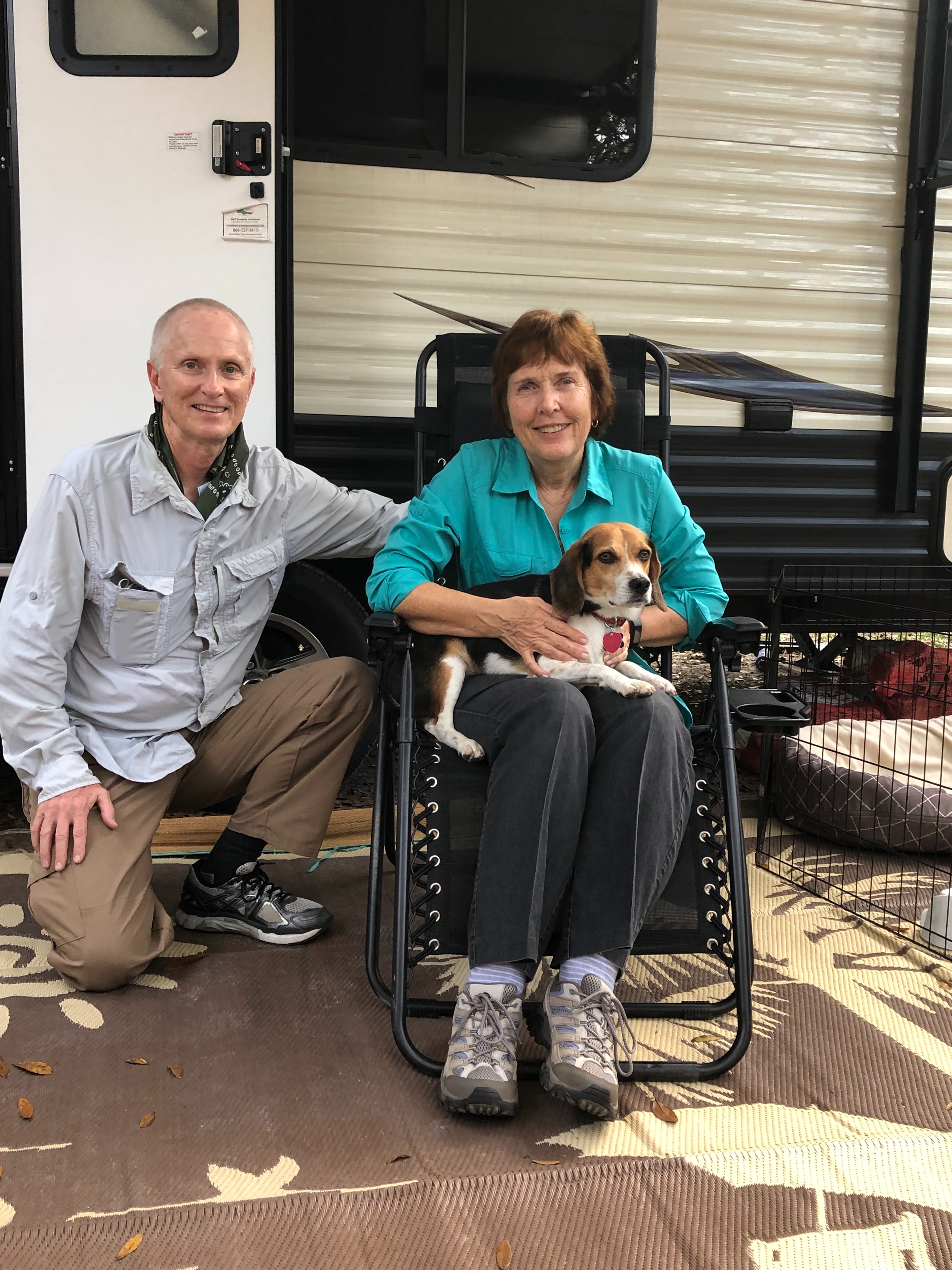
We were happy to share Buddy’s “back story”, and the upcoming release of Buddy the Beagle on Blueberry Street, my first children’s book. (Elk Lake Publishing) Later, Leeann and Dan visited us at our camper to chat and take photos of us with Buddy. They shared his story on their facebook page, RV Companions. All of a sudden I felt like I was on a book tour… after all, Buddy is the real star and Herb and I are only his managers.

Back to the Myakka campground. Our site was located in Old Prairie, which was one of three campgrounds located in the park. Almost everyone had a dog traveling with them, most had two. Of course when there are that many dogs in close proximity to one another, you have a fair amount of barking going on. I felt like a proud mama because Buddy seemed quiet and calmer than the rest. That was until we left him in the trailer for an hour while we visited the Canopy Walkway. Later, during a casual conversation, our neighbor informed us Buddy was not happy most of the time we were gone. His whining escalated to crying. Soon all the neighboring dogs started to bark. Note to self: administer the anti-anxiety medication at least two hours before leaving Buddy alone.

Even though Buddy woke up our neighbor at seven in the morning, he had an easy-going attitude and didn’t seem to mind. Maybe it was because he had four dogs of his own. He did suggest some of Buddy’s loneliness could be solved if we adopted a companion pet for Buddy. We were not interested. Living quarters are already tight inside our sixteen foot Viking. (We haven’t asked Buddy what he thinks about it.)

As night fell, peace also descended upon the busy campground. Some of the dogs were secure and quiet inside their RV’s. Others close to their owner’s feet, dozed by the campfire. The nightly soundtrack of waking insects began to play as the sun set. The smell of grilled burgers and hot dogs drifted through the air. Campers come and go, yet tonight there is a feeling of community among all of us who love nature, outdoor life, and dogs.

Thanks for reading my post. Don’t forget to sign up to follow me and please share my blog on your social media sites.

Dear Readers,

Greetings on this last day of 2018. How was your year? Did you have some memorable moments? First, I want to thank all of you who have faithfully followed my blog. Some of you have not left comments, but I check my stats, and I know you’re out there!

When I started my site in 2016, I wanted to encourage people to find fulfillment in pursuing their interests. For me, writing is the spice of life, and this blog has given me an opportunity to share my passions. I’ve crossed paths with those who love nature, history, poetry, books, family life, beagles, and all things Florida.

Today I want to step back and reflect upon my blogging year. Here are my most read posts of 2018. Click on the link to see what others have enjoyed reading:

Dover Shores: Thanks for the Memories

Sharing Books with Kindred Spirits

Redefining Age with Valerie Ramsey

buddy’s world

Poetry: A Message in a Bottle

I’ll admit my blog is kind of a mixed bag. But it’s a reflection of me, and I’m a person with many interests. Narrowing myself to one area of expertise seems kind of boring.

In closing, I hope you have time to pause and reflect upon your life this year. This morning I made a list of all of my blessings. When compared with my challenges, the blessings won! I love this quote from Melody Beattie.

“Gratitude makes sense of our past, brings peace for today, and creates vision for tomorrow.”

I invite you to continue to follow me in 2019 as I meander the road less followed. Best wishes for a joyful January as we walk into 2019.

Cooking, Then and Now

Do you like to cook? Whether you do or not, I’m sure you enjoyed someone else’s cooking during this holiday season. Food is a big deal for my family. As the chief cook, I’ve spent quite a bit of time of time in the kitchen during the last two weeks. In addition to the tried and true recipes my family members expect, I like to unveil at least one new dish.

This year my search for cookie recipes led me to an ancient resource. As I scanned the books on my shelf, I came across Betty Crocker’s Picture Cook Book, published in 1950 by General Mills. This family heirloom, handed down from my mom, describes American family life during that decade.

Betty Crocker dedicates her cookbook, “to homemakers everywhere who like to minister to their dear ones by serving them good food. Cooking for your family is the age-old way to express love and concern for their welfare.”

Most women of the 1950’s were not employed outside the home. Their days were spent cooking, cleaning, and caring for children. The book contains tips on how to keep your husband happy. For instance, “The clever wife has a simple appetizing cocktail (cold in summer, hot in winter) ready for her weary husband when he comes home from work.” By the way, all of the drinks listed are non-alcoholic. I never knew there were so many ways to jazz up tomato juice.

The book gives pointers on meal planning and purchasing quality food. The appearance of the meal when served is important. Cooks should add “finishing touches” in the form of garnishes. Dinner was an event, that demanded proper dress and manners. This was the same time period as the Leave it to Beaver TV show, when Ward, the dad, wore a suit around the house. June, the mom, always wore a dress, pearls, and high heels.

Quite a contrast to today’s culture where meals consist of pre-prepared foods hastily gobbled down in front of the TV. (Microwaves were not invented yet.) Does your family sit in the dining room for dinner? Recently I’ve noticed many people are no longer doing their own grocery shopping. They order food online and pay a professional shopper to gather it and have it ready for pick up.

My favorite part of the Betty Crocker Picture Cook Book are the snippets of food history included. At the time of publication, appetizers were new to American cuisine. According to Betty, the custom of appetizers began in ancient Rome. People munched on chicory, endive, or celery to excite hunger. Later the Europeans elaborated on the custom, by advancing to caviar and anti-pasta. By 1950, Americans were becoming more cosmopolitan and refined. The hostess who served appetizers was considered chic because the activity of moving around in the living room before a meal put guests at ease.

Although I didn’t actually prepare anything from my historic cookbook this holiday season, it was a great conversation piece. A lot has changed about American kitchens over the past seventy years but people are still eating and enjoying food!

Have your culinary methods of cooking and serving food changed over the years? Leave a comment and tell me about it. Bon Appetite!