
Living Slow in Djupivogur

Dear Readers,

I apologize for my long absence from my blog. Would you believe I was stuck in an elevator for three months? (No. I didn’t think you would accept that excuse.) Before 2025 slides into 2026 I’d like to share a travel experience with you. When I was young I made a list of places I wanted to see in my life and Iceland was at the top of my list. The land of fire and ice intrigued me, but my dream seemed out of reach.

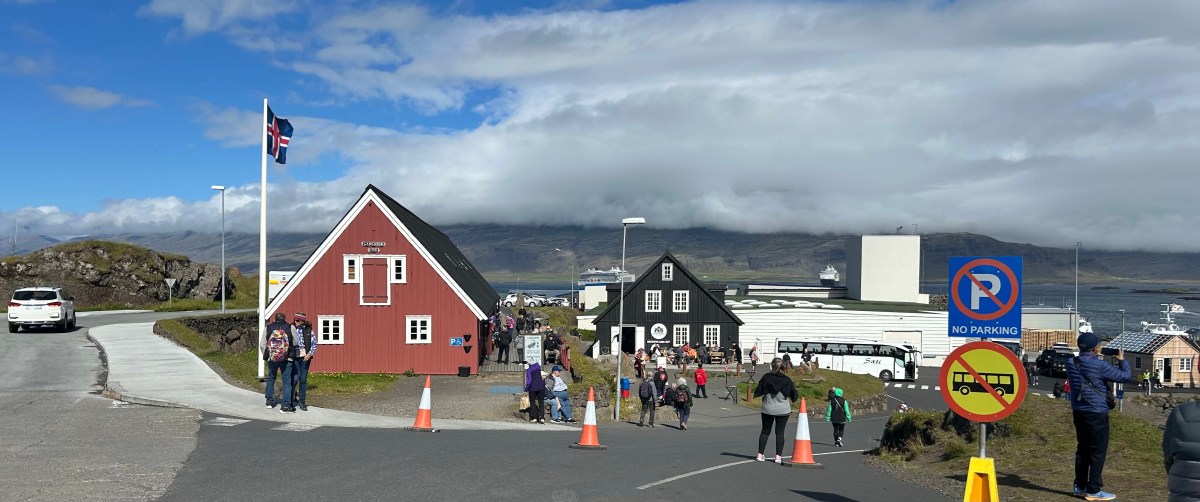
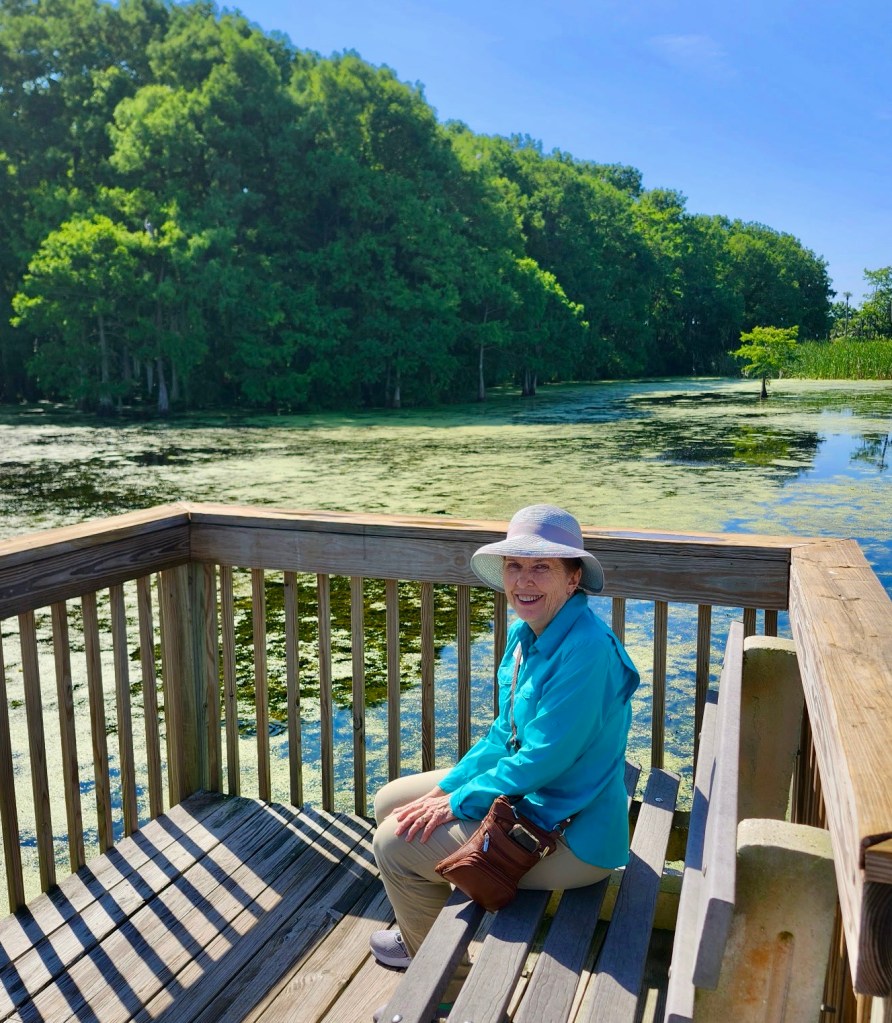
Finally in 2025 as senior citizens, my husband and I took the opportunity to book a Viking cruise which circled Iceland. We visited many towns I could write about, but Djupivogur is a port which stands out above the rest.

Djupivogur might be one of the world’s smallest towns, but it is grand with natural beauty. Located on a fjord in eastern Iceland, the surrounding landscape features snow-capped mountains, black sand beaches, and magma dykes formed by volcanic eruptions millions of years ago. In winter the Northern Lights dance across the sky.

A trading center since the 16th century, Djupivogur shipped salted meats, fish, and Icelandic wool to Europe throughout the 18th and 19th centuries. Fishing remains a significant part of the village’s economy, but in recent years the tourist industry has grown.

During the summer months the population swells, but the number of people who live in Djupivogur year round is only 450. Although the town welcomes outsiders, they are a tight-knit community. Due to their low numbers adults serve multiple roles. Our local guide worked in a fish oil processing plant, and served as an on-call plumber. He also belonged to the emergency search and rescue team. This is the kind of town where everyone knows one another. Folks are willing to drop whatever they are doing to help out when needed.

I was interested to learn that Djupivogur has adopted the cultural trend known as “Cittaslow” (slow city). This philosophy is dedicated to eco-friendly practices and the preservation of a town’s cultural heritage. The citizens do not want commercialization to take over. Which happens often in scenic areas that give way to the rise of fast food and gift shops selling products made elsewhere. Djupivogur is one of 260 small towns around the world committed to a less stressful and more community oriented way of life.

Like many of the Icelandic guides we met, our escort moved from Djupivogur to further his education in the “big city” of Reykjavik. Once he completed the requirements to become a licensed plumber, he returned because he found city life too stressful. As we walked the quiet streets he asked, “Do you wonder what we do for entertainment in a town of 450 people?” His question captured our interest as we climbed a small hill toward what appeared to be a rusty oil tank. Upon our arrival he announced we would be hearing a concert in Tankurinn, a fish oil tank which had been transformed into an exhibition space for music.

He opened the door and we took our seats in the “auditorium” of sorts. Plastic patio chairs were lined up across from burning candles on the floor. After the vocalist entered the tank, the door closed and she commenced to sing. I was amazed to hear sounds unlike any I’d ever heard before. The acoustics and reverberations made it seem as if many more singers were in the room.

Our visit to Djupivogur gave me new appreciation for small town life. I can understand why our guide decided there is no place else he would rather live. If you read this post and decide you want to move there, please don’t. Too many people would spoil everything.

The moral of my story is this: Never stop dreaming. What seems far away today may be closer than you think.

For those of you who are interested, I am creating an author newsletter to stay in contact with readers of my children’s books. “Time Together” will include ideas for fun activities parents and grandparents can do with their young children. If you want to subscribe to my newsletter click here and complete the information. Include “subscribe to newsletter” in the message box.

Do You Like Your Job?

Most people would agree there are things they like and dislike about their job. In my featured photo I’m shown working at my desk when I taught third grade. I look happy. Maybe this was taken on a Friday after school dismissed!

Now that I’m retired, I look back on my career with amazement. How did I do it? How does any teacher manage to fulfill all the expectations of the position? The only way I survived was by learning how to multi-task. Somehow teachers take attendance, listen to morning announcements, and keep an eye on the class all at the same time. Like a jack of all trades, a teacher fulfills many roles.

On Labor Day, we pay tribute to the contributions and achievements of American workers. For most workers our jobs are the most important thing in our lives.  After years of working at the same job, we begin to identify ourselves by our career. When introduced to someone, we ask, “What do you do for a living?” This pattern continues during retirement, “What did you retire from?”

It’s difficult for people to retire because it’s hard to imagine a life without work. Some feel like life will have no purpose or meaning. I’m often asked, “So what do you do all day?”

“I fill my days in much the same way I did during summer vacation. The big difference is I never reach a date on the calendar when I start to feel anxious about school starting again.”

We confuse the value of our work with the amount of money we receive for it. When I stayed at home to care for my preschool children, I received no income, but the experiences we shared were invaluable. Our “self-worth” should not be dependent on our level of income.

Do you feel undervalued at work? Comedian George Carlin said, “The caterpillar does all the work, but the butterfly gets all the publicity.”

Too bad Mr. Carlin seems to have forgotten, the butterfly once was the caterpillar. If I work at something with all my heart, I feel content knowing I’ve done my best, even if no one else seems to notice.

One of my favorite scriptures reads, “Whatever you do, work at it with all your heart, as working for the Lord, not for men, since you know that you will receive an inheritance from the Lord as a reward. It is the Lord Christ you are serving. Colossians 3:23,24 NIV

Engaging in our work changes us. Our “on the job experiences” teach us new skills. By trial and error we learn new ways of problem solving to accomplish our goals. Eventually we discover that like the monarch, we can fly!

Happy Labor Day!

If you’ve enjoyed my musings about work, please subscribe to be notified of future posts. Thanks!

Shedding Light on the Dog Days of Summer

Welcome to the “dog days” of summer, the time of year when heat and humidity force many of us indoors. As a Floridian, I think of this season as our winter. Some of us estivate in our air-conditioned homes and only come out to buy groceries or take the trash out. That is, unless we need to walk a dog.

Until recently I associated the phrase “dog days of summer” with the time of year when dogs pant more frequently and lie down more often. Dogs feel the heat just like their humans. But instead of sweating, our furry friends cool themselves by panting. When dogs inhale and exhale rapidly, the evaporation of water allows them to cool their body from the inside out. Dog owners know that they need to supply plenty of fresh water and shade to keep their pet from overheating.

Actually the phrase “dog days of summer” has nothing to do with the habits of dogs. According to the Old Farmer’s Almanac the “dog days” begin in the Northern Hemisphere on July 3, and last for forty days until August 11. (Unless you live in Florida, where the “dog days” seem to last until October.)

The phrase originated with the ancient Greeks, who discovered the rise of the Sirius star in the summer. The name Sirius stems from the Greek word “Seirious,” which means scorching or glowing. Sirius is part of the constellation Canis Majoris (the Greater Dog) and is the brightest star in the night sky. The Romans nicknamed Sirius the Dog Star, which led to referring to the hottest part of the summer as the “dog days”. The phrase stuck.

The ancient Greeks and Romans thought Sirius emitted heat and contributed to the rise in temperature during the summer. The Egyptians correlated the flooding of the Nile River with the “dog days.” Sirius became a “watchdog” for this weather event. No matter how you look at it, summer ushered in a time of extreme weather conditions. The Romans saw the rise of Sirius as a bad omen, responsible for drought, disease, discomfort, and insanity. They even went so far as to sacrifice dogs in hope of appeasing the Dog Star. Excuse my pun, but might that be a hot dog?

The ancients didn’t understand that the “dog days” are caused by earth’s orbit around the Sun. Remember our general science class where we learned that the northern hemisphere receives the most direct angle of sunlight in the summer? Soon after the June twentieth summer solstice, the North Pole is at its maximum tilt toward the Sun which makes our days longer and hotter. Sirius is hotter than the Sun, but it does not affect our weather because it’s further away—8.6 light years from Earth. 

Whew! I feel better knowing this uncomfortable season was not named after man’s best friend. Aren’t you thankful we live in the year 2025? During our “dog days” we can run to the comfort of air-conditioning and take Fido with us.  

Seeking A Life of Simplicity

What does it mean to simplify? Consuming natural foods? Downsizing your possessions? Saying no to those who make demands on your time? All of these actions can contribute to less stress, better health, and greater happiness.

Throughout history many writers and teachers have voiced the importance of living simply. The ancient Greek philosopher Democritus (460-370 B.C.) wrote “Let your occupations be few, if you would lead a tranquil life.” Jesus taught that we should trust God and not get caught up in the busyness of life. Thoreau believed spending time in nature is the key to a life with less anxiety. By listening to all of these different voices, we can conclude that living simply is the way to find peace, happiness, and a closer relationship with God.

I’m sure we can all remember simpler times in our lives. As children, we occupied ourselves with play and our worries were few. We relied upon our parents to meet most of our needs. Later life became more complicated when we joined the workforce in order to make a living. Even so, the technological advances of the past fifty years made our jobs easier, not more difficult.

Today’s modern conveniences make it possible to spend less time on household chores compared to our parents and grandparents. One would think we would be the most contented people who ever lived. Instead many of us feel frazzled and exhausted from trying to keep up with our busy calendar. Could it be that we have too many choices to make regarding how to spend our free time?

When I retired from teaching I felt unmoored. I needed to do something meaningful to fill my day. Once I expressed my feelings to a friend. He said, “There are many things you could do, but only pursue one thing.” At the time I’m not sure he was aware of the significance of his words. His suggestion opened my eyes to the truth about myself. I wanted to write, and I’ve been writing ever since. Hence, the founding of this blog in 2016.

Now I live in a retirement community and I am surprised at the schedule of activities which are offered. We have fitness classes, trips, chef’s demos, lectures, drop-in-bridge, ice cream socials, and shuffleboard! Yet, here I am— sitting at my laptop, banging on the keys.

But I am as happy as a clam because I’ve said yes to the “one thing.”

If you feel pulled in many directions and can’t seem to find a moment’s peace, stop and ask yourself, “How can I best spend my time in a way that brings purpose to my life and also encourages others?”

Then start doing it!

Going Batty in Baldwin Park

Floridians love the sunshine and the beach, but we all know there are trade-offs to living here. In the summer we not only endure humidity and storms—we also endure living with bats. As someone who has lived in the Orlando neighborhood of Baldwin Park, I have first hand knowledge of these flying furry animals.

Bats are drawn to the natural environment around Lake Baldwin. Animals migrate to find food, and bats take no exception. Summer temperatures in the mid-nineties and frequent rainstorms make Florida the perfect environment for mosquitos, and bats love to eat mosquitos. That’s a good thing right?

It’s good until bats take up residence in your house. The pitched roofs of many Baldwin Park homes invite bats to roost in the attic by squeezing through any opening they might find. Recently a Baldwin Park homeowner told me he heard a strange sound in his living room. The next morning he discovered a bat on the floor of the dining room. It was still alive, but could not raise itself to fly. Quick thinking, he captured the animal in a pool net and released it outside before any harm was done.

Later the homeowner contacted a “bat specialist” for advice, and set up an appointment for a home inspection. The specialist said it’s uncommon for a bat to enter the living area of a home, but it’s not impossible. The inspection revealed there was a colony of bats living in the attic. Since they are a protected species, it’s illegal to disturb their “roost” until August 15!

Attic Nurseries

Hearing about my neighbor’s experience prompted me to know more. My internet research informed me the Brazillian free-tailed bat is the main species found in Orlando. Their maternity season begins April 15 and ends August 15. The female bats gather in dark enclosed spaces (often in an attic) to give birth and nurse their babies. I was surprised to learn that bats are mammals. They even have a belly-button! The babies are very dependent upon their mothers until they are around eight weeks old. Then the juveniles start to find food for themselves.

August 15—Eviction Day

A few years ago bats roosted in our Baldwin Park townhome. Once I was walking our dog at sunrise, and I saw dozens of bats enter a tiny opening in the dormer above our front porch. Their guano (feces) made a nasty mess of our front steps. Throughout the month of July my husband cleaned the porch daily. On August 15, a professional installed a one-way door in the dormer, so the bats could fly out but not return. This is a humane way to eradicate bats from a building without harming them.

Are Bats Dangerous?

According to the U.S. Geological Survey, healthy bats avoid humans. Less than one percent of the bat population contracts rabies. Even so, bats should not be handled—especially those that are active during daylight hours. All bat bites should be washed immediately with soap and water and a physician should be consulted.

Bat guano is a serious health risk for homeowners. When guano exists in an attic or crawlspace, the microscopic spores can be inhaled by humans and cause a serious respiratory infection called histoplasmosis. If they eat the guano, Pets can also become infected.

Why are Bats Protected?

Over half of bat species are in serious decline due to habitat loss, climate change, and a fungal infection called white-nose syndrome. Even though bats cause problems for homeowners, we need them. They pollinate plants and devour their body weight in insects every night. Without bats we wouldn’t have bananas, avocados, and mangos. These heroes of the night are more helpful than harmful.

A Common-Sense Solution

If homeowners want to evict bats from their attics, but not leave them homeless, a bat house might work. Homeowners need to contact their HOA to learn the regulations for their neighborhood.

August 15 is almost two months from now. Until then, my neighbor will need to keep his pool net handy!

If You Build It—They Will Come.

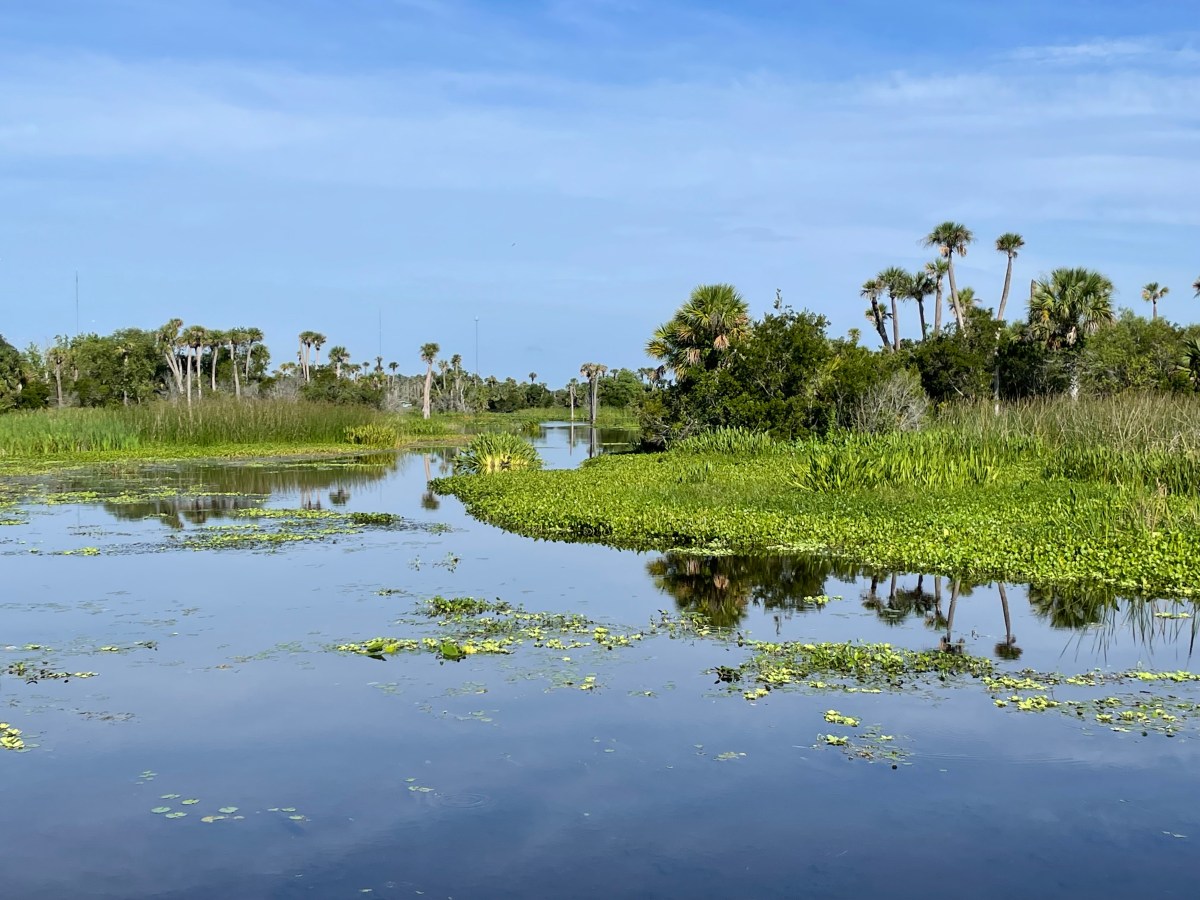
Orlando Wetlands Park provides a habitat for 220 species of birds.

Remember the 1989 movie Field of Dreams? An Iowa farmer named Ray Kinsella walks through his cornfield and hears a “voice” which says, “If you build it— he will come.” Ray responds by turning his cornfield into a baseball diamond, and creates a place for deceased players to redeem their lost opportunities to play baseball. By doing so, Kinsella sacrifices a profit from the sale of corn in order to fulfill a higher calling.

Connections can be made between this movie and other situations. The growth and development of central Florida is one example. After the Civil War, the early settlers drained the wet prairie for agricultural purposes and cattle grazing. During the 1900s the population of Orlando continued to grow, and the construction of more housing developments meant that more wetlands were drained.

The loss of Florida wetlands has had a major effect on water quality, flood control, and wildlife habitats. Wetlands filter pollutants, and play a crucial role in recharging the aquifer, a vital source of drinking water.

In 1986 city of Orlando officials heard the “voice” of the environment when they came up with an innovative solution for the disposal of reclaimed sewer water. The city purchased 1,650 acres of former pasture land and converted it to a man-made wetland near Fort Christmas. Orlando Wetlands was designed to further purify treated sewage water discharged from the Iron Bridge Water Reclamation Facility. The reclaimed water enters the southwestern edge of the property, and over a period of forty days meanders through various marshes, swamps, and Lake Searcy, before flowing into the St. Johns River.

So what does all this have to do with the Field of Dreams? Instead of attracting the ghosts of former baseball players, Orlando Wetlands attracts an abundance of living creatures. The wetlands provide a habitat for numerous animal species including otter, bobcat, deer, turtles, snakes, alligators, and over 220 species of birds. Eighteen of these species are listed as threatened, endangered, or protected. I like to think of it as an opportunity for animals to live in a place they had once been evicted from.

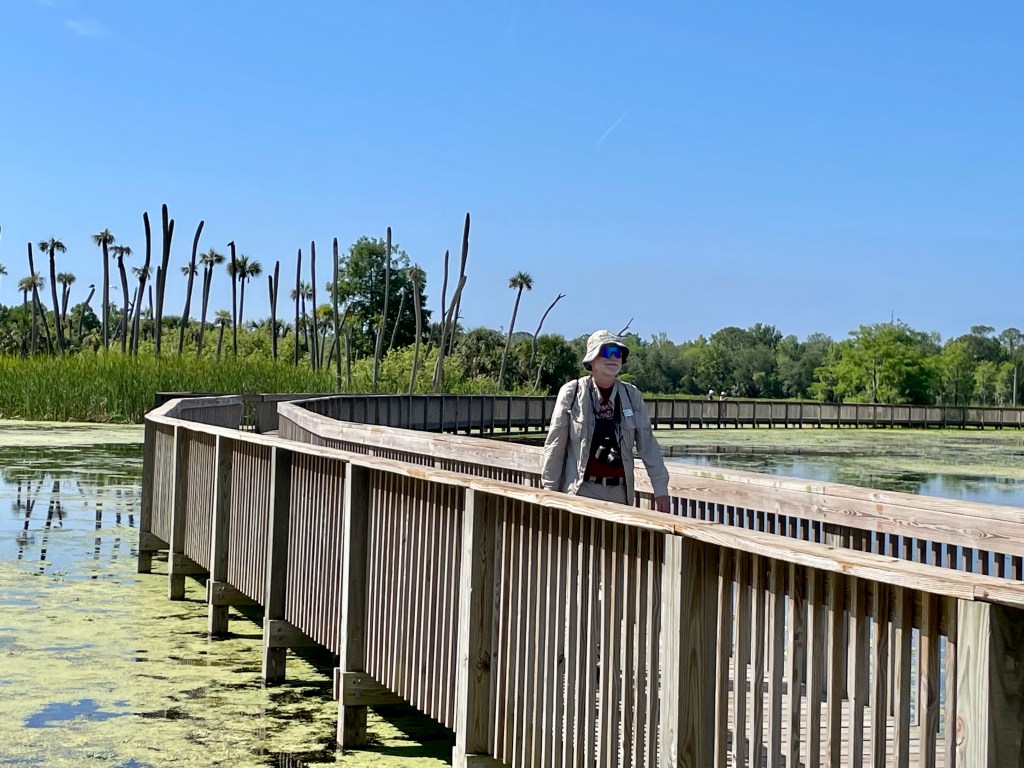
Orlando Wetlands is open to the public and admission is free. My husband, Herb, and I visited the park and walked the half-mile Cypress Boardwalk which affords close-up views of aquatic wildlife.

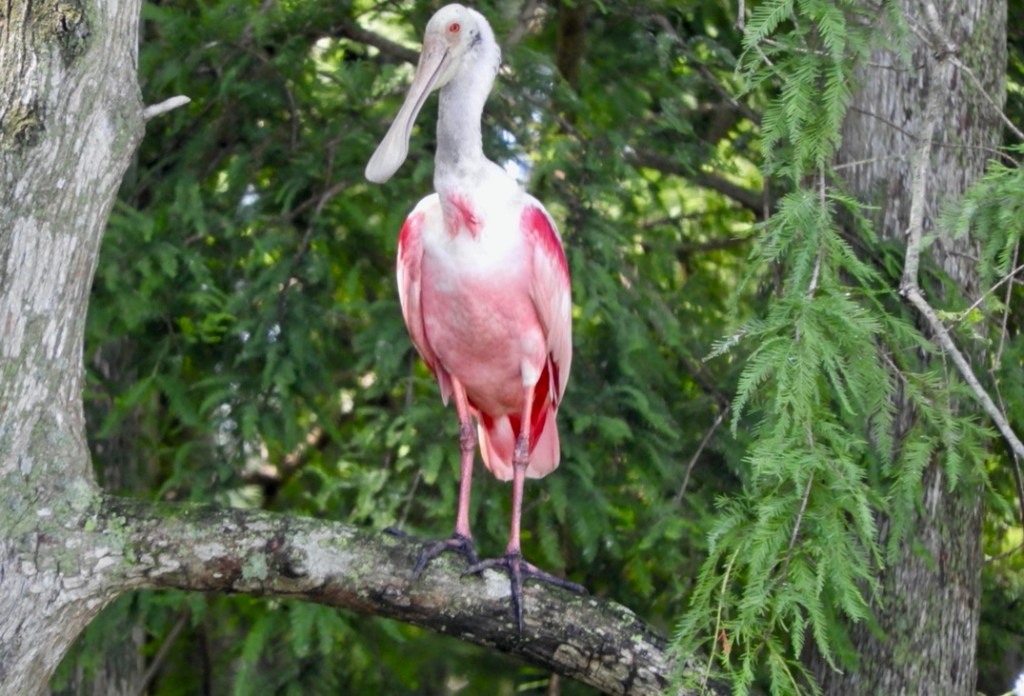
Beautiful Roseate Spoonbills roost in a grove of bald cypress trees near the boardwalk. Herb snapped this photo with his zoom lens. Did you know a baby spoonbill is called a teaspoon?

I can’t say this species is endangered. The Florida Fish and Wildlife Commission estimates there are over 1.3 million alligators in Florida.

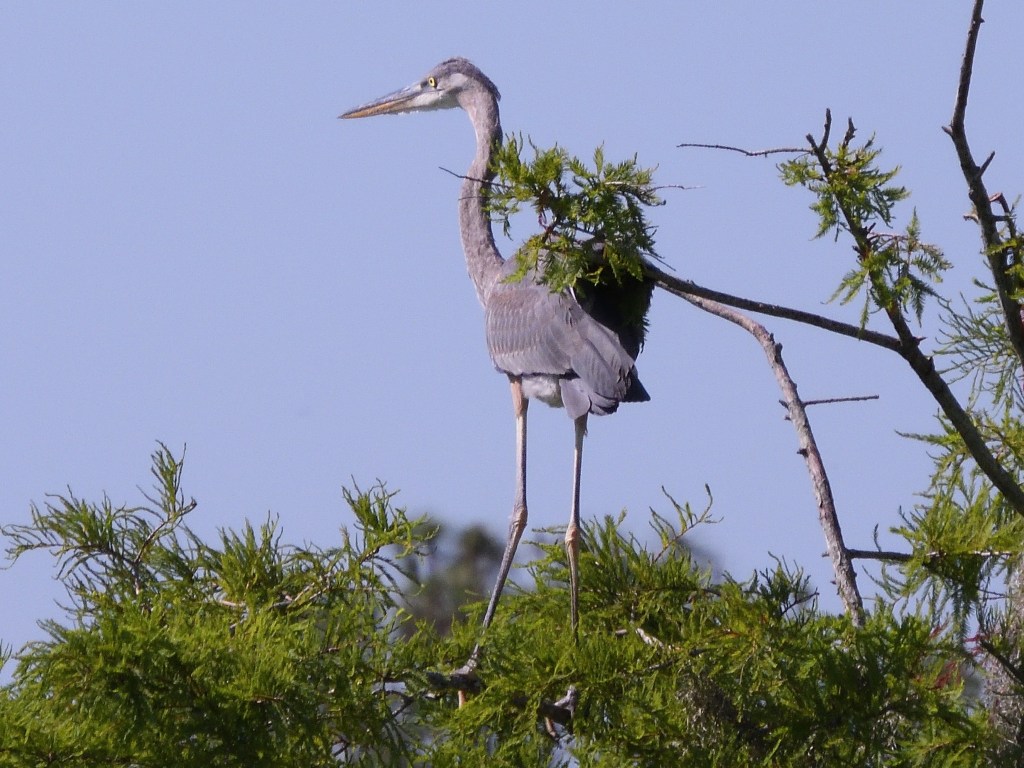
This tree top provides a place to rest for the Great Blue Heron, while allowing the bird to focus on what’s happening in the marsh below.

I’m not sure what kind of bird this is. If you can identify it, leave a comment. It makes a lot noise!

Summer is a challenging time to explore the outdoors in Florida. Wear a hat, carry water, and take breaks often. Follow the link for more information about visiting Orlando Wetlands.

Holy Fire

Seeking respite from the world  

I pause to still my soul.

The spirit cannot listen

When flesh is in control.

In prayer, I see a vision

Red embers burning low.

Praise lifts up an offering

Adds fuel for love to grow.

Open space for heaven’s breath

The sparks burst into flame.

Joy renewed by faith in Christ 

And I am not the same.

Be An Overcomer

Don’t allow your obstacles to loom larger than your goals.

Like many writers, my motivation ebbs and flows according to my mood. When I feel a lack of drive to persevere in my craft, I like to read historical fiction novels which include characters who overcame challenges.

I am on my third reading of A Land Remembered by Patrick D. Smith. The main character, Tobias MacIvey, is a failed Georgia sharecropper who moved to the Florida scrub with his wife Emma and their young son Zech in 1858. The family lived in a lean-to made of pine limbs and palmetto thatch for a year until Tobias finished building their cabin.

Since wild animals were plentiful, Tobias managed to feed his family by hunting. When shotgun shells became scarce due to the Civil War, the MacIvey’s were desperate for food and money. Wild cattle freely roamed the state ever since the Spanish brought them to Florida. When Tobias learned of the demand for cattle in Cuba, he became a Florida cowboy, a.k.a. “cracker.” He rode a horse and cracked a whip to direct the cattle into a corral where he branded them. After branding hundreds of cattle, he hired a couple of men to help him drive the herd to Punta Rassa where the animals could be sold and shipped to Cuba.

Tobias lived in the Kissimmee area and didn’t really know how to reach Punta Rassa. Imagine no roads, no maps and no GPS! The location of the sun, rivers, and lakes provided signs of direction. Once he had to backtrack around a swamp filled with hungry alligators. The trip was full of dangers including violent storms and fierce wolves.

My favorite part of the story is the night before Tobias delivers the cattle to be sold. He felt as if all the work he had done was hanging by a thread and suspended in time. He stayed up all night wondering if he would find a buyer. What would happen if he didn’t?

Reading about Tobias reminds me of my own experience trying to overcome the challenges associated with writing and publishing.  Like most writers, my initial experiences with the world of publishing were difficult. My first book, Buddy the Beagle on Blueberry Street, was initially written as a rhyming picture book. The manuscript was rejected because the editors I talked with were looking for children’s chapter books instead. So I wrote a manuscript for a children’s chapter book. When I pitched the chapter book to an agent, I was turned down by someone who said, “Clearly you know how to write, but nobody wants to read about dogs.”

I put the book aside for a year until the next Florida Christian Writer’s Conference came around. This time I had an appointment with Deb Haggerty of Elk Lake Publishing. The morning of the appointment I paced my hotel room dreading the meeting. I honestly couldn’t take one more rejection. Like Tobias I felt suspended in time. I wondered if I could land a contract. What would happen if I didn’t? Should I quit writing?

God met me that morning. The Holy Spirit entered my thoughts with his still small voice. This time he said, “Do you trust me?”

“Yes, Lord. I trust you.”

That blessing was all I needed to give me the courage to meet with Deb. I think you already know the outcome of that meeting. Buddy the Beagle on Blueberry Street came under contract with Elk Lake and I became an author.

Henry Ford once said, “Obstacles are those frightful things you see when you take your eyes off your goal.”  As writers, the obstacles standing before us are not life-threatening. But the motivation to continue to work can disappear if we allow our obstacles to loom larger than our goals. The worst thing a writer can ever do is to stop trying. Your break-through might be just around the corner. Remember God’s timing is never too late.

An Uninvited Specimen

Poetry inspired by a visit to Zoo Miami.

I am a green iguana

Roaming at the zoo

Unattended feeding troughs

Are my dream come true.

When elephants are busy

I climb up a tree

Drop into their habitat

To munch on all I see.

I watch where I am going

Quick to get-a-way

When keepers try to catch me

I live another day.

If temperatures are chilly

Cover up your head

Watch out for falling reptiles

That look like they are dead.

I traveled here from Cuba

Onboard a cargo ship

I’ve found food and freedom

Miami’s really hip!

Tourists stare at animals

Confined within a space

But they look twice when they see me

Marching place to place.

Are You Viewing the Canyon From the Rim?

Several years ago my husband asked me to join him for a two-day guided mule ride to the bottom of the Grand Canyon. At first, I hesitated to give him an answer. I have no riding skills and I’m fearful of heights.

Even so, I began to entertain his suggestion. I’ve always wanted the experience of of being inside the canyon, instead of standing at the rim, so I agreed to go. Once he made our flight arrangements, there was no turning back. In the meantime, I focused on trying to think positive thoughts about what might await us.

Have you ever allowed fear to stop you from experiencing more in life? A few weeks ago one of my friends commented she wants to write more, but is fearful her work will be rejected by others. She avoids writing by busying herself with other activities until she no longer has time available. Her fear has become a source of self-protection. I appreciate her honesty. The first step to overcoming fear is acknowledging it.

I will never forget something I heard author Tosca Lee say at a conference. “Write like no one will see this.” Her advice helped me chase away fear and give myself permission to create. I believe we need to banish the self-critic in order to let our thoughts flow onto paper. Until we engage in our art, we will not move forward.

Maybe what you write will only be read by you. Perhaps it will be shared with close friends or family. Not all of our creative works are worthy of publication. Rejection goes with the territory, whether it be from an editor, a friend, or a spouse. Sometimes my husband proofs my work and says, “I’m not getting this.” Then I know I haven’t made myself clear. Time for another revision. Rejection can make us better writers.

Accept the reality that there are people who can write better than you. Comparing ourselves to others chokes our creativity. Our culture demands instant success. But how do people achieve success? First they decide to start. Then they decide to continue. Most marathon runners begin by competing in a 5K. Slowly, they continue to build their stamina by participating in longer races.

We can receive encouragement from Scripture when facing fearful situations. One of my “go to” verses is Proverbs 29:25. “Fear of man will prove to be a snare, but whoever trusts in the Lord is kept safe.”

Just like a snare traps a small animal, fear traps us from pursuing our dreams. Pray for courage to throw off fear and trust God to take you where He wants you to go.

When I first descended into the Grand Canyon, I was afraid to look to the right or left of the trail. I kept my focus straight ahead on Olga, my mule. I realized she had traveled the path many times before. As Olga continued to steadily plod along, I began to relax and enjoy the beautiful landscape around me.

Ask yourself what really matters in life. Are you content to stay in your comfort zone, or is it time to stop viewing the canyon from the rim?