Living Slow in Djupivogur

Dear Readers,

I apologize for my long absence from my blog. Would you believe I was stuck in an elevator for three months? (No. I didn’t think you would accept that excuse.) Before 2025 slides into 2026 I’d like to share a travel experience with you. When I was young I made a list of places I wanted to see in my life and Iceland was at the top of my list. The land of fire and ice intrigued me, but my dream seemed out of reach.

Finally in 2025 as senior citizens, my husband and I took the opportunity to book a Viking cruise which circled Iceland. We visited many towns I could write about, but Djupivogur is a port which stands out above the rest.

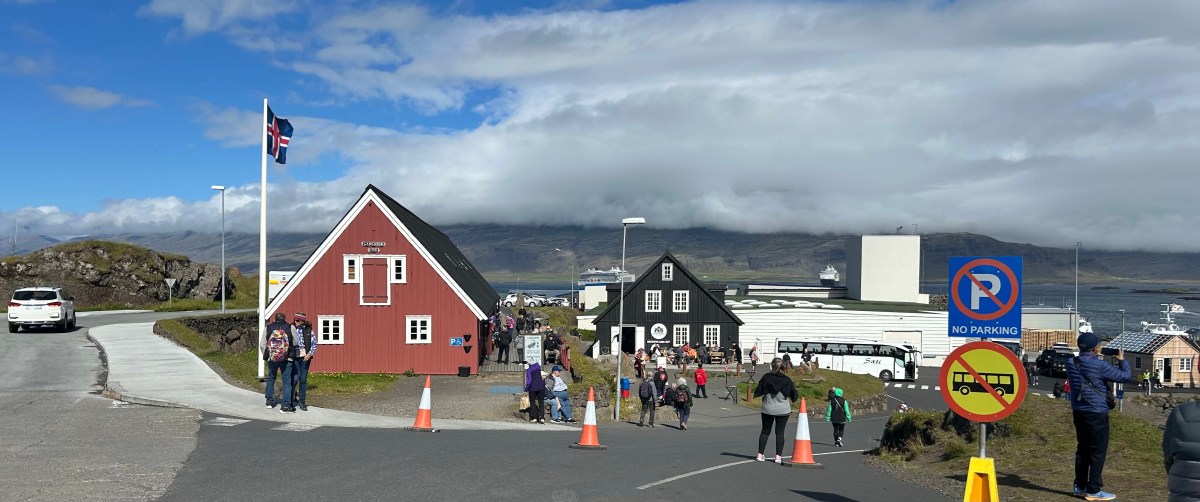
Djupivogur might be one of the world’s smallest towns, but it is grand with natural beauty. Located on a fjord in eastern Iceland, the surrounding landscape features snow-capped mountains, black sand beaches, and magma dykes formed by volcanic eruptions millions of years ago. In winter the Northern Lights dance across the sky.

A trading center since the 16th century, Djupivogur shipped salted meats, fish, and Icelandic wool to Europe throughout the 18th and 19th centuries. Fishing remains a significant part of the village’s economy, but in recent years the tourist industry has grown.

During the summer months the population swells, but the number of people who live in Djupivogur year round is only 450. Although the town welcomes outsiders, they are a tight-knit community. Due to their low numbers adults serve multiple roles. Our local guide worked in a fish oil processing plant, and served as an on-call plumber. He also belonged to the emergency search and rescue team. This is the kind of town where everyone knows one another. Folks are willing to drop whatever they are doing to help out when needed.

I was interested to learn that Djupivogur has adopted the cultural trend known as “Cittaslow” (slow city). This philosophy is dedicated to eco-friendly practices and the preservation of a town’s cultural heritage. The citizens do not want commercialization to take over. Which happens often in scenic areas that give way to the rise of fast food and gift shops selling products made elsewhere. Djupivogur is one of 260 small towns around the world committed to a less stressful and more community oriented way of life.

Like many of the Icelandic guides we met, our escort moved from Djupivogur to further his education in the “big city” of Reykjavik. Once he completed the requirements to become a licensed plumber, he returned because he found city life too stressful. As we walked the quiet streets he asked, “Do you wonder what we do for entertainment in a town of 450 people?” His question captured our interest as we climbed a small hill toward what appeared to be a rusty oil tank. Upon our arrival he announced we would be hearing a concert in Tankurinn, a fish oil tank which had been transformed into an exhibition space for music.

He opened the door and we took our seats in the “auditorium” of sorts. Plastic patio chairs were lined up across from burning candles on the floor. After the vocalist entered the tank, the door closed and she commenced to sing. I was amazed to hear sounds unlike any I’d ever heard before. The acoustics and reverberations made it seem as if many more singers were in the room.

Our visit to Djupivogur gave me new appreciation for small town life. I can understand why our guide decided there is no place else he would rather live. If you read this post and decide you want to move there, please don’t. Too many people would spoil everything.

The moral of my story is this: Never stop dreaming. What seems far away today may be closer than you think.

For those of you who are interested, I am creating an author newsletter to stay in contact with readers of my children’s books. “Time Together” will include ideas for fun activities parents and grandparents can do with their young children. If you want to subscribe to my newsletter click here and complete the information. Include “subscribe to newsletter” in the message box.

If You Build It—They Will Come.

Orlando Wetlands Park provides a habitat for 220 species of birds.

Remember the 1989 movie Field of Dreams? An Iowa farmer named Ray Kinsella walks through his cornfield and hears a “voice” which says, “If you build it— he will come.” Ray responds by turning his cornfield into a baseball diamond, and creates a place for deceased players to redeem their lost opportunities to play baseball. By doing so, Kinsella sacrifices a profit from the sale of corn in order to fulfill a higher calling.

Connections can be made between this movie and other situations. The growth and development of central Florida is one example. After the Civil War, the early settlers drained the wet prairie for agricultural purposes and cattle grazing. During the 1900s the population of Orlando continued to grow, and the construction of more housing developments meant that more wetlands were drained.

The loss of Florida wetlands has had a major effect on water quality, flood control, and wildlife habitats. Wetlands filter pollutants, and play a crucial role in recharging the aquifer, a vital source of drinking water.

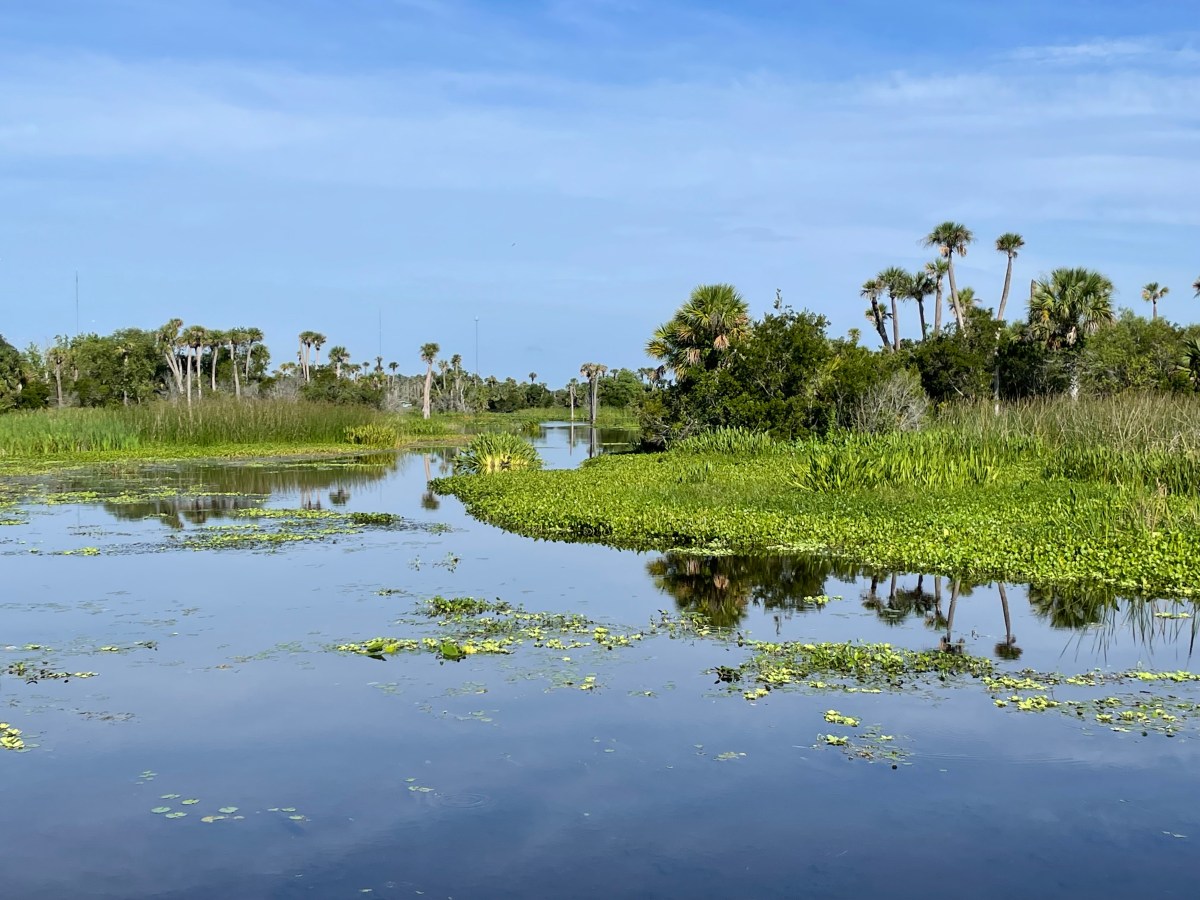
In 1986 city of Orlando officials heard the “voice” of the environment when they came up with an innovative solution for the disposal of reclaimed sewer water. The city purchased 1,650 acres of former pasture land and converted it to a man-made wetland near Fort Christmas. Orlando Wetlands was designed to further purify treated sewage water discharged from the Iron Bridge Water Reclamation Facility. The reclaimed water enters the southwestern edge of the property, and over a period of forty days meanders through various marshes, swamps, and Lake Searcy, before flowing into the St. Johns River.

So what does all this have to do with the Field of Dreams? Instead of attracting the ghosts of former baseball players, Orlando Wetlands attracts an abundance of living creatures. The wetlands provide a habitat for numerous animal species including otter, bobcat, deer, turtles, snakes, alligators, and over 220 species of birds. Eighteen of these species are listed as threatened, endangered, or protected. I like to think of it as an opportunity for animals to live in a place they had once been evicted from.

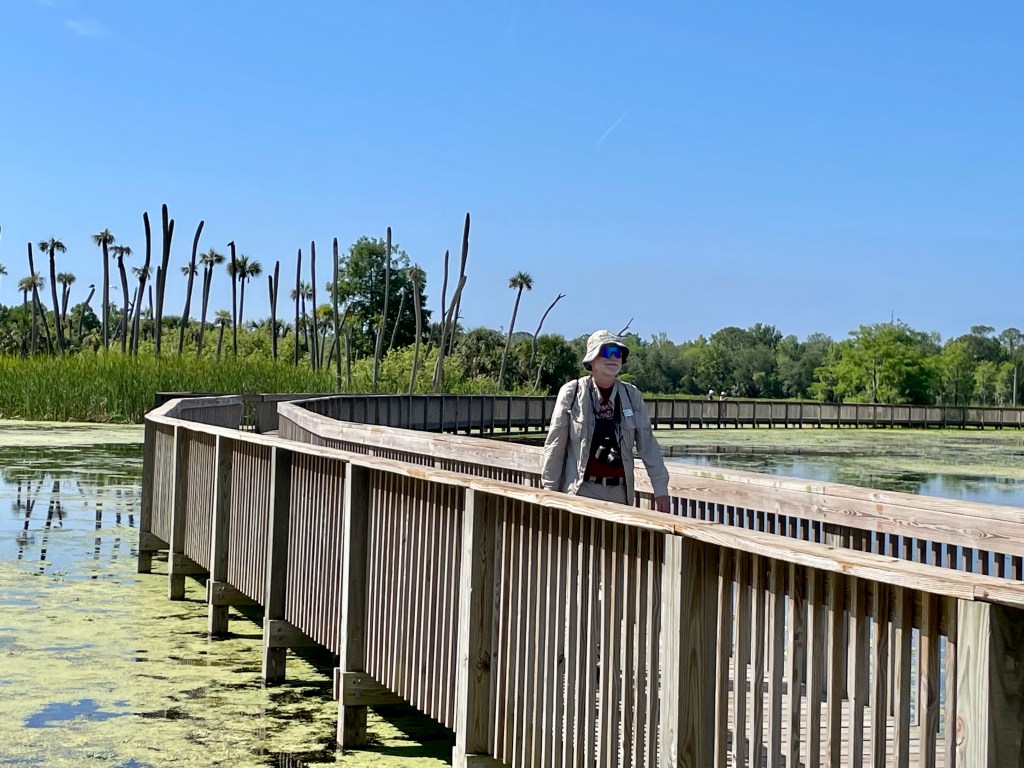
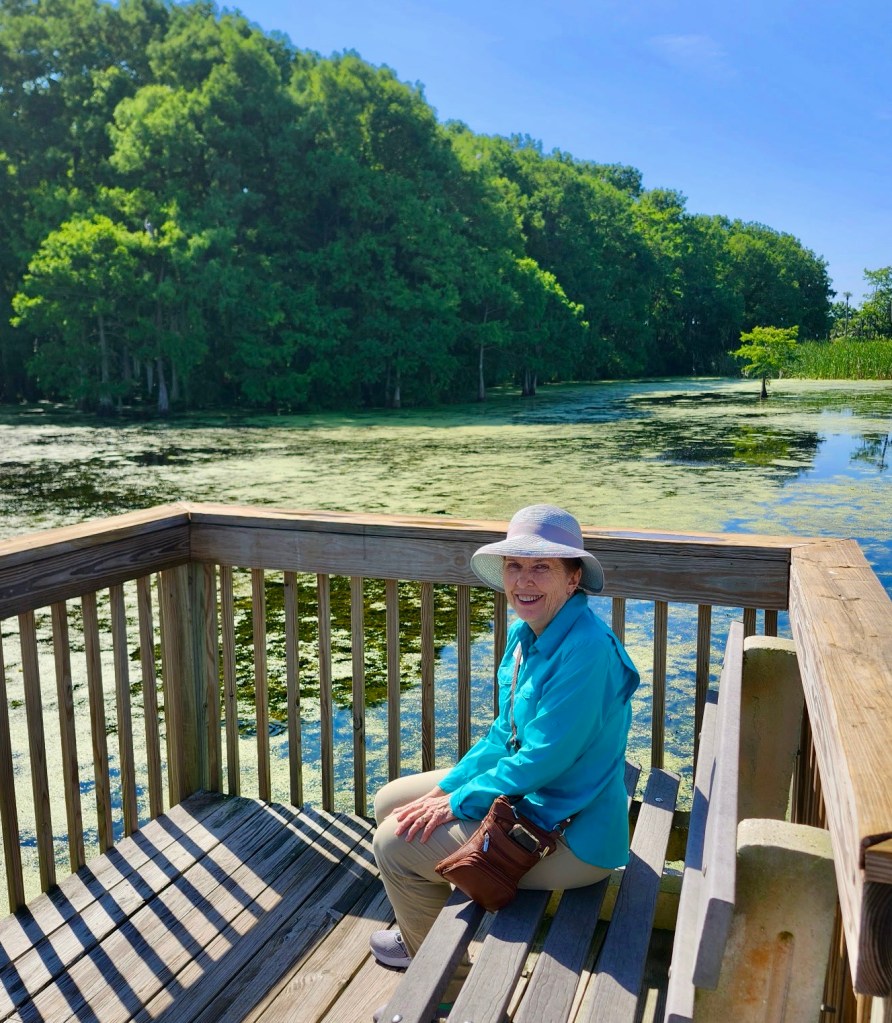
Orlando Wetlands is open to the public and admission is free. My husband, Herb, and I visited the park and walked the half-mile Cypress Boardwalk which affords close-up views of aquatic wildlife.

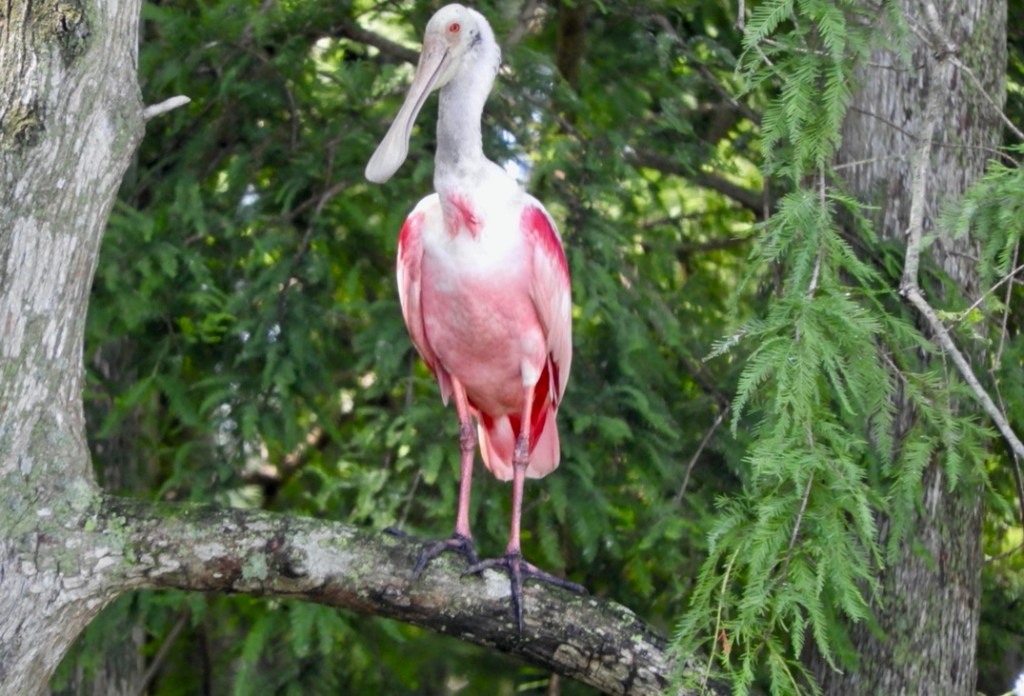
Beautiful Roseate Spoonbills roost in a grove of bald cypress trees near the boardwalk. Herb snapped this photo with his zoom lens. Did you know a baby spoonbill is called a teaspoon?

I can’t say this species is endangered. The Florida Fish and Wildlife Commission estimates there are over 1.3 million alligators in Florida.

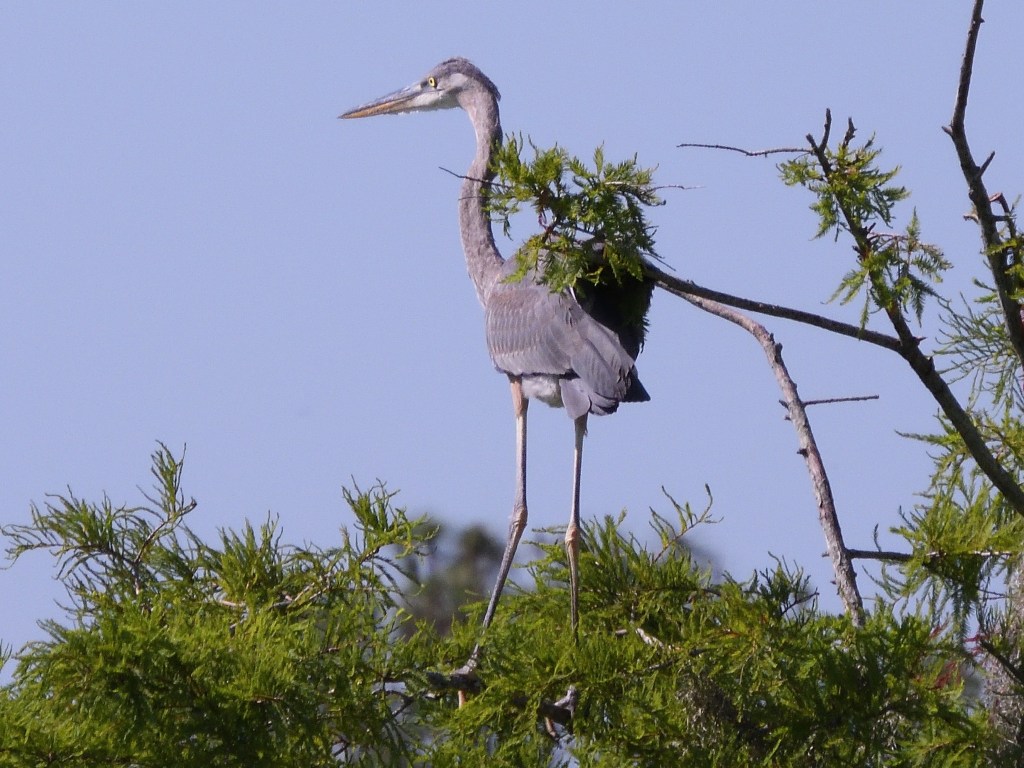
This tree top provides a place to rest for the Great Blue Heron, while allowing the bird to focus on what’s happening in the marsh below.

I’m not sure what kind of bird this is. If you can identify it, leave a comment. It makes a lot noise!

Summer is a challenging time to explore the outdoors in Florida. Wear a hat, carry water, and take breaks often. Follow the link for more information about visiting Orlando Wetlands.

Are You Viewing the Canyon From the Rim?

Several years ago my husband asked me to join him for a two-day guided mule ride to the bottom of the Grand Canyon. At first, I hesitated to give him an answer. I have no riding skills and I’m fearful of heights.

Even so, I began to entertain his suggestion. I’ve always wanted the experience of of being inside the canyon, instead of standing at the rim, so I agreed to go. Once he made our flight arrangements, there was no turning back. In the meantime, I focused on trying to think positive thoughts about what might await us.

Have you ever allowed fear to stop you from experiencing more in life? A few weeks ago one of my friends commented she wants to write more, but is fearful her work will be rejected by others. She avoids writing by busying herself with other activities until she no longer has time available. Her fear has become a source of self-protection. I appreciate her honesty. The first step to overcoming fear is acknowledging it.

I will never forget something I heard author Tosca Lee say at a conference. “Write like no one will see this.” Her advice helped me chase away fear and give myself permission to create. I believe we need to banish the self-critic in order to let our thoughts flow onto paper. Until we engage in our art, we will not move forward.

Maybe what you write will only be read by you. Perhaps it will be shared with close friends or family. Not all of our creative works are worthy of publication. Rejection goes with the territory, whether it be from an editor, a friend, or a spouse. Sometimes my husband proofs my work and says, “I’m not getting this.” Then I know I haven’t made myself clear. Time for another revision. Rejection can make us better writers.

Accept the reality that there are people who can write better than you. Comparing ourselves to others chokes our creativity. Our culture demands instant success. But how do people achieve success? First they decide to start. Then they decide to continue. Most marathon runners begin by competing in a 5K. Slowly, they continue to build their stamina by participating in longer races.

We can receive encouragement from Scripture when facing fearful situations. One of my “go to” verses is Proverbs 29:25. “Fear of man will prove to be a snare, but whoever trusts in the Lord is kept safe.”

Just like a snare traps a small animal, fear traps us from pursuing our dreams. Pray for courage to throw off fear and trust God to take you where He wants you to go.

When I first descended into the Grand Canyon, I was afraid to look to the right or left of the trail. I kept my focus straight ahead on Olga, my mule. I realized she had traveled the path many times before. As Olga continued to steadily plod along, I began to relax and enjoy the beautiful landscape around me.

Ask yourself what really matters in life. Are you content to stay in your comfort zone, or is it time to stop viewing the canyon from the rim?

The Power of Lists

Have you ever stopped to think about how many lists there are in the world? I’ll begin by listing a few of them.

  • to-do-list
  • reading list
  • guest list
  • wait list
  • class list
  • wish list
  • bucket list
  • grocery list
  • packing list
  • FBI most wanted list….

This week I’m packing for a trip, so I made a list of everything I want to take with me. This method is not entirely fool-proof, but it helps. I wonder about people who literally, “fly by the seat of their pants,” and wait until the last minute to pack. Making a list is not for them. I’ve had experiences with family members who don’t pack enough clothes, and are forced to visit gift stores when they need a clean shirt.

A list helps me remember things. As I age, writing things down gives me a sense of security and organization. Yes, I’m one of those people who makes a weekly menu and writes down all of the items I need from the grocery. One time I lost my grocery list at the store. A feeling of panic flooded my mind and I wondered how I could function. After taking a deep breath, I realized I usually need the same staples every time I shop. Strolling through each aisle stimulated my memory. “Ok… cereal, fruit, milk, bread, turkey… (I think we’ll survive.)”

What about to-do-lists? Do you enjoy a sense of accomplishment as you complete each task and check it off the list? Too often I write too many tasks and need to carry them over to the next day, or maybe even the next week. Making and keeping lists can be time consuming and leave you depressed if you don’t accomplish what you set out to do.

What’s the point of having your whole day crossed out before you go to bed? Extend that to crossing out weeks, months, years, and even your whole life. To-do-lists are mostly for boring, unpleasant tasks that no one really wants to do. Some of the most memorable moments of our lives happen in between the entries on our list. Who writes down, “eat ice cream today,” or “sit on the front porch and enjoy the sunset?”

Speaking of enjoying life, many people write bucket lists which include exotic places to visit and adventurous activities. I’m curious, do most people write their bucket list in one sitting, or do they continually add to it? For the unimaginative, see the 55 Best Bucket List Ideas to Help you Live your Life to the Fullest.  

According to psychotherapist Karen Balumba-Bennett, people who are intentional about writing down their goals are more likely to reach them. Some bucket list ideas require time, money, and travel but there are plenty of simple things you can accomplish at home. By the way, I noticed one idea on the list is “watch the sunrise.”

Bucket lists should facilitate getting more out of life and not fulfilling duties. Balumba-Bennett believes in allowing yourself the flexibility to alter your list from year to year if your goals change. A bucket list is a way to reward yourself by doing what you really want to do.

My suitcase is packed, and I’m ready to check off another bucket list item. Vacation is calling…

New Year, Same Me

The countdown to 2024 has begun! What are you thinking about this week? Yesterday I received a text from a local gym encouraging to me to buy a membership for 2024. After all, a new year means a new me. The text made me step on the scales and scratch my head wondering, just how did I manage to gain those extra pounds in December?

This time of year we open our closets and cupboards to see they are just as stuffed as we are. The new year brings an urgency to downsize, organize, and exercise our way into a new reality.

Let’s be honest. The resolutions you make will probably be the resolutions you break. Do you even remember the goals you set for 2023? By April, the change you desired evaporated with the winter snow.

Something within our human nature makes us desire a “better” future. All of a sudden whatever happened this year isn’t good enough. We hope 2024 will be better. We think changing our appearance, buying a new car, or taking a vacation can fulfill us. Our focus remains on ourself and what we can do to make us happy. But is that how real happiness is found?

When we seek tangible things in order to be happy we can be let down if it doesn’t happen. And if we somehow achieve our goal, our happiness is short-lived. We find ourselves striving for the next achievement, no longer content with where we are today.

What do you want to take with you from 2023? Think about the wisdom you gained instead of the pounds.

I want to live the life I have instead of longing for the life I might have in the future. After all, how much of life is under my control? I can live my best life now. I want to look around and thank God for time spent with friends and family. I want personal advancement to take a back seat to my relationships with others.

Each day is an opportunity for something amazing to happen. I want to get up in the morning and wonder… “What does God have for me today?”

Keep your eyes and heart open to whatever God has for you. It might be something you never resolved to obtain. And that my friends, is the beauty of life!

Teton Magic—First you see them, then you don’t.

“Sometimes all the planning in the world doesn’t mean your day or week will turn out the way you expected.”

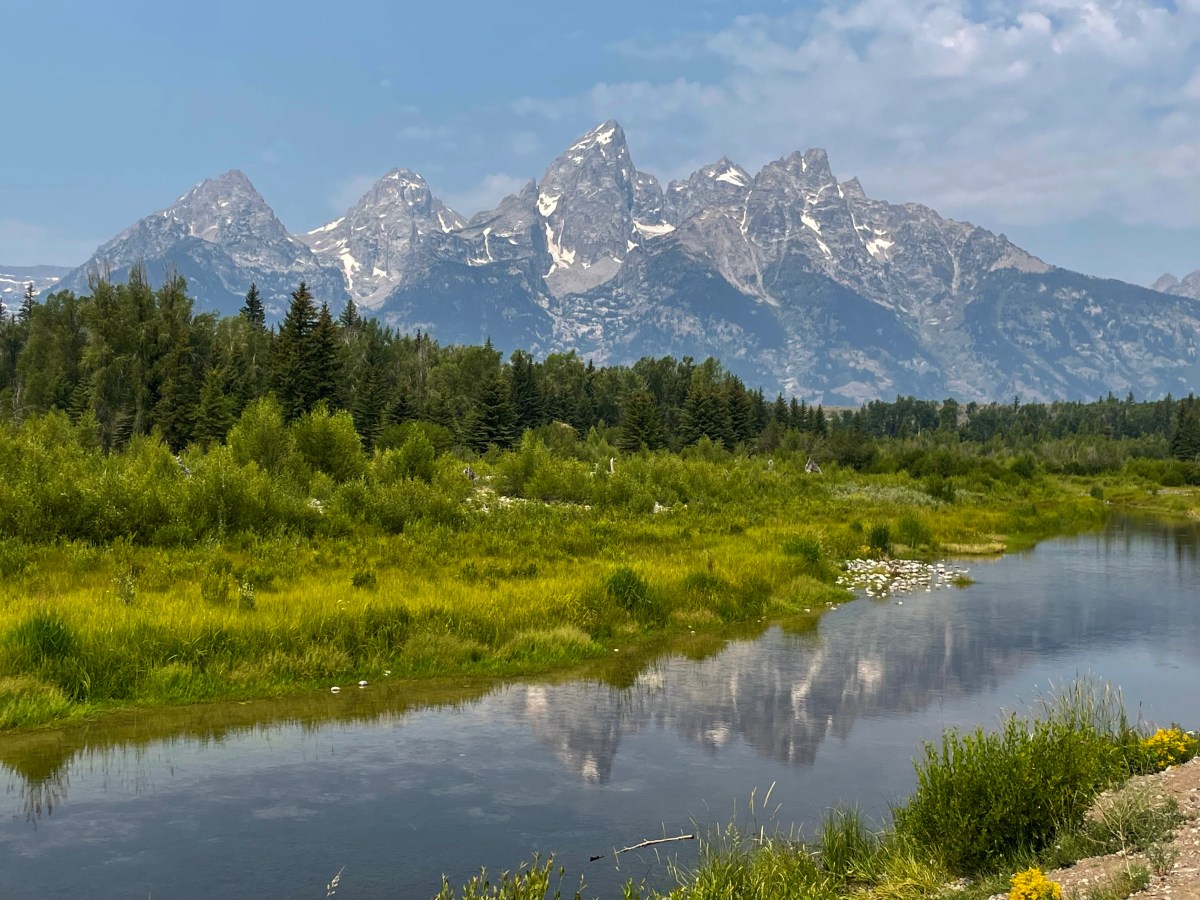
I have always been captivated by the Grand Tetons in Wyoming. The mountains seem to rise out of nowhere and demand your attention. I am awestruck and humbled by their presence. If I let my imagination go, I can hear them speak of the majesty of creation. The Tetons place sixth among the most photographed mountains in the world.

We all know 2020 was hard. And like many travel deprived Americans, I felt eager to fly somewhere this summer. For weeks Herb, Jenny, and I watched videos, studied maps, and planned our activities. We had a tight schedule with four days to spend in the park. That seems like enough time, right? But this trip to Grand Teton National Park came with two unexpected trials.

One week prior to leaving, I strained my back lifting a box of books. I felt good when we left on Saturday, but the pain returned after the long flight and the drive from Salt Lake City to Jackson.

When we finally arrived at the park on Sunday, I was saddened to see smoke covering the mountains. The smoke originated from fires in Oregon. Since we couldn’t see much, my traveling companions insisted I visit an urgent care for help with my back pain.

“But we only have four days! How can I waste time waiting to see a doctor?” I asked. Eventually they convinced me if I didn’t get help, I would never be able to hike. I relented and off we went to the nearest clinic.

After a lengthy wait, I saw a doctor who called in a prescription to a pharmacy across the street. When I arrived to pick up my medication, ten people stood in line ahead of me. My back muscles tensed as I noticed the pharmacy closed early on Sunday. Thirty minutes later I reached the pharmacy window, only to be told the prescription wasn’t ready and I should come back in twenty minutes.

I joined Herb and Jenny at an outdoor table for a quick snack and hobbled back to the pharmacy. Now eleven people waited in line. (Someone told me the pharmacy closes on time whether people are waiting or not.) Desperate to receive my medication, I cut through the line to get to the pick up window. I simply couldn’t stand on my feet any longer, and the thought of being turned away was more than I could bear.

The pharmacist served me, much to the chagrin of those waiting in line, who complained about my behavior. At this point it was three minutes to five and I don’t blame them for being angry. I received my meds and left the store before emotions got out of control. I confess I felt ashamed of myself.

The remainder of Sunday I spent in bed at our Airbnb in Teton Village. Monday morning I encouraged Jenny and Herb to return to the park without me as I felt no improvement in my health. I stayed in bed and felt sorry myself. I didn’t have much time left to tour the park. I wondered if all I would see is the four walls around me? Would this be my punishment for cutting the line?

By Tuesday morning I felt ready to hike. I used my trekking poles to traverse the most beautiful trail to Taggart Lake. The smoke lifted that day and we got some great pictures of the mountains. I felt good to be alive and see such beauty. After the hike we drove to visit some of the historic buildings in the park.

Taggert Lake

Wednesday we hiked to Inspiration Point, located on the opposite side of Jenny Lake. Both hikes were listed as moderate with a significant elevation gain. I felt surprised when a fellow hiker told me I was his inspiration. (Probably due to my age, I guess.)

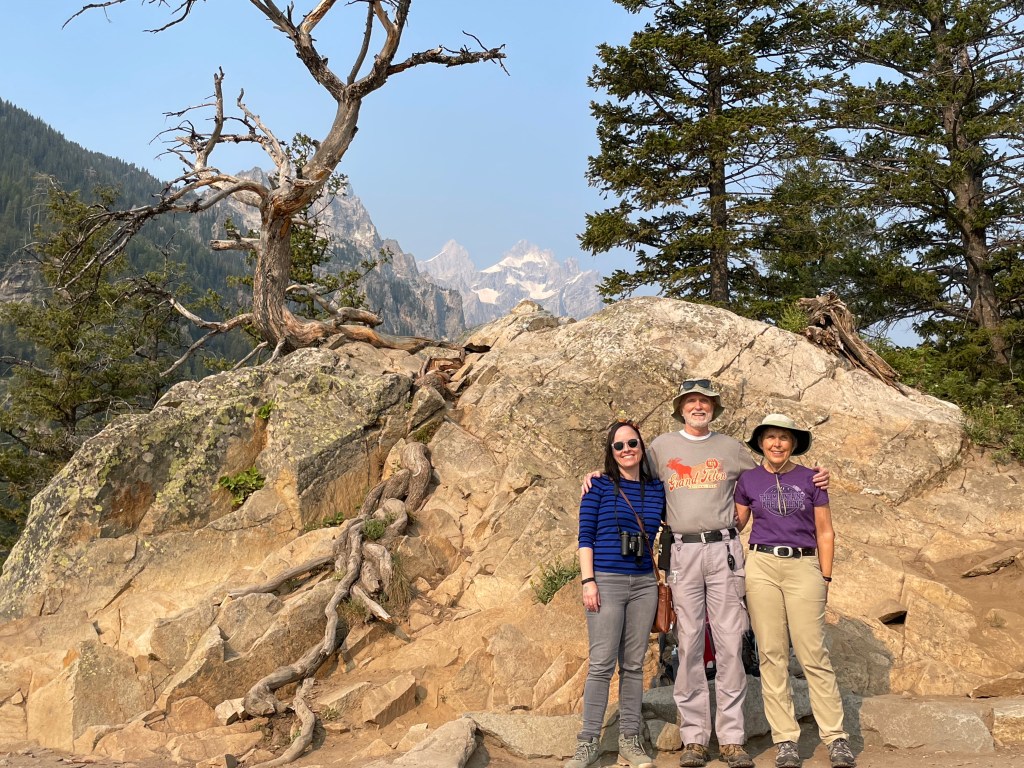
Inspiration Point with Herb and Jenny

By Thursday my pain returned and a thick blanket of smoke covered the mountains again. We checked out and began our return trip to Orlando.

Now a week later, I am still recovering. What did I learn from this experience?

Trips take people, people don’t take trips. All the planning in the world doesn’t mean your day or week will turn out the way you expected or wanted. I had expected too much from this trip. Blessed are those who are happy with little. I am thankful for those two days when the smoke lifted and I was well enough to experience the mountains.

Somewhere in the middle, between the good times and the bad, I sensed God’s love for me. I remembered the sick woman who pressed through the crowd to reach Jesus. (Matt. 9:20-22) She received her healing. Did she cut through a line?

I am thankful Jesus is able to recycle our mistakes into something good by his transforming grace. When I depend on experiences for my happiness, I want to remember the smoke and pain of this trip.

I want to remember lasting joy is only found in God’s redeeming love.

Our Escape to Lake Louisa

Like many of you, I’ve done my share of whining during the past three months. The pandemic has left me stressed, angry, and bored. If you’ve read many of my past writings, you know the one activity I’ve missed most is travel.

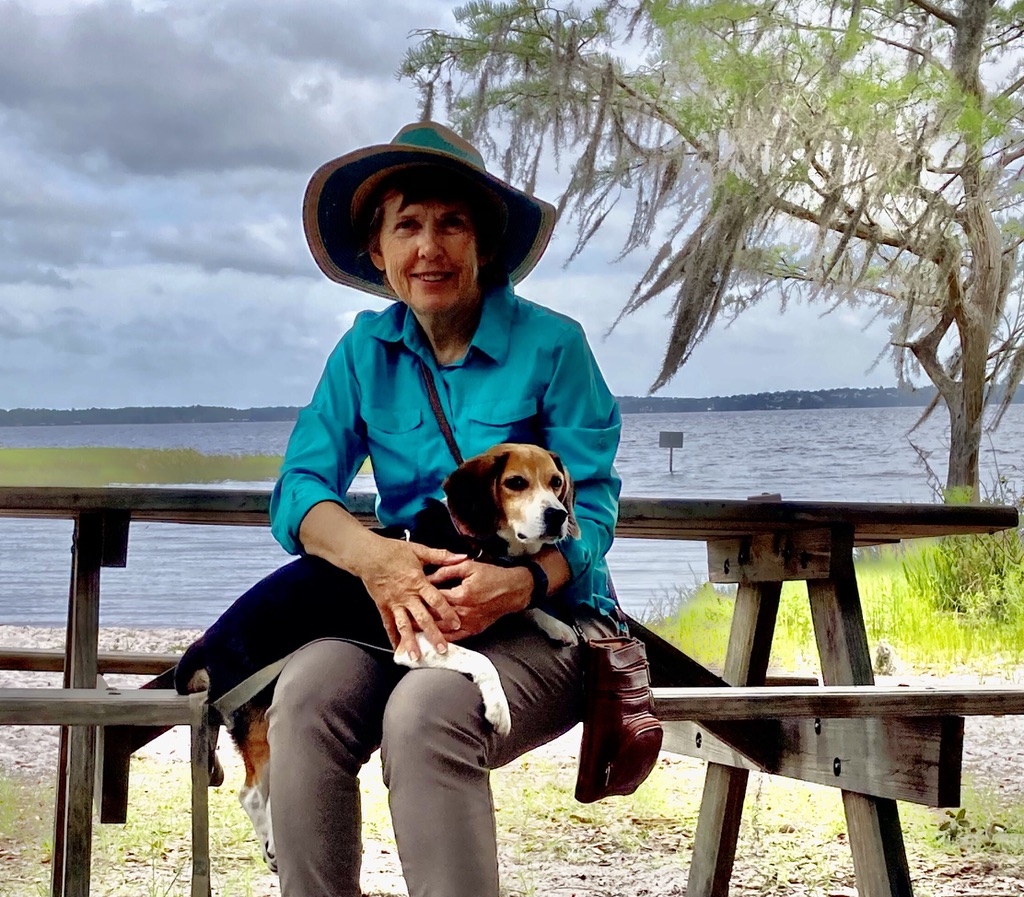
Herb and I felt disappointed when the Florida State Parks closed in March. Later, when they reopened on May 4 we were excited until we learned the campgrounds would remain closed. In spite of this information, I reserved a site for Memorial Day weekend at Lake Louisa —a short thirty minute drive west of Orlando. We were ecstatic when the campground opened on May 21, one day before we were scheduled to arrive! We packed our clothes, food, and beagle into the jeep and hitched up our Viking trailer for our great escape.

The weather was hot, after all this is Florida. But we didn’t let the weather phase us. Like all happy campers we couldn’t stop smiling. We set up camp before a tremendous rainstorm hit. Did that bother us? Not in the least. Snug inside our tiny trailer we munched our homemade cheeseburgers and laughed about our good fortune.

Our little home away from home.

The ninety-five degree temperatures continued on Saturday. Fortunately, we were able to cool off under the shade of our awning and a large beach umbrella we brought along.

We made Buddy more comfortable by setting up a fan at either end of his pen.

Ahh… this is more like it!

Over fifty campsites sit upon a strip of land between Dixie Lake and Lake Hammond. As night fell we were treated to a beautiful sunset above Lake Dixie.

And of course, no campout is complete without a campfire.

Even so, the warmer temperatures made it necessary to sit farther away from the flames.

Sunday morning we hiked on one of the park’s lovely trails. Buddy had a great time exploring the area.

Hmm… Who has been here before me?

We measure our distance, and when Buddy has walked one mile, Herb carries him in our doggie backpack. What a good Dad!

Wow! I can see new sights from up. here! I always wanted to be tall.

Although we’ve camped at Lake Louisa before, we noticed a new addition. Three Luxury Carefree Campsites are for rent.

These air-conditioned tents are furnished inside like a hotel room. (No private bathrooms, however.) Sad.

No trips to the real Florida are complete without a gator. Herb took this photo of a baby below the dock on Dixie Lake.

If you are looking for an escape, and don’t mind the Florida summers, consider camping. No face masks required.

Accepting The Risks of Life

Life is full of risks. Fortunately disaster seldom happens, or we would never travel in a car or fly in a plane. We would never eat out because restaurant food might give us salmonella. We would stay in our homes with the doors locked and the blinds pulled down.

I take a risk whenever I hike through a forest. I’m allergic to poison ivy. I developed an allergy to this evil plant in my teens. My symptoms? A blistery itchy rash that drives me crazy, especially in the middle of the night!

Throughout my adult years my allergic reactions worsened, usually requiring one or two trips to a doctor for doses of steroids in order to get over it.  The only preventative advice the doctors ever give me is “stay away from poison ivy.” They always smile after they say it.  I think what they really mean is,”Good luck with that.”

According to the  American Academy of Dermatology, eighty-five percent of the U. S. population is allergic to poison ivy.  I guess I’m in good company. The above link offers more specific details about how to identify the plant.

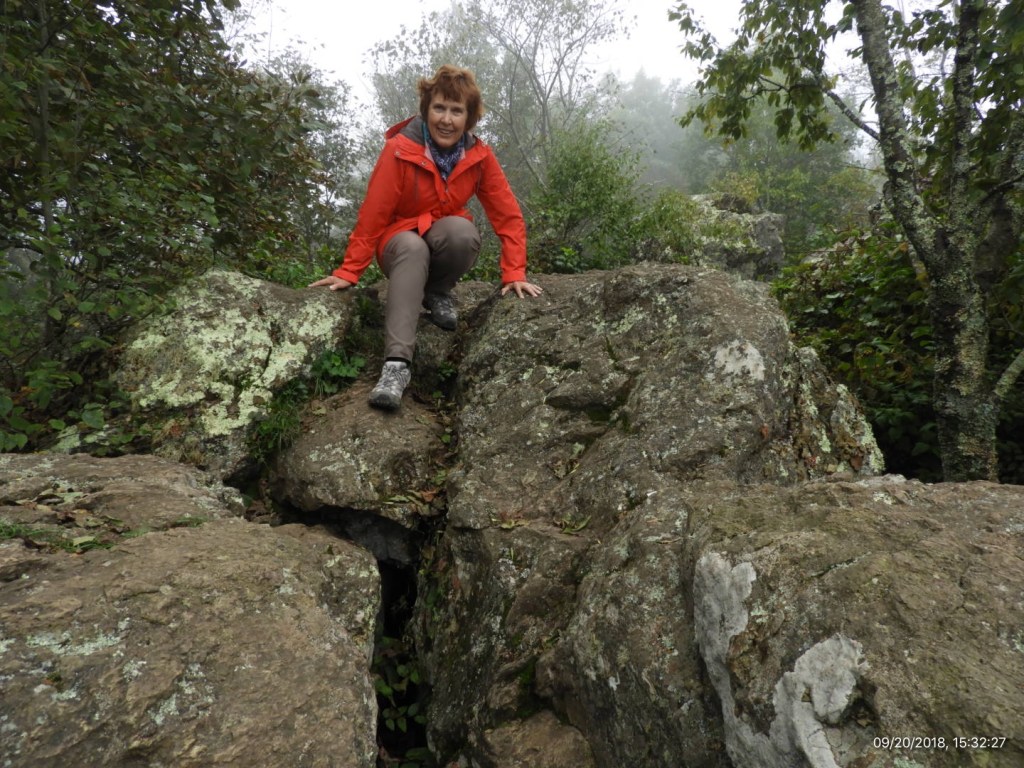
Over the years I’ve become more adept at avoiding poison ivy by walking in the middle of any trail. I usually stay on the look-out. Remember the old saying, “Leaves of three, let it be.” However, my last adventure included scrambling over boulders in Shenandoah National Park.  Scrambling involves using your hands and feet to move vertically. When I grabbed hold of a rock to steady my balance, I touched a strange vine.

IMG_5859

Let’s put it this way, I was between a rock and a hard place. I wanted to keep myself from breaking a leg. Touching the weird vine was a total accident. A day later I was symptomatic.

Although I always wear long sleeves and pants when I hike, I’ve learned that the oil (urushiol) of the plant clings to your clothes and shoes. Have you ever tried to change your clothes without touching them? It’s not an easy process.

By the way, urushiol can also cling to a dog’s fur. Buddy wasn’t with me on this trip, so I can’t blame the family dog for my irritation.

Every time I hike in the woods or take a camping trip I put myself in danger. So far I haven’t decided to stop being “mother nature’s child.” The trails are too inviting, the trees too alluring.  At this point I’ve decided to accept the risks that go with my choices.

As I write this I’m sure many people are struggling with making decisions about their spring break and summer vacations. The coronavirus appears to be more deadly than poison ivy. Maybe spending time in the wilderness and away from crowds is the right vacation for you this year. Accept the risks that go with your choices. At least you can’t spread poison ivy to other people.

Here are a some links to my previous posts about amazing places to visit in America. Pikes Peak, Zion National Park, Grand Canyon. (If you hesitate to fly, there’s always the option of driving.)

“Life is either a daring adventure, or nothing at all.” —Helen Keller

When Airline Travel Goes Wrong

We thought we had it made. With boarding passes in hand and luggage stowed, Herb and I relaxed at the Orlando (MCO) airport in plenty of time to board our flight. The sunny skies confirmed we had good weather for flying. Our itinerary included traveling to Newark, New Jersey from Orlando. Once in Newark, we would embark on a night flight to London.

Herb thought of everything. He even reserved seats with extra leg space on the flight to London to ensure our comfort. We planned to sleep on the plane and arrive rested and ready to see a few sights in London before meeting our Viking tour group.

Then we heard an announcement. “The three p.m. flight to Newark is delayed. Liberty International is closed due to storms. Stay tuned for more information.” An hour went by. I tried to occupy my mind with a crossword puzzle. The four p.m. announcement repeated the same information.

Herb began to pace the airport like a caged tiger. “Looks like we’re going to miss our connection to London.” I continued to focus on my crossword puzzle and hope for the best.

Finally at five p.m. the staff started boarding procedures. The plane taxied out of the gate. Then the captain announced, “Ladies and gentlemen, I’m sorry—Newark is not allowing any planes to land. The storm has gotten worse. We will need to go back to the gate. I promise to update you in an hour.”

So we sat. And we sat. True to his word, at six-thirty the captain told us nothing changed. People were starting to panic. Word had spread there were two dogs stowed in the baggage section of the plane. In ninety-degree heat with no water, how would the animals survive?

Soon the captain announced anyone who wanted to exit to plane, could do so. Someone was going to take the dogs out of the hold and give them water. Whew! The passengers cheered.

We remained in our seats. At this point I didn’t want to be left behind if the plane departed. I also didn’t want to join the number of passengers who might delay our flight any longer with their goings and comings. I began to regret my decision when the person next to me returned with a pizza. The protein bar I ate a couple of hours ago couldn’t compete with the aroma. My stomach churned from hunger and anxiety.

Finally, at eight p.m. we were cleared for Newark. Herb and I knew we were doomed. What would happen when we arrived? Our future hung in the balance.

Finally at eleven p.m. we landed in Newark. We rushed to our connecting gate, only to discover our flight to London took off about fifteen minutes prior to our arrival. We were told to go to customer service to find out what to do next.

Tired and disappointed, we joined the line with other disgruntled customers. When our turn came, we pleaded our case to the attendant behind the desk. After checking her computer she said, “Well, it looks like you might be able to fly stand-by to London first thing in the morning at eight o’clock. You will need to board at seven. “

“What do we do until then?” Herb asked.

“You can take a taxi to a hotel for the night. But you will need to collect your luggage from baggage claim and recheck it in the morning.” she responded.

Herb and I moved away from the counter to discuss our options. We got back in line until it was our turn to speak to the attendant again.

“We’ve decided to stay here. We don’t want to be late in case we can board the early flight. Do you have any pillows or blankets?” Herb asked.

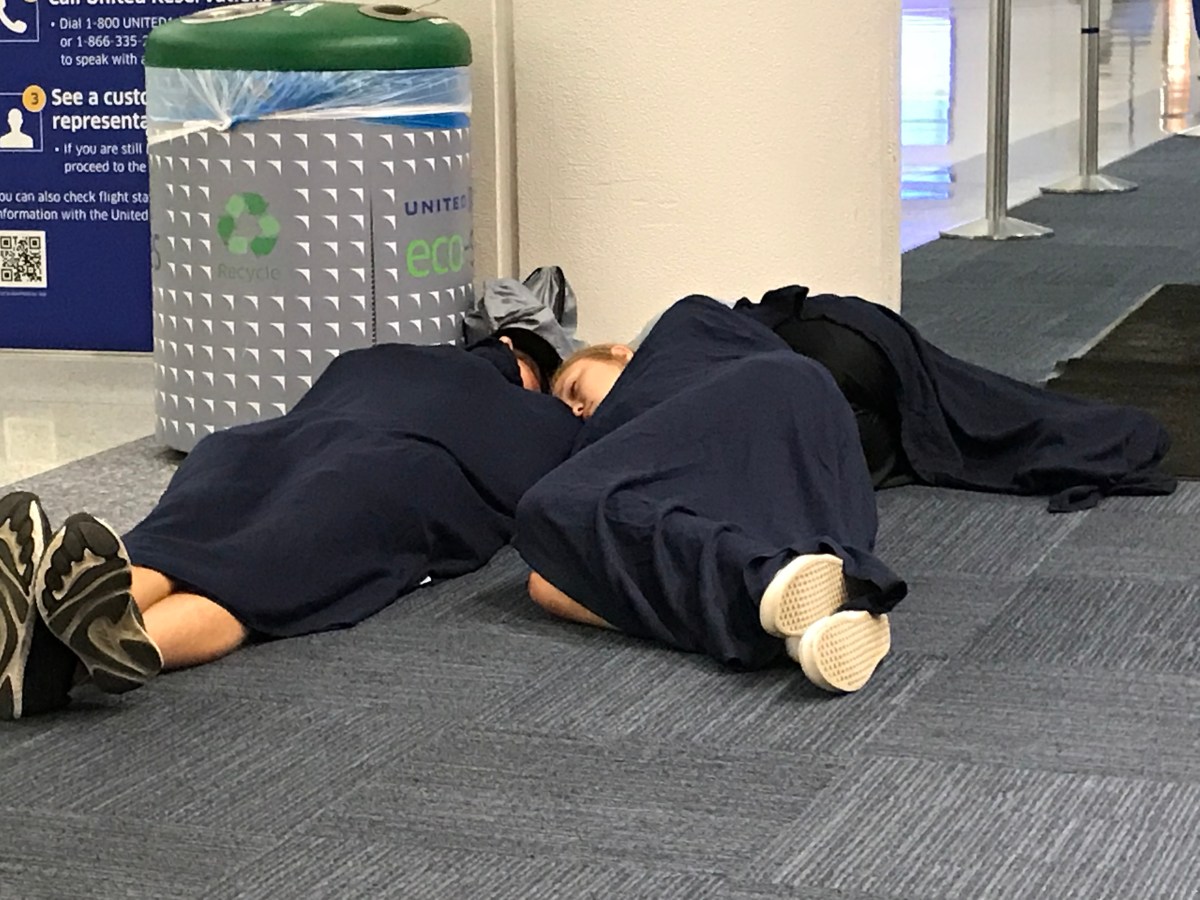
The attendant stepped into a side closet and returned with two blankets. (The same super thin kind they give out on planes.) She didn’t produce any pillows.

Herb decided to buy a neck pillow from a self-serve vendor. We took the blankets and our carry-on luggage to the only piece of carpeted floor we could find. A few other wretched souls were curled up across from us.

“Goodnight, Herb.” I tried to get comfortable by resting my head on top of my purse. It didn’t work. Sleep eluded me. Blame it on the glaring ceiling lights. Blame it on the incessant droning of airport “techno” music. Blame it on the guy talking on the phone a few feet away. On top of all this, I couldn’t get warm. Every time I looked at Herb his eyes were closed and I thought I better stay quiet.

About five a.m. the activity in the airport picked up. A stream of passengers with early flights rolled by our “bedroom.” Herb and I picked up our blankets and stumbled off to find coffee and breakfast.

After breakfast, we checked in with the receptionist at our new gate and took our seats in the waiting area. Finally after another hour of anxious waiting our names were called! We had seats on the next flight to London. Is this what it might feel like when God looks in his “book of names” for entry to heaven? We were elated.

Eight more hours of flying and a five hour time difference put us at London Heathrow airport around eight p.m. Twenty-seven hours had passed from when we set foot in the Orlando airport. We made it, but of course our luggage did not. This was a perfect example of what can go wrong, did go wrong.

What did this experience teach me? What are the lessons I learned?

“Traveling is brutality. It forces you to trust strangers and lose sight of the familiar comforts of home. You are constantly off balance.” —James Michner.

This quote rings true with me. Traveling can be brutal. No matter how carefully a person plans, forces beyond his control can change everything. Do you agree? Leave a comment. I also welcome any travel tips you may want to offer.
Our Viking Cruise through Normandy

“A great way to learn about your country is to leave it.” —Henry Rollins

Bonjour mes ami! This summer I learned how much the French people appreciate politeness. Did you know it’s considered rude to ask a direct question without first speaking a proper greeting? This is just one of the many tips I picked up from one of our Viking excursion guides. No wonder so many Americans, myself included, tend to get off on the wrong foot as tourists.

Yes, in some places, Americans are considered uncultured, rude, and self-centered. However, I discovered the people of Normandy are willing to overlook our faults. Many of them remember the D-Day Invasion of 1944. During our visit to Normandy I appreciated being greeted by scores of American flags. I saw flags displayed outside homes, on fences, or strung from rooftops across city streets. Our Viking cruise focused on the 75th anniversary of D-Day. In this post I will share how beautifully the Viking staff developed this theme through excursions and onboard lectures.

Our Excursions

My husband and I boarded our Viking longboat outside of Paris on June 4. We cruised on the meandering Seine River until we disembarked at Rouen. Then we traveled by bus to the American landing sites of Point du Hoc, Utah Beach, and Omaha Beach. Thousands of Allied ships comprised the largest amphibious invasion in history, known as “Operation Overlord.” In the wee hours of the morning on June 6, 1944 wave after wave of troops were cut down by German defenses perched high on the cliffs above Omaha beach. However, a few American soldiers managed to scale the cliffs shown below and by the end of the day an 80 mile stretch of land along the Atlantic coast had been breached by the Allies.

Two thousand American soldiers lost their lives at Omaha Beach on June 6, 1944. Nazi gun embankments controlled the high cliffs above the water.

Today a beautiful memorial rises out of the water to symbolize the courage of the American soldiers who sacrificed their lives to liberate France. “Les Braves” was created by Anilore Banon and presented as a gift from the French people on the 60th anniversary of D-Day.

“Les Braves”

The sculpture represents three elements: The Wings of Hope and the Wings of Fraternity stand on either side. The center of the work is called Rise, Freedom and inspires the world to stand strong against all forms of inhumanity.

Onboard Lectures

Our program director expanded the travel experience by inviting local guests on board to speak. While we were docked in Vernon, Monsier Castreau shared his memories of living in Vernon as a teenager. He experienced first hand the horrors of the Nazi invasion, the Nazi occupation of his community, and the eventual liberation by Americans. He remembers feeling hungry because the Nazi army ate most of what food was available. Monsier Castreau expressed his heartfelt appreciation for America. There wasn’t a dry eye in the audience, many of whom were the sons and daughters of American soldiers who fought in France during the war.

I was honored to meet Monsier Castreau, who experienced life under the Nazi occupation of France.

Further upstream, at La Roche Guyon, we heard a presentation by Magali Clemencon, author and lecturer. Magali’s grandfather was a member of the French Resistance. Magali has interviewed and documented the testimony of 24 survivors of the Montluc prison, where the Nazi’s housed anyone deemed “undesirable,” like members of the Resistance, Jews, and Gypsies.

Author Magali Clemencon

Magali made a comment I will never forget. “It takes forty years for anyone who has experienced a deeply tragic event to be able to talk about it.” She shared that many survivors of World War II were unable to talk about their experiences with their children. For some, they could only speak about their past a few years prior to their death. Those who committed heroic deeds all say the same thing, “I only did what anyone in my position would do.”

I hate to imagine what the world might look like today if it were not for ordinary people doing extraordinary things. These special guests made history come alive to me. Through the eyes of strangers I came to know America in a different light and I gained a better understanding of my country’s contribution to freedom.This 4th of July take a few moments to reflect upon the freedoms we enjoy and the sacrifices of those who made it possible.

Utah Beach

In closing, I wish to thank Lionel Auber, our Viking Program Director who coordinated all excursions and onboard activities.

Many thanks to Lionel Auber for a memorable travel experience.