

I never intended to travel the world until Viking Cruises made it easy. All of the details are arranged by travel experts who do everything and allow you to enjoy your vacation. When my husband and I discovered Viking’s Journey to Antiquities cruise we signed up because Herb wanted to see “old things.” One excursion on the cruise featured a tour of Pompeii, the ancient Roman city buried by volcanic ash when Mt. Vesuvius erupted August 24, 79 A.D.
Ever since I was a child, the ruins of Pompeii intrigued me. At age ten I dreamed of becoming an archeologist and finding artifacts which would connect people of today with ancient civilizations. Visiting Pompeii with our Italian tour guide was like a dream come true. I couldn’t believe I was actually walking where the citizens of Pompeii lived and worked. The volcanic ash which buried the city acted like a protective layer preserving buildings, artifacts, and even organic materials like bread.
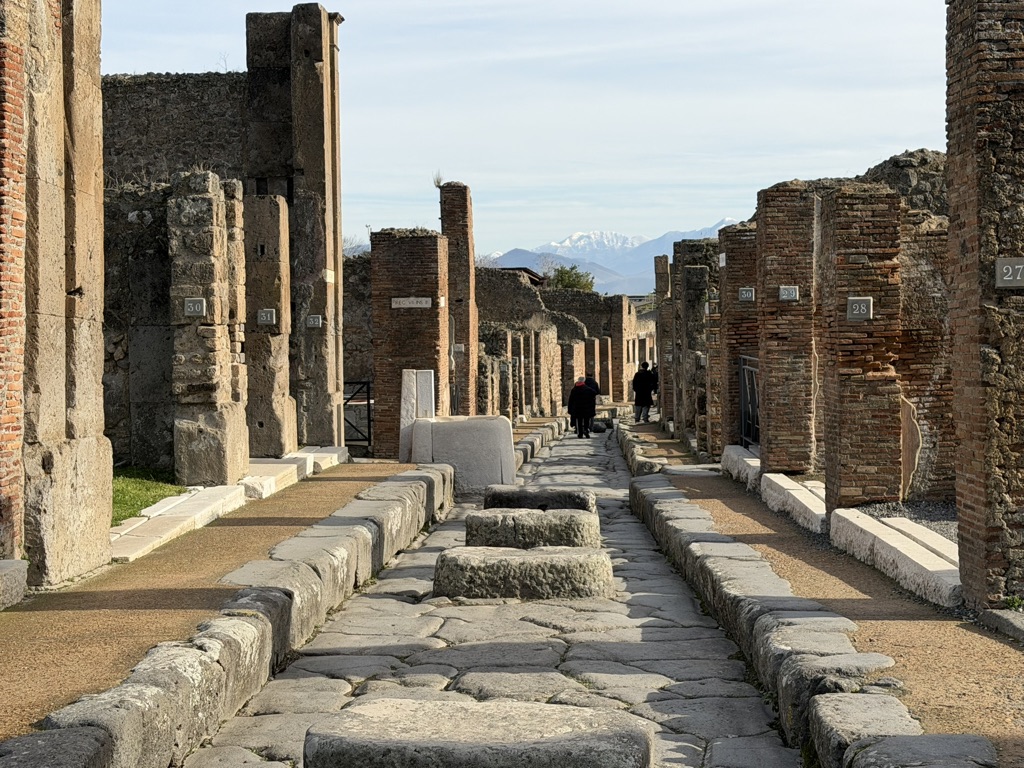
The photo above shows a marketplace with vendor booths on each side. The elevated sidewalks kept shoppers’ feet out of the sewer which ran down the middle of the street. The builders included stepping stones so people could cross the sewer. I marveled at the ingenuity of the Romans, but had to watch my step to keep my balance.
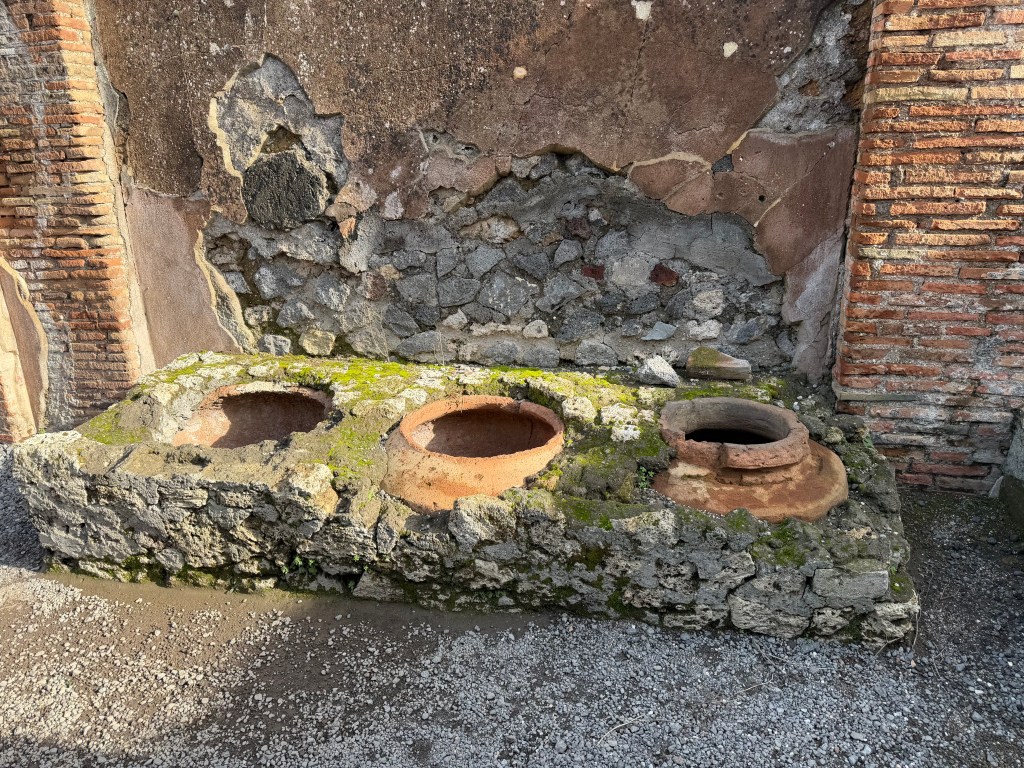
Our guide told us these pots were part of a fast food stand. This was the “thermopolia” where hot food was sold at lunchtime. In the Roman world it was customary to eat a meal outside the house. (And I thought fast food originated with McDonald’s. Wrong!)
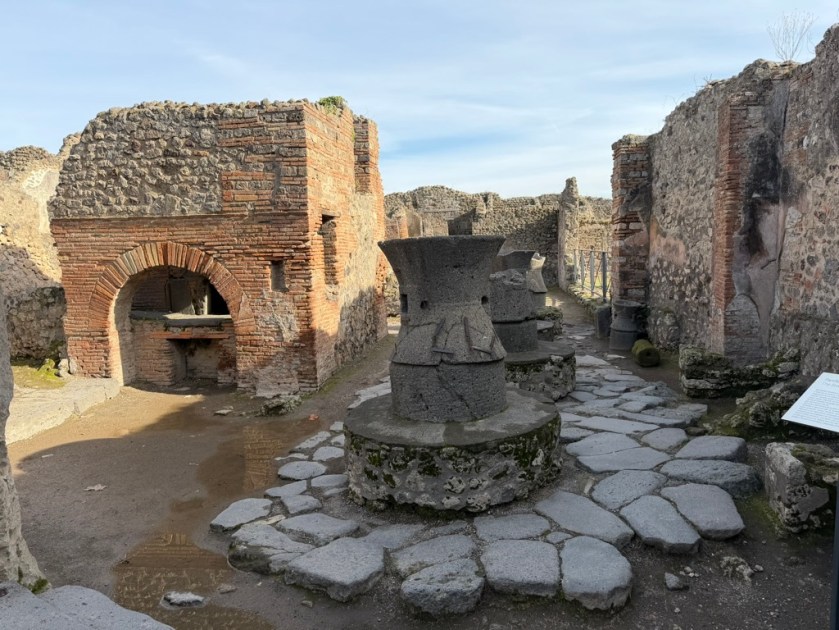
Here we have a bakery where grain was ground using large millstones made of lava stone pulled by animals. After the flour was collected, the dough was mixed then baked in the brick oven. Archeologists have discovered 36 bakeries in Pompeii. Only two-thirds of the city has been excavated and work is currently ongoing.
Our excursion to Pompeii included lunch at a restaurant in Naples, the birthplace of pizza. The roots of pizza date back to the ancient Greeks who topped their flatbreads with olive oil and herbs. When tomatoes were brought to Europe from America some people thought they were poisonous, but over time the vegetable became essential to Italian dishes. In 1889 Neapolitan Rafael Esposito created a special pizza in honor of Queen Margherita of Savoy. The pizza, topped with tomatoes, mozzarella cheese, and basil represented the colors of the Italian flag.
I was able to view the preparation of our margherita pizza by the chef.
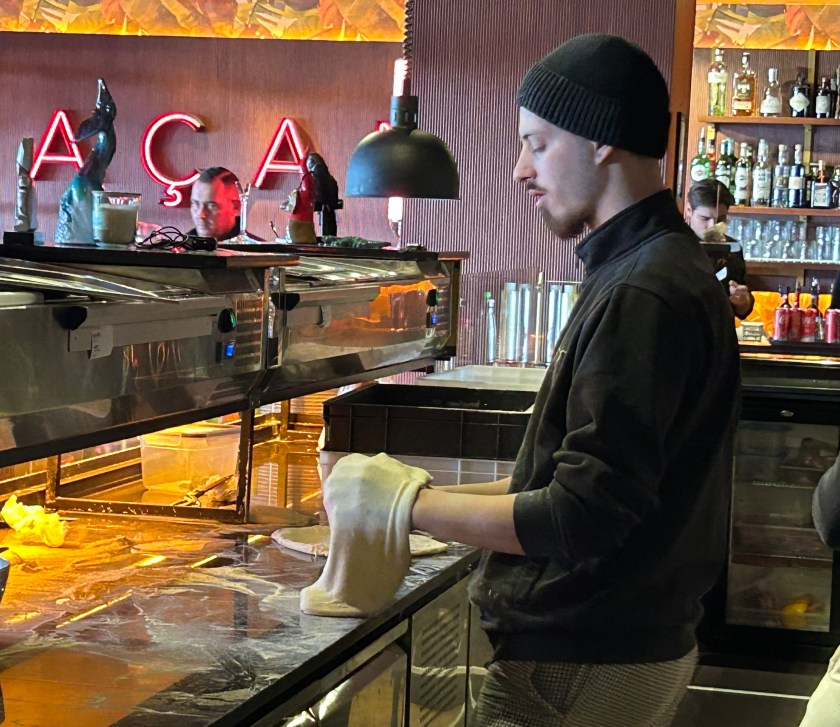
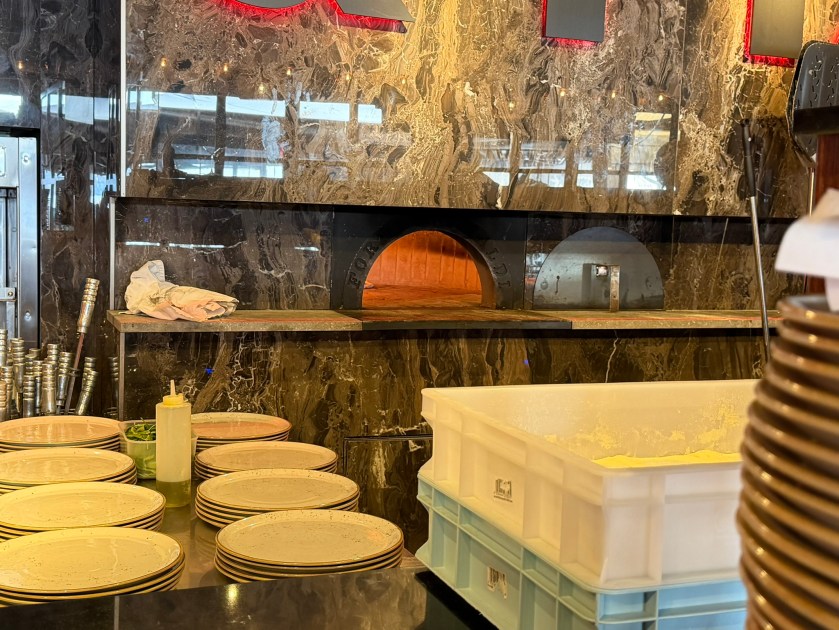
Look! Is that a brick oven like those in the bakeries of Pompeii? Maybe there isn’t anything new under the sun.
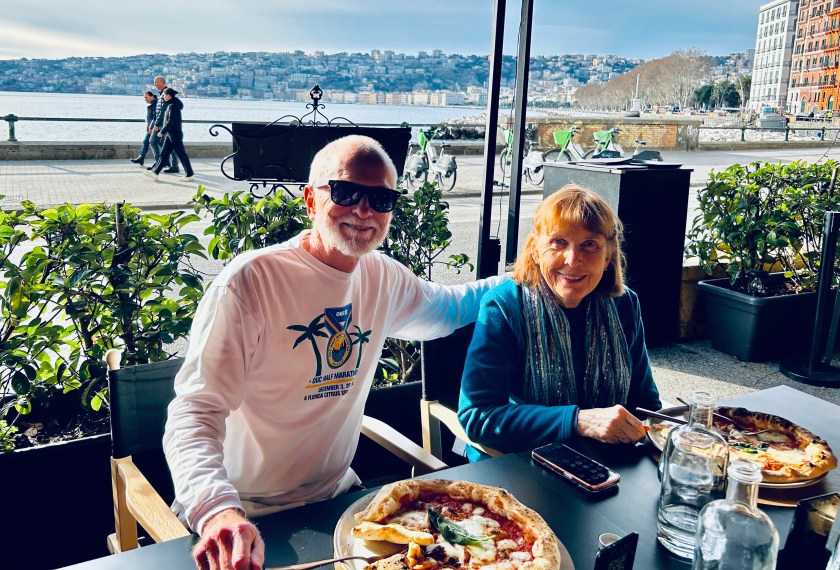
As they say in Italian, “mangie e gusta.”
 debbieburton.blog