
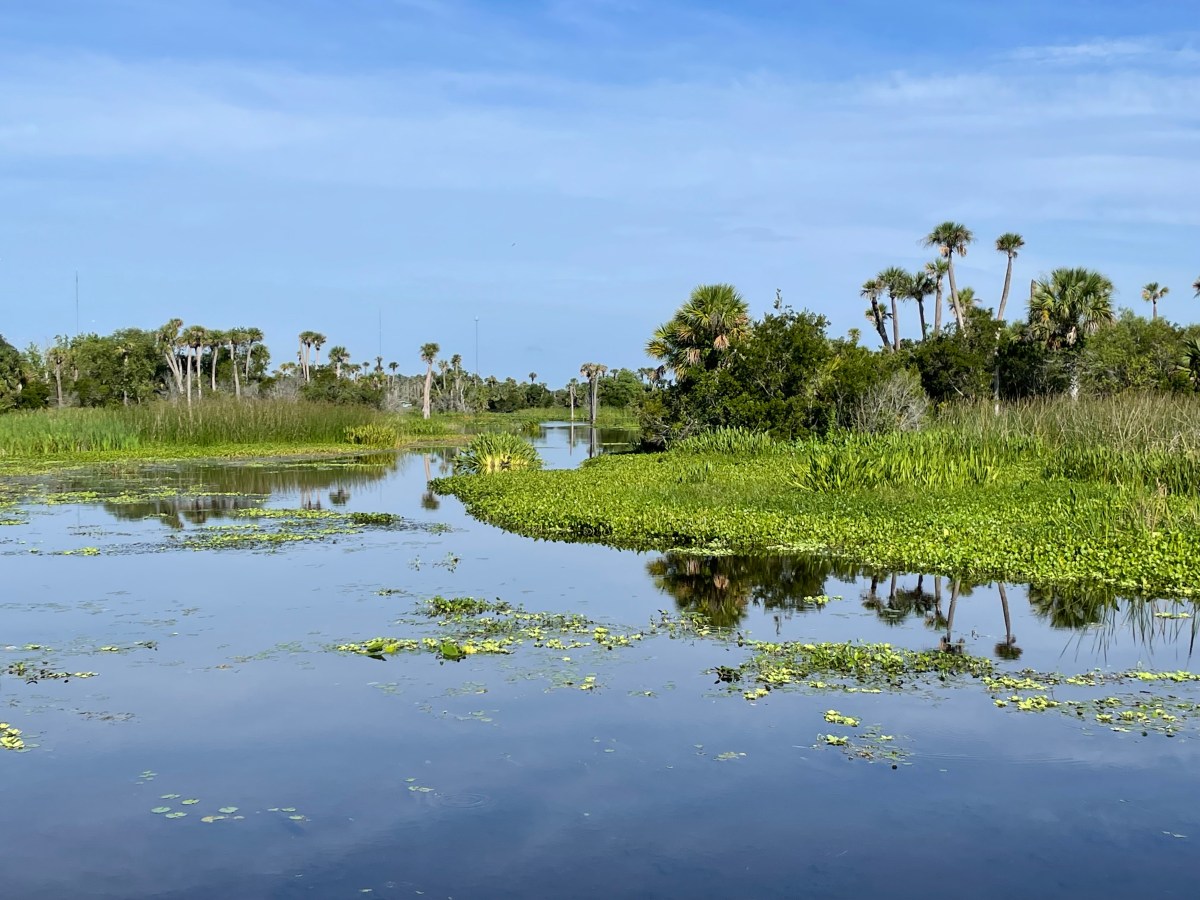
If You Build It—They Will Come.

Orlando Wetlands Park provides a habitat for 220 species of birds.

Remember the 1989 movie Field of Dreams? An Iowa farmer named Ray Kinsella walks through his cornfield and hears a “voice” which says, “If you build it— he will come.” Ray responds by turning his cornfield into a baseball diamond, and creates a place for deceased players to redeem their lost opportunities to play baseball. By doing so, Kinsella sacrifices a profit from the sale of corn in order to fulfill a higher calling.

Connections can be made between this movie and other situations. The growth and development of central Florida is one example. After the Civil War, the early settlers drained the wet prairie for agricultural purposes and cattle grazing. During the 1900s the population of Orlando continued to grow, and the construction of more housing developments meant that more wetlands were drained.

The loss of Florida wetlands has had a major effect on water quality, flood control, and wildlife habitats. Wetlands filter pollutants, and play a crucial role in recharging the aquifer, a vital source of drinking water.

In 1986 city of Orlando officials heard the “voice” of the environment when they came up with an innovative solution for the disposal of reclaimed sewer water. The city purchased 1,650 acres of former pasture land and converted it to a man-made wetland near Fort Christmas. Orlando Wetlands was designed to further purify treated sewage water discharged from the Iron Bridge Water Reclamation Facility. The reclaimed water enters the southwestern edge of the property, and over a period of forty days meanders through various marshes, swamps, and Lake Searcy, before flowing into the St. Johns River.

So what does all this have to do with the Field of Dreams? Instead of attracting the ghosts of former baseball players, Orlando Wetlands attracts an abundance of living creatures. The wetlands provide a habitat for numerous animal species including otter, bobcat, deer, turtles, snakes, alligators, and over 220 species of birds. Eighteen of these species are listed as threatened, endangered, or protected. I like to think of it as an opportunity for animals to live in a place they had once been evicted from.
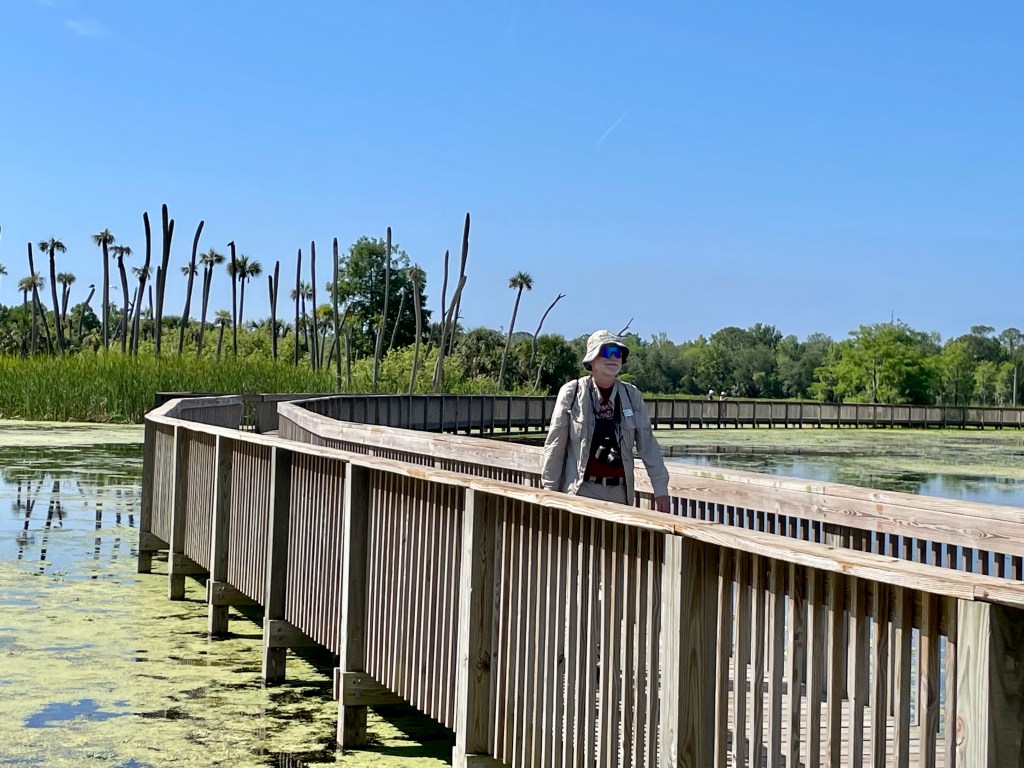
Orlando Wetlands is open to the public and admission is free. My husband, Herb, and I visited the park and walked the half-mile Cypress Boardwalk which affords close-up views of aquatic wildlife.
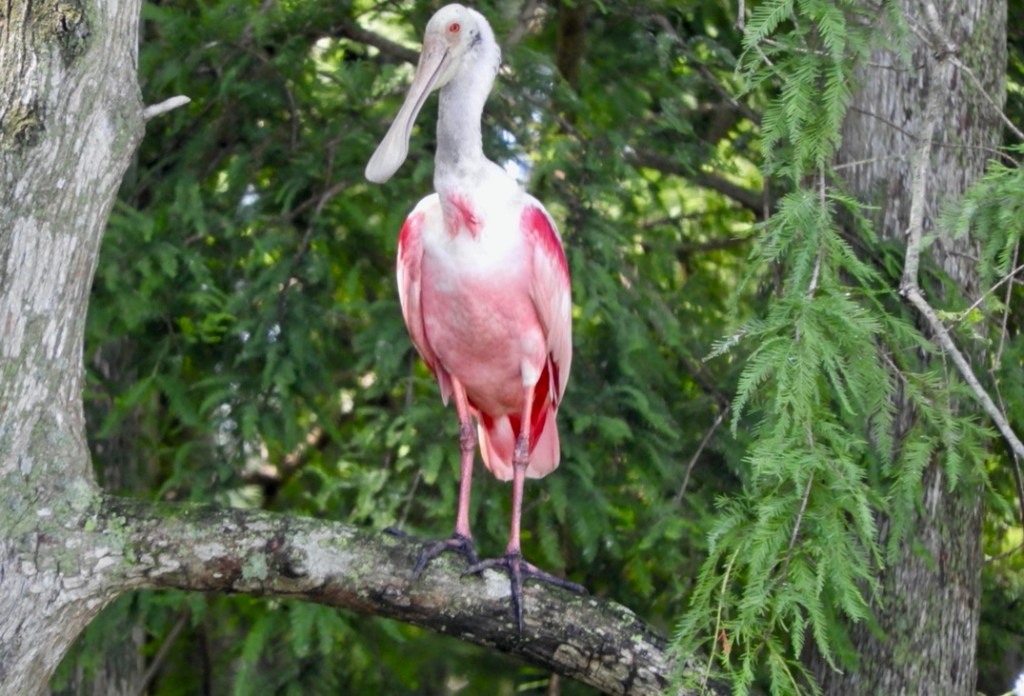
Beautiful Roseate Spoonbills roost in a grove of bald cypress trees near the boardwalk. Herb snapped this photo with his zoom lens. Did you know a baby spoonbill is called a teaspoon?

I can’t say this species is endangered. The Florida Fish and Wildlife Commission estimates there are over 1.3 million alligators in Florida.
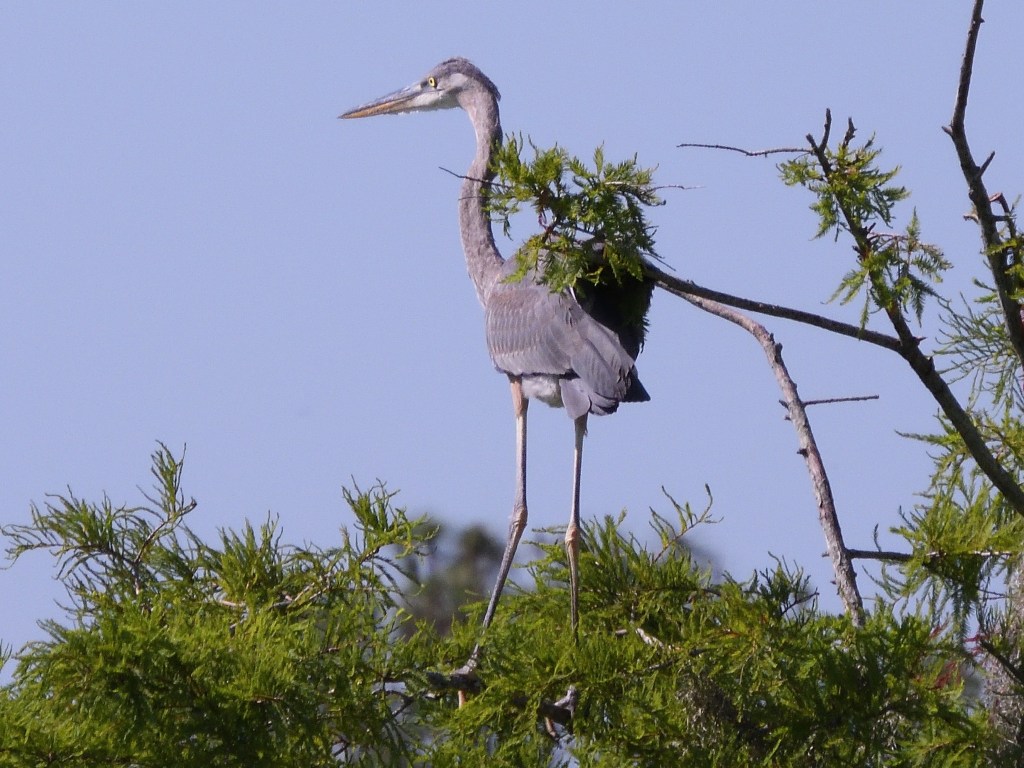
This tree top provides a place to rest for the Great Blue Heron, while allowing the bird to focus on what’s happening in the marsh below.

I’m not sure what kind of bird this is. If you can identify it, leave a comment. It makes a lot noise!
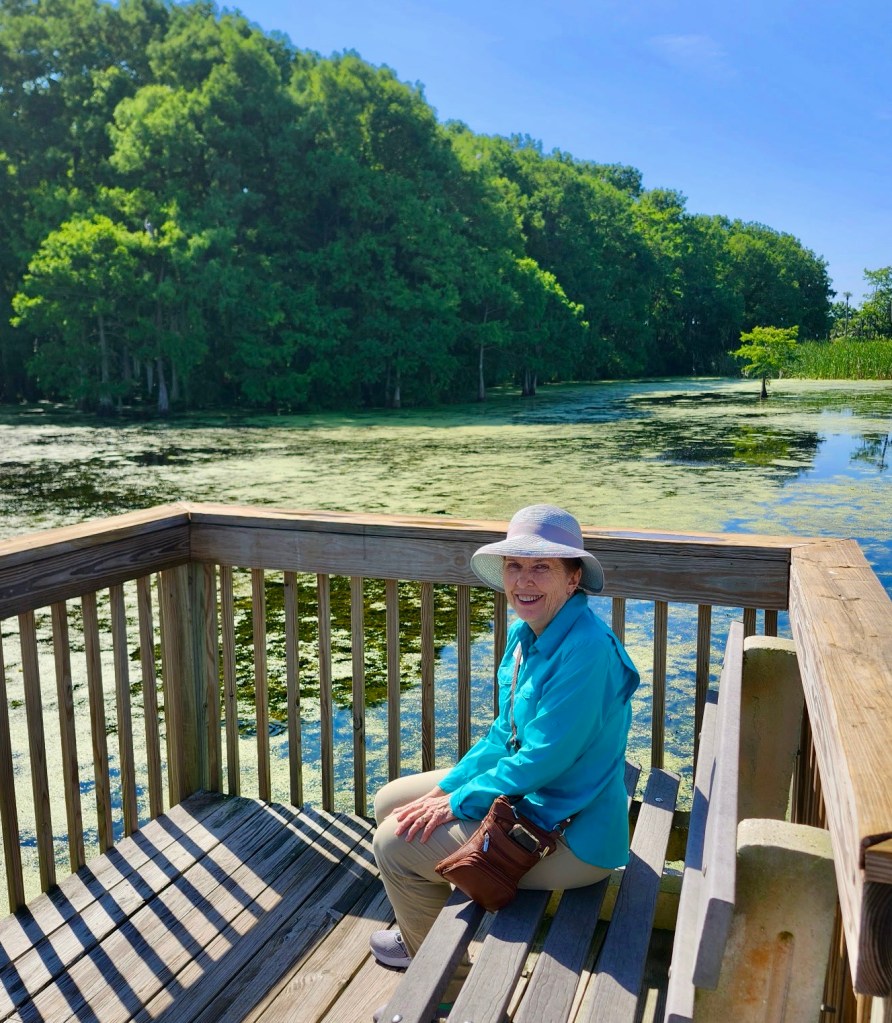
Summer is a challenging time to explore the outdoors in Florida. Wear a hat, carry water, and take breaks often. Follow the link for more information about visiting Orlando Wetlands.
Unfailing Hope

Like most people I’ve had my share of ups and downs. Last year a fractured metatarsal in my left foot impaired my ability to walk for several months. During my recovery I spent a lot of time reading and discovered a volume of Emily Dickinson Collected Poems published by Fall River Press. Since poetry invites interpretation by the reader, I want to share my thoughts about one of my favorites, “Hope is a Thing with Feathers.” Emily Dickinson penned this work in 1861.

Hope is a thing with feathers

That perches in the soul

And sings the tune without the words,

And never stops at all,

And sweetest in the gale is heard;

And sore must be the storm

That could abash the little bird

That kept so many warm.

I’ve heard it in the chillest land,

And on the strangest sea,

Yet never in extremity,

It asked a crumb of me.

This poem encouraged me to never lose hope that I would someday walk again without pain. Today I’ve recovered from my injury, and Emily Dickinson’s words still speak to my spirit. As an optimist, I connect with the theme of hope. But her words also challenge me to think.

I wonder why she chose a little bird as a metaphor for hope. Birds take flight when they sense danger. They migrate to avoid harsh weather. Birds seem unsettled and fragile in comparison with other animals. But the bird in the poem is not flying. Instead it’s perched in a person’s soul singing a tune which never ends. Could its song be one of praise to its creator?

The bird’s song of hope warms those who live in cold and lonely places. Although the little bird is fragile, its tune can keep people alive during the fiercest storm. Since I live in Florida, I think of hurricane survivors who rebuild their community after a storm. They hear the song of hope which renders a power of resiliency not easy to understand.

The Oxford Language Dictionary defines hope as a feeling of expectation and desire for a certain thing to happen. The Bible goes beyond the dictionary and describes hope as what people look for God to do. Hope goes beyond a wish, to a confident expectation in God’s ability to meet a need.

Dickinson describes the little bird as asking for nothing, not even a crumb. It doesn’t cost a penny to be optimistic. Hope holds much value to people who rely on its power because it lifts their spirits. We’ve all heard stories of people who have survived unsurmountable circumstances because they did not give up. Their stories encourages us, no matter what obstacles we’re facing.

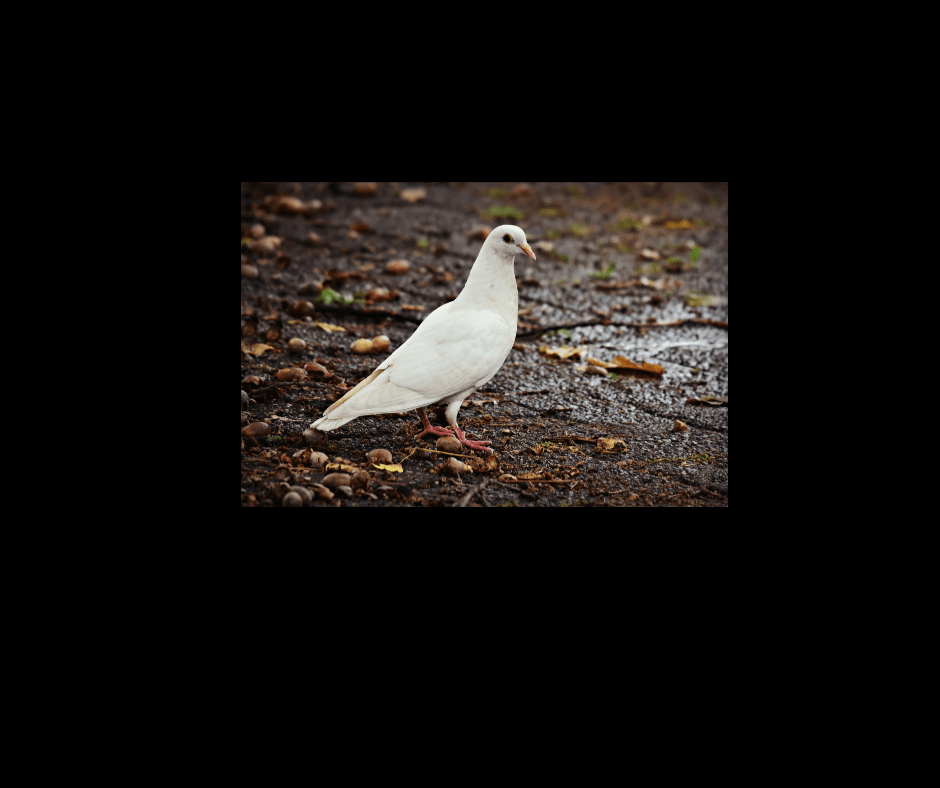
Let’s come back to the little bird in the poem. Could the bird be a dove? The Old Testament relates that after the Flood, Noah sent a dove from the ark to find land. The dove returned with an olive branch in its beak. Then Noah knew the water had receded from the earth. (Genesis 8:10-12 NIV) Can you imagine the hopefulness Noah must have felt?

The dove appears again in the New Testament. All four gospels communicate that the Holy Spirit took the form of a dove and was seen at Jesus’ baptism. Here the dove symbolizes the holiness with which Jesus was endowed. His sacrificial death for our sins brought reconciliation with God to everyone who believes.

When Jesus sent his disciples into various towns he said, “Behold, I send you out as sheep in the midst of wolves. Therefore be wise as serpents and harmless as doves.” (Matthew 10:16 NKJV) Like the feathered thing in Dickinson’s poem, doves are harmless creatures. When housed in a soul however, the dove emanates courageous hope.

Hope is a gift from God to those who seek HIm. Perhaps hope does make one demand. It asks us to trust in God. “May the God of hope fill you with all joy and peace as you trust in him, so that you may overflow with hope, by the power of the Holy Spirit.” (Romans 15:13 NIV)

Behold the Beautiful Anhinga

Meet Mr. Anhinga. Sometimes he appears at the pond outside our apartment building. I felt lucky to snap this photo of him drying out his wings in the warm Florida sunshine. Some people consider him ugly. Do you?

I am attracted to the Anhinga because of his huge black wings. Notice how they glisten in the light. Here he strikes the perfect pose, and balances his wet, heavy, body on the pointy top of a cypress knee.

I shared this photo with two of my neighbors. One guy shook his head, “No, that’s a cormorant.”

My other neighbor, a fisherman, did not share my excitement. “Those birds are no good because they eat fish.”

The old saying is true. “Beauty is in the eye of the beholder.” My neighbor’s comments motivated me to seek more information about this interesting creature.

First of all, the bird pictured above is definitely an Anhinga due to his long neck, dagger like beak, and long tail. A cormorant is much smaller and has a rounded beak. It doesn’t have silvery patches on its wings like the Anhinga.

However, my neighbor who fishes was correct. Anhingas are amazing predators and stab fresh water fish with their pointy beaks. After they harpoon their prey, they swallow it whole. These birds must have strong muscles in their throat to accomplish this feat.

The name Anhinga comes from the Tupi Indians in Brazil and means “devil bird.” (Apparently they had the same attitude as my fisherman neighbor.) Anhingas have several nicknames including darter, water turkey, and snakebird.

I understand the snakebird reference. When Anhingas swim they submerge most of their body, but raise their neck and head above the surface. I can see why someone might think they are a water snakes. And few people like snakes.

Although the Anhinga has webbed feet for paddling, the bird doesn’t have waterproof feathers. Its waterlogged feathers allow it to dive easily and search for underwater prey, such as fish and amphibians. Anhingas can stay underwater for substantial periods of time.

Anhingas need to dry out their wings between dives. Poor things, talk about body maintenance! They spend as much time out of the water as they do in the water. But they have an advantage of being able to fly. In fact they can soar through the sky and stretch out their wings in the shape of a cross. Perhaps their ability to fly can help them escape from their natural enemy, the alligator.

The Anhinga’s call sounds like a booming croak that reminds me of fingernails on a chalkboard. I’m thankful I’ve never heard one sing in our pond.

Do you remember the book “The Ugly Duckling,” by Hans Christian Anderson? There are advantages to being ugly:

″‘Oh,’ sighed the duckling, ‘how thankful I am for being so ugly; even a dog will not bite me.’ And so he lay quite still, while the shot rattled through the rushes, and gun after gun was fired over him.”

Unfortunately, my Anhinga will never change into a swan. I appreciate Mr. Anhinga for who he is. Maybe that’s because a poet can find beauty everywhere.