Going Batty in Baldwin Park

Floridians love the sunshine and the beach, but we all know there are trade-offs to living here. In the summer we not only endure humidity and storms—we also endure living with bats. As someone who has lived in the Orlando neighborhood of Baldwin Park, I have first hand knowledge of these flying furry animals.

Bats are drawn to the natural environment around Lake Baldwin. Animals migrate to find food, and bats take no exception. Summer temperatures in the mid-nineties and frequent rainstorms make Florida the perfect environment for mosquitos, and bats love to eat mosquitos. That’s a good thing right?

It’s good until bats take up residence in your house. The pitched roofs of many Baldwin Park homes invite bats to roost in the attic by squeezing through any opening they might find. Recently a Baldwin Park homeowner told me he heard a strange sound in his living room. The next morning he discovered a bat on the floor of the dining room. It was still alive, but could not raise itself to fly. Quick thinking, he captured the animal in a pool net and released it outside before any harm was done.

Later the homeowner contacted a “bat specialist” for advice, and set up an appointment for a home inspection. The specialist said it’s uncommon for a bat to enter the living area of a home, but it’s not impossible. The inspection revealed there was a colony of bats living in the attic. Since they are a protected species, it’s illegal to disturb their “roost” until August 15!

Attic Nurseries

Hearing about my neighbor’s experience prompted me to know more. My internet research informed me the Brazillian free-tailed bat is the main species found in Orlando. Their maternity season begins April 15 and ends August 15. The female bats gather in dark enclosed spaces (often in an attic) to give birth and nurse their babies. I was surprised to learn that bats are mammals. They even have a belly-button! The babies are very dependent upon their mothers until they are around eight weeks old. Then the juveniles start to find food for themselves.

August 15—Eviction Day

A few years ago bats roosted in our Baldwin Park townhome. Once I was walking our dog at sunrise, and I saw dozens of bats enter a tiny opening in the dormer above our front porch. Their guano (feces) made a nasty mess of our front steps. Throughout the month of July my husband cleaned the porch daily. On August 15, a professional installed a one-way door in the dormer, so the bats could fly out but not return. This is a humane way to eradicate bats from a building without harming them.

Are Bats Dangerous?

According to the U.S. Geological Survey, healthy bats avoid humans. Less than one percent of the bat population contracts rabies. Even so, bats should not be handled—especially those that are active during daylight hours. All bat bites should be washed immediately with soap and water and a physician should be consulted.

Bat guano is a serious health risk for homeowners. When guano exists in an attic or crawlspace, the microscopic spores can be inhaled by humans and cause a serious respiratory infection called histoplasmosis. If they eat the guano, Pets can also become infected.

Why are Bats Protected?

Over half of bat species are in serious decline due to habitat loss, climate change, and a fungal infection called white-nose syndrome. Even though bats cause problems for homeowners, we need them. They pollinate plants and devour their body weight in insects every night. Without bats we wouldn’t have bananas, avocados, and mangos. These heroes of the night are more helpful than harmful.

A Common-Sense Solution

If homeowners want to evict bats from their attics, but not leave them homeless, a bat house might work. Homeowners need to contact their HOA to learn the regulations for their neighborhood.

August 15 is almost two months from now. Until then, my neighbor will need to keep his pool net handy!
If You Build It—They Will Come.

Orlando Wetlands Park provides a habitat for 220 species of birds.

Remember the 1989 movie Field of Dreams? An Iowa farmer named Ray Kinsella walks through his cornfield and hears a “voice” which says, “If you build it— he will come.” Ray responds by turning his cornfield into a baseball diamond, and creates a place for deceased players to redeem their lost opportunities to play baseball. By doing so, Kinsella sacrifices a profit from the sale of corn in order to fulfill a higher calling.

Connections can be made between this movie and other situations. The growth and development of central Florida is one example. After the Civil War, the early settlers drained the wet prairie for agricultural purposes and cattle grazing. During the 1900s the population of Orlando continued to grow, and the construction of more housing developments meant that more wetlands were drained.

The loss of Florida wetlands has had a major effect on water quality, flood control, and wildlife habitats. Wetlands filter pollutants, and play a crucial role in recharging the aquifer, a vital source of drinking water.

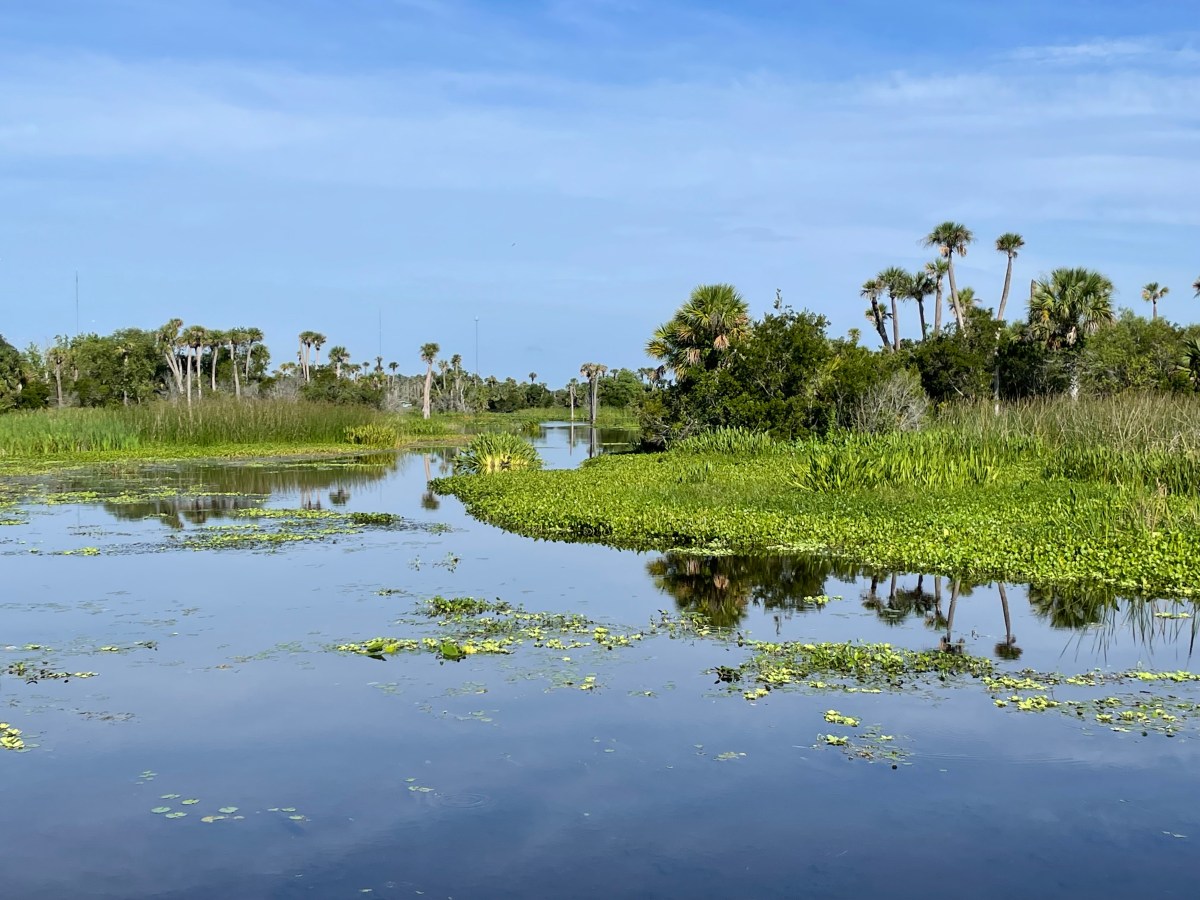
In 1986 city of Orlando officials heard the “voice” of the environment when they came up with an innovative solution for the disposal of reclaimed sewer water. The city purchased 1,650 acres of former pasture land and converted it to a man-made wetland near Fort Christmas. Orlando Wetlands was designed to further purify treated sewage water discharged from the Iron Bridge Water Reclamation Facility. The reclaimed water enters the southwestern edge of the property, and over a period of forty days meanders through various marshes, swamps, and Lake Searcy, before flowing into the St. Johns River.

So what does all this have to do with the Field of Dreams? Instead of attracting the ghosts of former baseball players, Orlando Wetlands attracts an abundance of living creatures. The wetlands provide a habitat for numerous animal species including otter, bobcat, deer, turtles, snakes, alligators, and over 220 species of birds. Eighteen of these species are listed as threatened, endangered, or protected. I like to think of it as an opportunity for animals to live in a place they had once been evicted from.

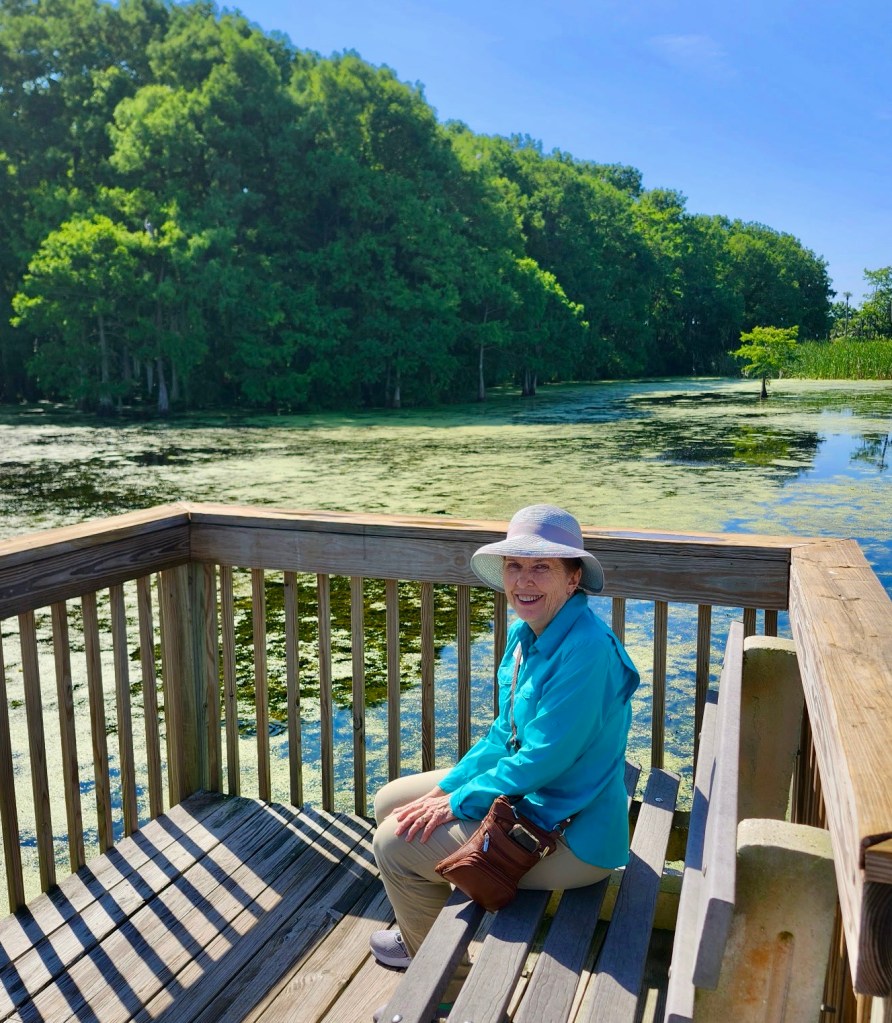
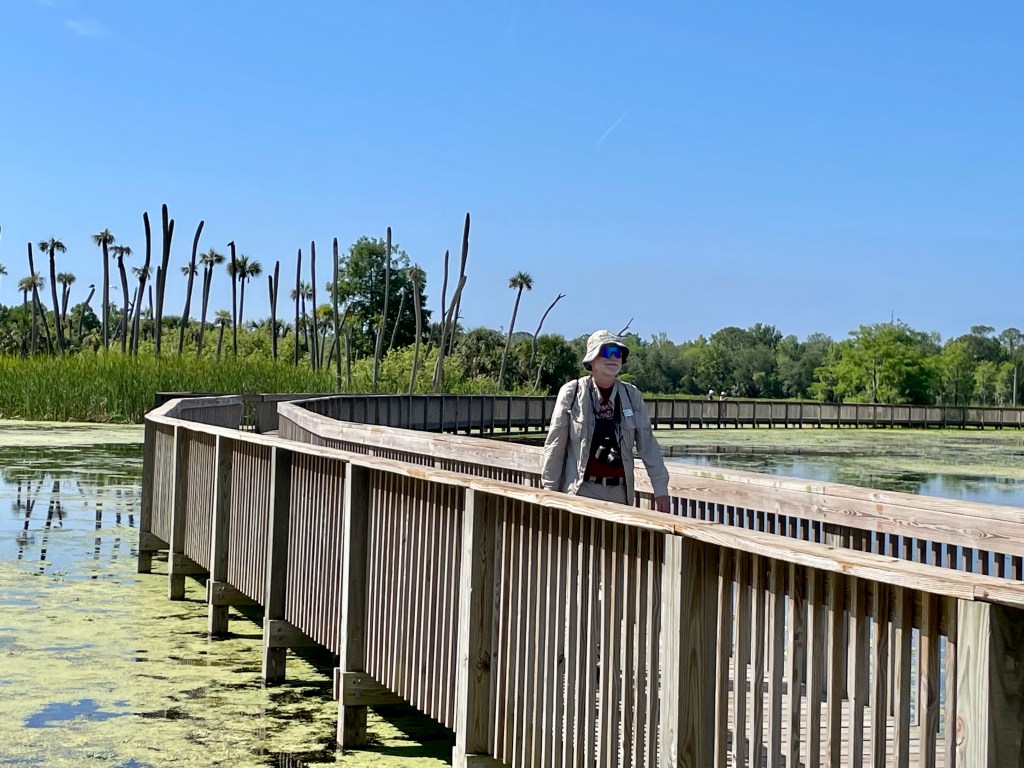
Orlando Wetlands is open to the public and admission is free. My husband, Herb, and I visited the park and walked the half-mile Cypress Boardwalk which affords close-up views of aquatic wildlife.

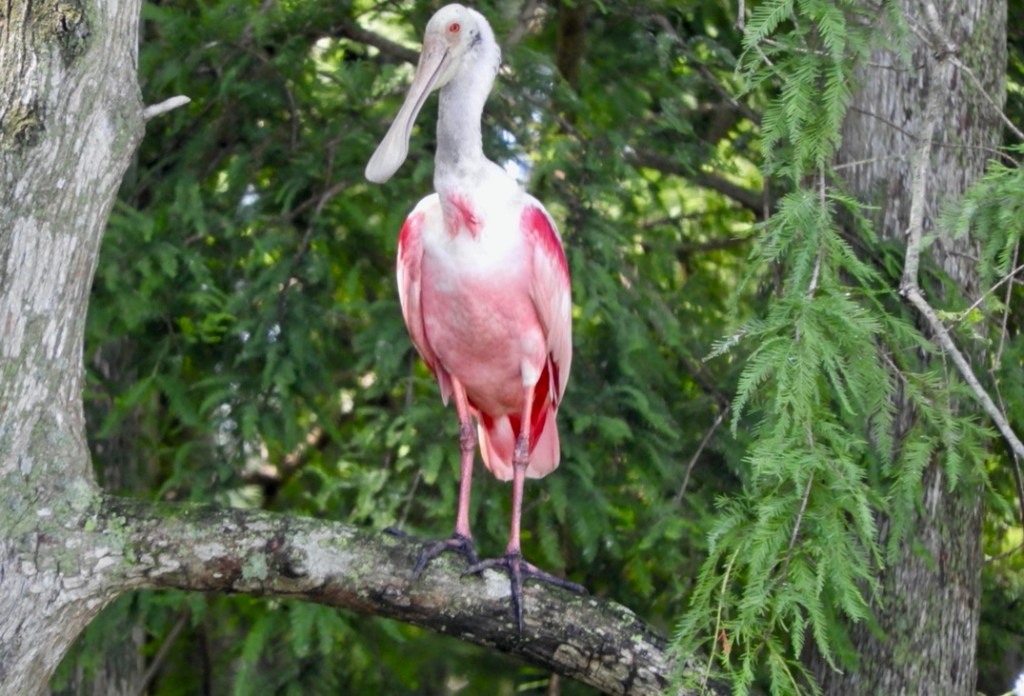
Beautiful Roseate Spoonbills roost in a grove of bald cypress trees near the boardwalk. Herb snapped this photo with his zoom lens. Did you know a baby spoonbill is called a teaspoon?

I can’t say this species is endangered. The Florida Fish and Wildlife Commission estimates there are over 1.3 million alligators in Florida.

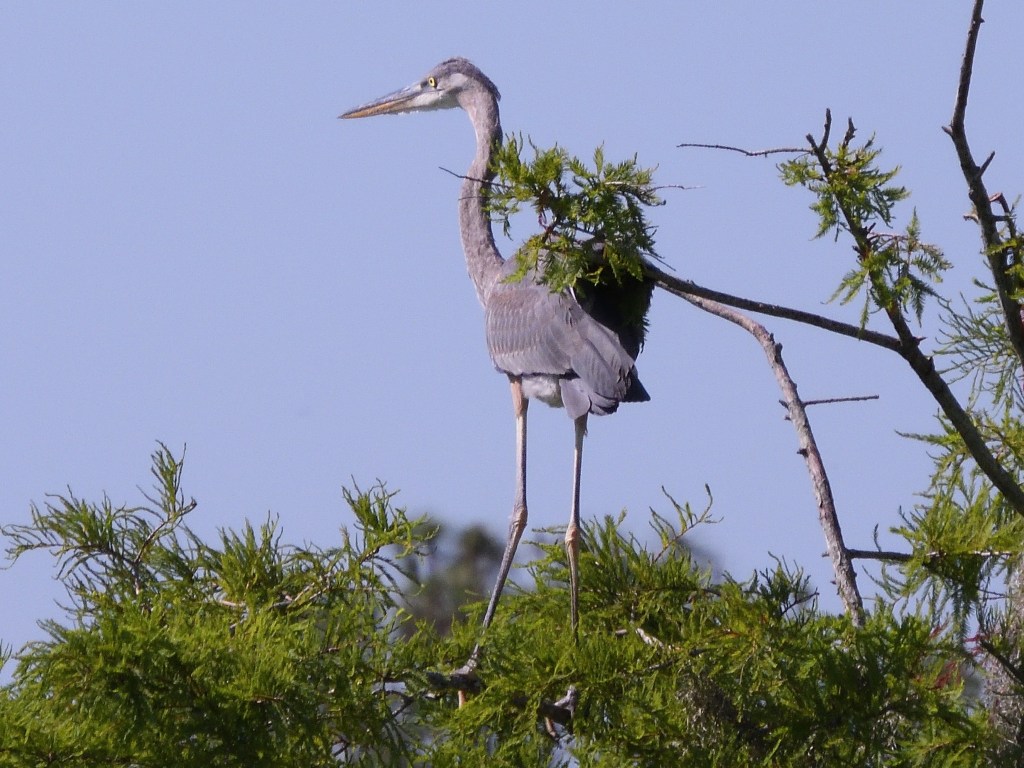
This tree top provides a place to rest for the Great Blue Heron, while allowing the bird to focus on what’s happening in the marsh below.

I’m not sure what kind of bird this is. If you can identify it, leave a comment. It makes a lot noise!

Summer is a challenging time to explore the outdoors in Florida. Wear a hat, carry water, and take breaks often. Follow the link for more information about visiting Orlando Wetlands.

Leaping Lizards!

“Ugh! Another lizard entered the house.” I pulled our sliding glass door shut, but it was too late. Herb and I live on the first floor of our apartment building, and every time we open the patio door, we invite the natural world inside.

Welcome to Florida, the epicenter of nonnative reptiles. I recognized our new guest as a brown anole. According to the University of Florida, this type of lizard hitched a ride on a shipment of cargo originating from Cuba during the late 1800’s.

Due to Florida’s warm and moist climate, the invasion of the brown anoles has expanded to every county of the peninsula. They are most common in areas dominated by humans. The little lizards can be found in school yards, gas stations, grocery stores and suburban neighborhood yards. People frequently see them on the ground and perched on tree trunks, fences, and the walls of buildings.

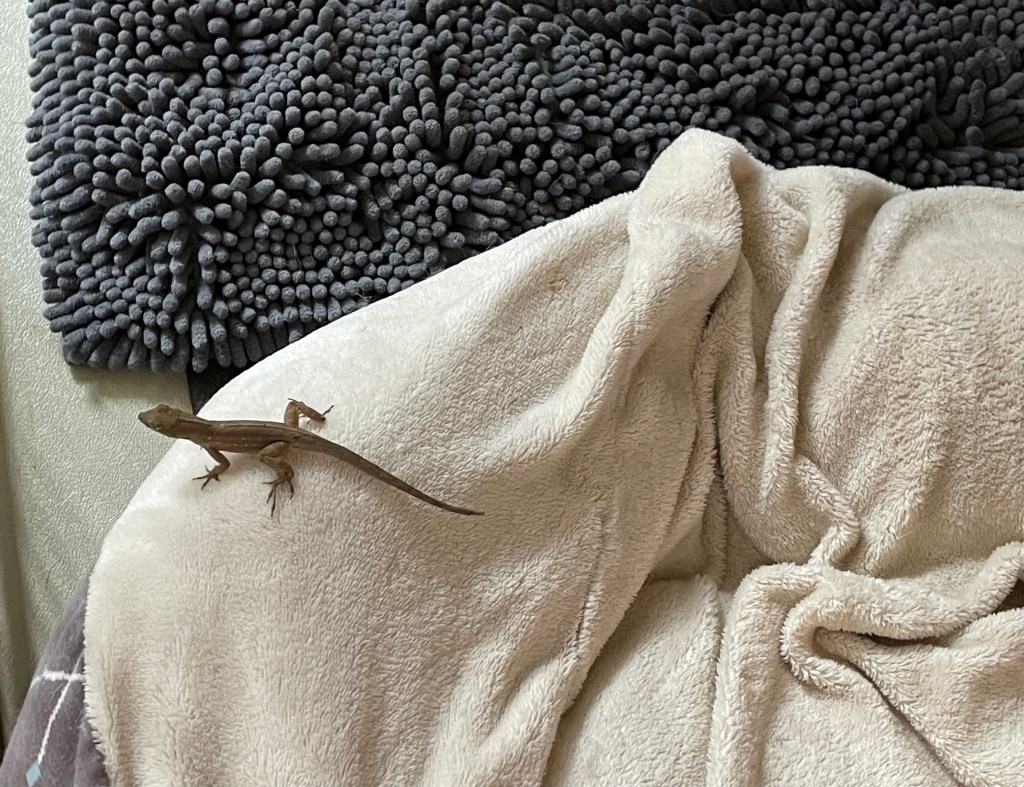
Our little invader jumped into Buddy’s dog bed which gave me an opportunity for a photo.

Isn’t he cute? I think I’ll name him Fred. My usual way of dealing with a lizard is to pick it up in a light-weight towel and release the animal outside. Unfortunately Fred was so fearful, the second I dropped the towel over him, he escaped. After ten minutes of chasing him around our apartment, I gave up.

The next morning, I spotted Fred on the floor between our sofa and end table.

I felt like he was taunting me, bobbing his head and doing little push ups with his upper body. Herb is usually able to grasp these guys with his bare hands. Fred was different. He was the fastest lizard we’d ever seen. A regular Houdini, who flattened his little body enough to slide under the couch.

When Herb and I inched the sofa away from the wall, Fred raced to the other side of the room. The chase began anew whenever we glimpsed him outside of his sofa hideout. Once we opened the patio door and tried to shoo him outside. He would have none of it. What can you do with animal who apparently has a death wish?

I read that anoles can live for a month without food but they can only live three days without water. Why was Fred still alive one week after entering our home? We could only imagine he was sneaking into the shower to lap up whatever moisture might be available.

After ten days Fred disappeared. He no longer came out from under the sofa to greet us. Someday we’ll find his dried up remains under a piece of furniture. What really killed Fred? Curiosity? Fear? Stupidity?

Not to worry. Brown anoles breed during the summer and a female lays one egg every one to two weeks. The eggs hatch about one month later. There will be plenty of Fred Juniors to carry on their invasion.

There’s No Place Like Home

We tend to think of home as the place where we live—our permanent residence and the people (and pets) who live there, too. Although I’ve lived in Orlando for over thirty years, it doesn’t take the place of Columbus, Ohio in my heart. Hmm… I wonder why?

Although I grew up in Ohio, I wasn’t born in Columbus. I didn’t go to grade school or high school there. The total amount of time I spent in Columbus was fifteen years. A lot of living was packed into that season of my life. It began by attending Ohio State, working as a social worker, and marrying my soulmate. You know the old saying, first comes love, then comes marriage, soon I’m pushing a baby carriage.

We bought our first house on the west side of town. I stayed at home with our two preschoolers and became involved in church and neighborhood activities. Our home was on a block of what you would consider “starter homes.” Half of the families had children under age six. It was a safe place for kids to learn how to ride a bike, with little traffic.

During those years I worked with a group of parents to petition the city of Columbus to develop a park for the children of our neighborhood. Twenty-four acres of land had been donated to the city in 1979 by Ruth E. Redick, a native of Columbus. Our efforts succeeded and by 1986 the playground was built, and given the name, Redick Park. My children enjoyed playing there for a few years before we moved to Orlando.

Herb and I visited Columbus in September. We drove around the city to see if any of the places we frequented, and homes we lived in are still there. Some of the buildings still stand. Some are gone. One house I lived in on South High Street was completely gone, and all that remained was the front steps. As we drove we talked about the past, the people we knew, the fun times.

When we visited Redick Park, I was pleased to see that the city is keeping up with it. The grass was mowed. They’ve added ball diamonds where a sand volleyball lot used to be. A feeling of contentment came over me knowing something remained of a project in which we were involved. I am thankful for Ruth Redick, who had the vision to create a place for families to enjoy the outdoors.

Contrary to the song “My City was Gone” by the Pretenders, this is one example of green space that has been preserved. “Way to go, Ohio.”

How about you? Is there a place you’ve lived which you remember fondly? A place you could never forget? Leave a comment. I’d love to hear from you.

Behold the Beautiful Anhinga

Meet Mr. Anhinga. Sometimes he appears at the pond outside our apartment building. I felt lucky to snap this photo of him drying out his wings in the warm Florida sunshine. Some people consider him ugly. Do you?

I am attracted to the Anhinga because of his huge black wings. Notice how they glisten in the light. Here he strikes the perfect pose, and balances his wet, heavy, body on the pointy top of a cypress knee.

I shared this photo with two of my neighbors. One guy shook his head, “No, that’s a cormorant.”

My other neighbor, a fisherman, did not share my excitement. “Those birds are no good because they eat fish.”

The old saying is true. “Beauty is in the eye of the beholder.” My neighbor’s comments motivated me to seek more information about this interesting creature.

First of all, the bird pictured above is definitely an Anhinga due to his long neck, dagger like beak, and long tail. A cormorant is much smaller and has a rounded beak. It doesn’t have silvery patches on its wings like the Anhinga.

However, my neighbor who fishes was correct. Anhingas are amazing predators and stab fresh water fish with their pointy beaks. After they harpoon their prey, they swallow it whole. These birds must have strong muscles in their throat to accomplish this feat.

The name Anhinga comes from the Tupi Indians in Brazil and means “devil bird.” (Apparently they had the same attitude as my fisherman neighbor.) Anhingas have several nicknames including darter, water turkey, and snakebird.

I understand the snakebird reference. When Anhingas swim they submerge most of their body, but raise their neck and head above the surface. I can see why someone might think they are a water snakes. And few people like snakes.

Although the Anhinga has webbed feet for paddling, the bird doesn’t have waterproof feathers. Its waterlogged feathers allow it to dive easily and search for underwater prey, such as fish and amphibians. Anhingas can stay underwater for substantial periods of time.

Anhingas need to dry out their wings between dives. Poor things, talk about body maintenance! They spend as much time out of the water as they do in the water. But they have an advantage of being able to fly. In fact they can soar through the sky and stretch out their wings in the shape of a cross. Perhaps their ability to fly can help them escape from their natural enemy, the alligator.

The Anhinga’s call sounds like a booming croak that reminds me of fingernails on a chalkboard. I’m thankful I’ve never heard one sing in our pond.

Do you remember the book “The Ugly Duckling,” by Hans Christian Anderson? There are advantages to being ugly:

″‘Oh,’ sighed the duckling, ‘how thankful I am for being so ugly; even a dog will not bite me.’ And so he lay quite still, while the shot rattled through the rushes, and gun after gun was fired over him.”

Unfortunately, my Anhinga will never change into a swan. I appreciate Mr. Anhinga for who he is. Maybe that’s because a poet can find beauty everywhere.

The Right Prescription

You’ve been there…remember that day when you answered a call from your doctor and your heart skipped a beat? His or her voice sounded serious as he shared information from your recent lab test. Now you have a new condition, one you hadn’t hoped for.

A few months ago, I learned my earlier diagnosis of osteopenia had advanced to osteoporosis. I felt depressed. Here was one more reminder I am aging. When I met with my doctor in her office, she prescribed a new calcium supplement and a strict regimen of weight-bearing exercise. She emphasized the importance of walking 40 minutes a day, for five days a week. I like to walk. I just don’t like being told I must walk, for how long, and how often. I thought it would be impossible to discipline myself to that degree.

The Florida heat during the month of August was more than I could bear, so I walked indoors on a treadmill (I call it the dreadmill) for the first few weeks of my exercise program. Even though I listened to my favorite playlist, I found the activity boring. I counted the minutes until I ended each session.

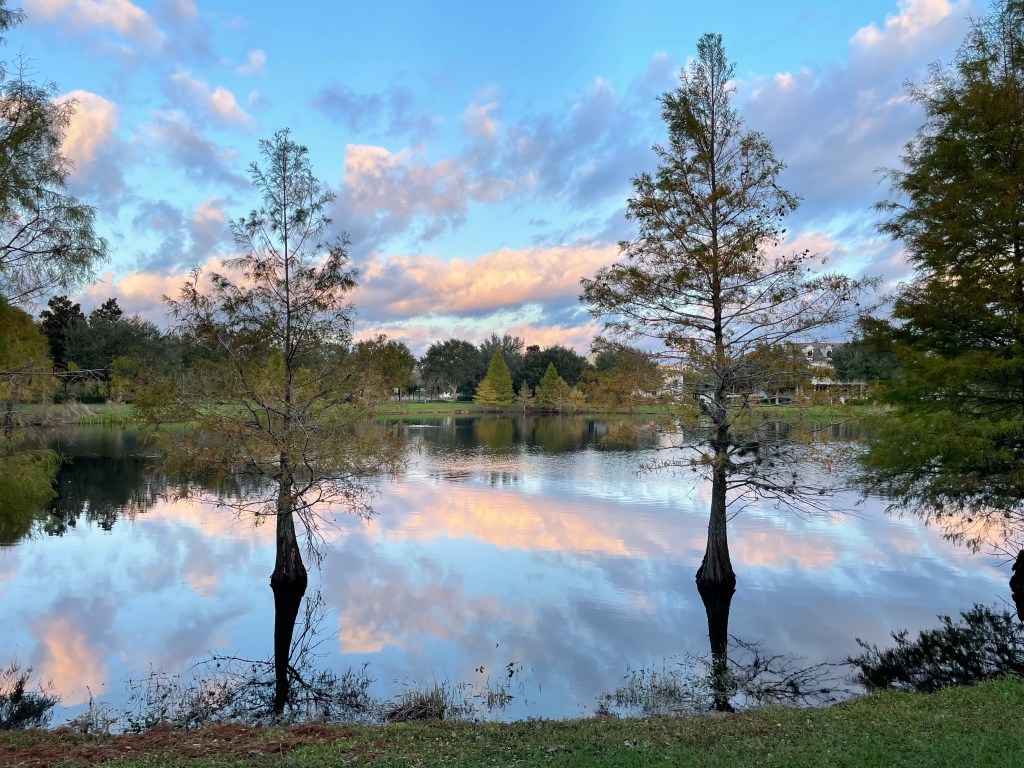
By October, the weather cooled and I could comfortably walk outside. I am fortunate to live in an area with several large ponds. These wetlands provide a perfect habitat for my favorite tree, the cypress.

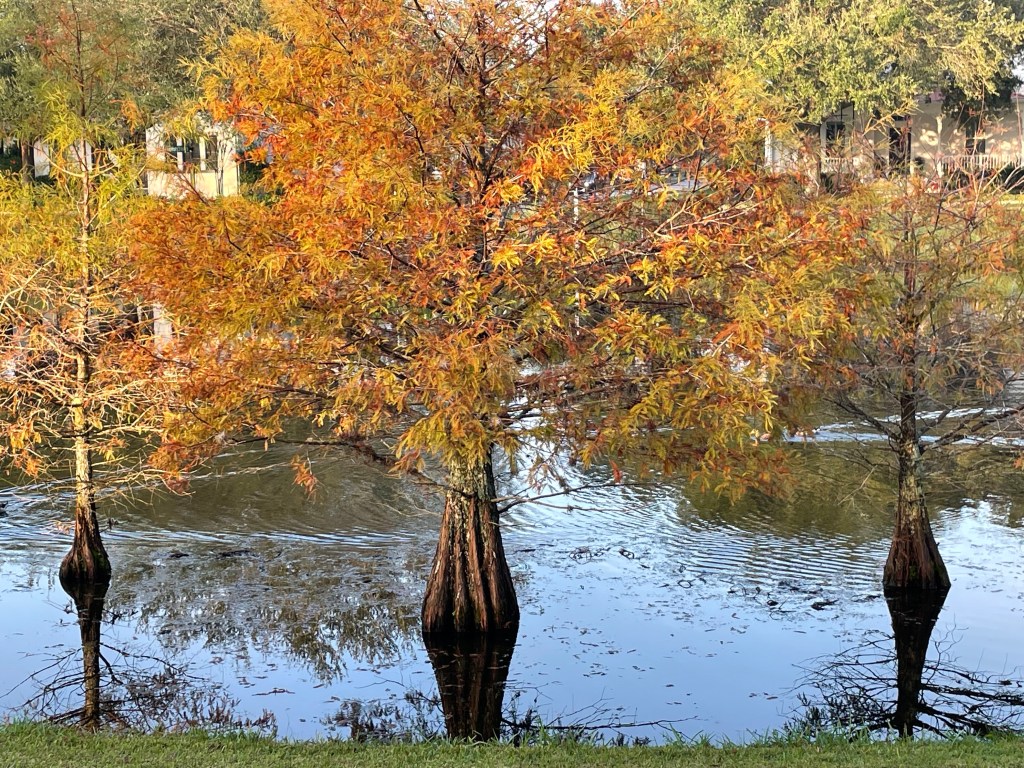
Whether I walk early morning, or late afternoon, I’ve discovered the light is remarkable for photographing the cypress trees. Some people aren’t aware of the fall season in Florida. During November and December, the needle-like cypress leaves change to burnt orange.

Since these trees are deciduous, they lose their leaves a short while later, similar to trees in northern forests.

There are two types of cypress trees. The bald cypress grows to a height of 150 feet. The pond cypress is smaller (80 feet tall). The trees I see on my walks are of pond cypress variety. The pond cypress are less likely to pop up “knees,” and when they do, the knees are much rounder and shorter.

A pond cypress tree in summer. Note the the “knees” in the foreground

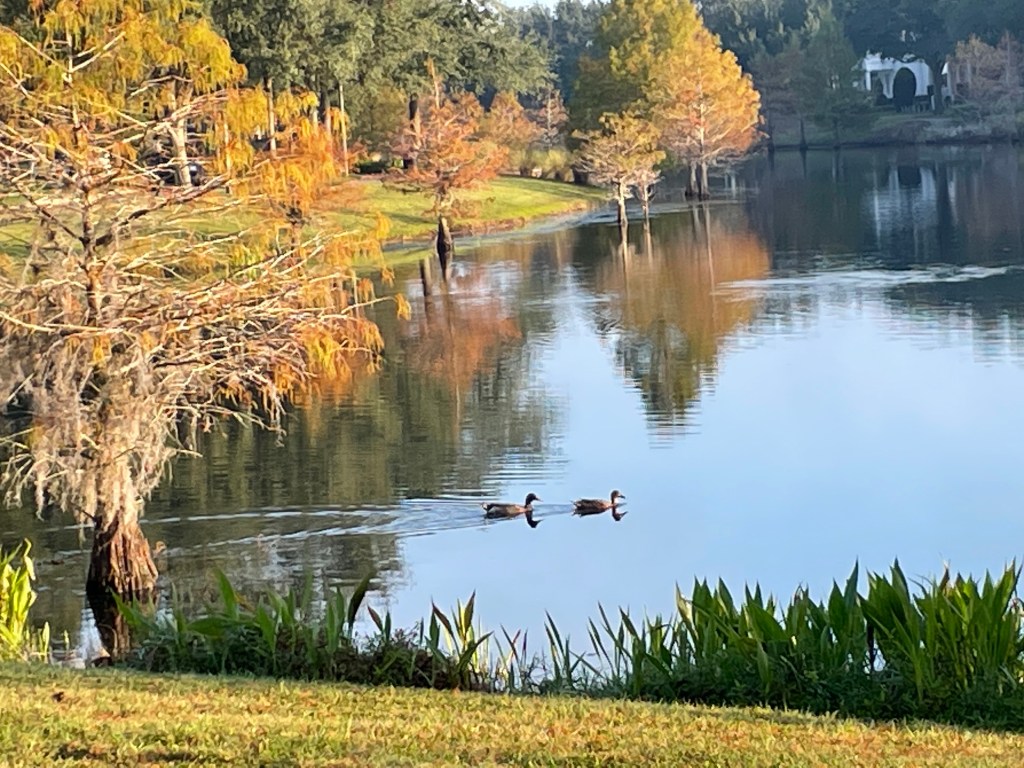
The pond is home to a variety of wildlife. Ducks and squirrels feed on cypress seeds. The trees also provide branches for epiphytes (air plants) which produce fruit that birds enjoy. I marvel at the great white egret who adds to the beauty of the scene. I make a game of trying to see how quick I can snap a photo before the bird takes flight.

Many medicines have unpleasant side effects. But there is nothing unpleasant about my time spent near the pond. The experience always has the same side effect, an uplifted spirit. When I see the beauty of creation, I am reminded of our Creator. God designed the world and all living things within it. The cycles and the seasons of the year operate with precision.

Whenever I take my walks, I think, “This is my medicine. I’m following my doctor’s orders and enjoying nature at the same time. This isn’t so bad after all.”

I can’t appreciate the beauty of nature without giving praise to the one who made it. I love these lines from God is in the Small Stuff and it all Matters by Bruce and Stan.

When you see a beautiful painting, praise the artist. When you hear a beautiful song, praise the composer. When you experience beauty in nature, praise the Creator.”

I can’t say I’m thankful for my new diagnosis, but I am grateful for the right prescription to treat my condition physically and emotionally. Are you facing a condition whose treatment requires a lifestyle change? How successful have you been at making the necessary change? Think about turning an unpleasant exercise into one you enjoy by incorporating something you’re passionate about. You might find the right prescription.

How Buddy the Beagle Stole the Christmas Candy

Yes, Christmas has come and gone. The tree ornaments and lights are boxed up and stored until next year. But we still have a few pieces of my favorite chocolate sitting around. And even though I’ve started my diet, I allow myself one or two, just to brighten up another dull January day.

We have to be careful where we set the candy bowl. A few nights before Christmas, Buddy gave us a scare. When it was time to turn in for the night, I realized Buddy wasn’t in the living room. I called his name and he wandered out of the spare bedroom.

I checked the bedroom and discovered a pile of chewed up foil wrappers on the floor. Buddy had gotten into the one bag of chocolate I’d purchased earlier that day. The bag was labeled “Lumps of Coal.” I thought I would put one piece in each of my loved ones stockings as a joke. Now the joke was on me.

Chocolate is toxic to dogs. The hour was late, and we did not want to make a trip to the local emergency vet clinic. So Herb accessed information about dogs and chocolate on the internet. He found a chart which listed dog weights and how much chocolate they could eat and still live. Buddy weighs twenty pounds and he would need to eat one pound of chocolate before he would be seriously affected. We also learned dark chocolate is more toxic to dogs than milk chocolate.

I hurried back to the bedroom and looked at the paper label from the bag. “We’re in luck!” I called out. “The candy contained more peanut butter than milk chocolate and the weight of the package was only three ounces.”

Buddy usually sleeps in his crate, but that night we carried it into our bedroom and so he could sleep near us. I’m sure he felt like he had won the lottery that night. In the morning he was fine.

The moral of the story…. “life happens and chocolate helps” only applies to people. On that note, I think I’ll have a piece of chocolate.

A Christmas Story

A friend and I like to walk on the bike path which circles Lake Baldwin in Orlando. The strip of land between the lake and the path is a natural habitat for a variety of plants and animals. Bald eagles and coyotes are among the local residents and I am always on the lookout for photo opportunities.

One morning something seemed out of place in the green landscape. We stepped closer to see a small package wrapped in red paper nestled among the needles of a bushy pine. “I think this the beginning of something,” I chuckled to my friend. In addition to the package, a shiny piece of garland adorned one side of the tree. We agreed the decorations must be someone’s idea of a joke in order to tease passersby to add more ornaments.

A few days later I walked my usual route and noticed many more decorations on the tree. A red and green bow served as a tree topper and bright ribbons spiraled the limbs. Then I noticed a note at the base of the tree inviting the community to add more ornaments in memory of “Bob.”

The author of the note shared a few details about Bob’s life. He loved to walk the path around the lake and started the tradition of decorating the small tree in 2020. Sadly, two months later Bob died from Covid 19. His family wants to continue the tradition in his memory and refers to the evergreen as the Community Tree of Baldwin Park.

The note touched my heart. This was not a joke but a serious memorial to a husband and father I never knew. This humble tree is very different from all the glitz and glamor of the Christmas tree in the Neighborhood Center of Baldwin Park. I prefer Bob’s tree because it represents the people from all walks of life who frequent the bike trail.

I never knew Bob, but I have a feeling I would like him. We have a common bond. He loved nature, walking, and Christmas.

December is a bittersweet time for many folks. I pray the Community Tree comforts Bob’s family as this will be their first Christmas with out him. Tomorrow I think I’ll visit the tree again and if there’s any space left, add a small token to tell Bob’s family they are not alone.

America’s Supply Chain Disruption

I’m sure by this time you may have been affected by the disruption in our country’s supply chain. If not, you could be affected, since the news media predicts shortages of toys, Christmas decorations, and turkeys for the upcoming holidays. Unfortunately these predictions often contribute to hoarding which increases the problem and perpetuates the cycle.

Even so, the shortages are real. Who is to blame for the problem? The crisis is a result of Covid-19 disruptions paired with an increased demand for goods. Yes, Covid-19. The gift that keeps on giving. (Or taking… depending on how you look at things.)

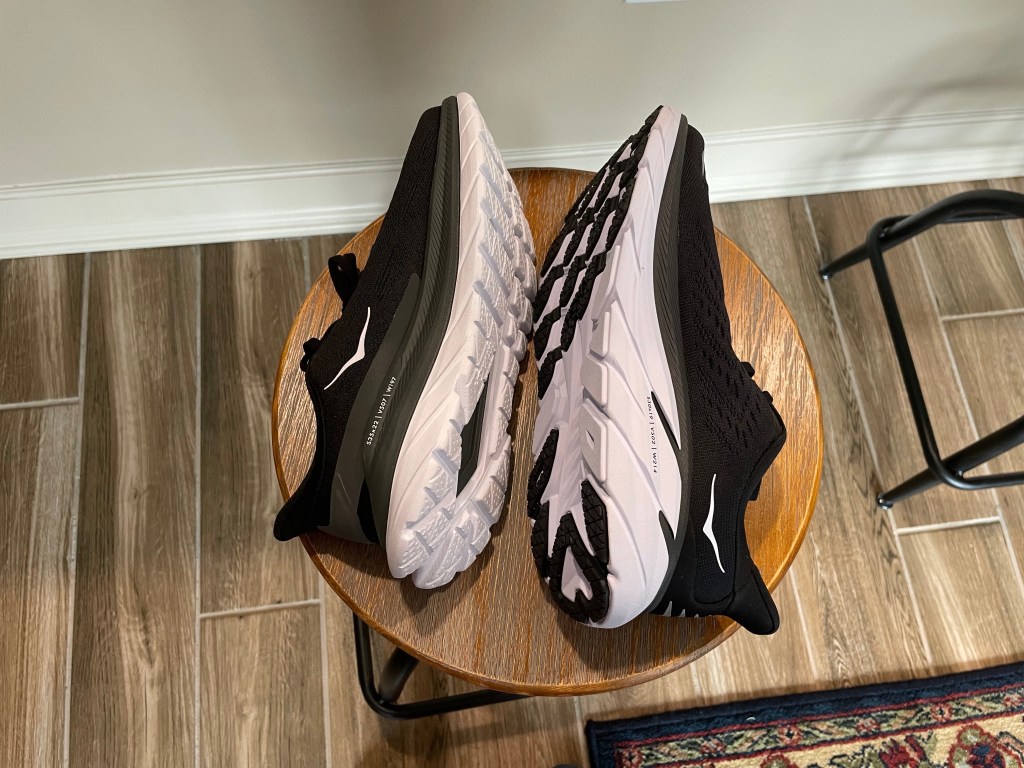
I need a new pair of athletic shoes. I like to try on shoes before I buy them, so I shopped at a local sporting goods store. I found a pair in my size, but I didn’t like the color. The salesperson checked the warehouse inventory and told me I was in luck. The warehouse had one pair in stock to fit my size in the color I wanted. I paid for the shoes at the checkout and was told to expect my delivery in two to seven days.

To my delight the package arrived in two days! I tore open the outer wrapping, eager to see my purchase. When I took the shoes out of the box, my excitement changed to shock. The left and right shoe were different sizes. On closer examination I realized size wasn’t the only issue. Each shoe was a different style. But I did get something I wanted. Both shoes were black and white.

The moral of the story: “If the shoes don’t match, don’t wear them.” The next day I returned the mismatched pair to the store.

The manager shook her head. “Someone sure made a big mistake.” She apologized and refunded my money. Consequently my search continues.

I admit for most of my life I’ve been spoiled by the abundance of material goods our wonderful supply chain has supplied. The supply chain crisis is something new to all of us. In the midst of everything, let’s try to not let our patience grow short as well.

How about you? Are you keeping your cool in the midst of the shortages? Leave a comment. You can cry on my shoulder. I don’t have all the answers, but I’m a good listener.

Cruising the St. Johns River

Would you agree 2021 seems a lot like 2020? The more stressful our lives become, the more we need to take time to relax. Even a three hour get-away can work wonders. My recent trip on a St. Johns riverboat increased my awareness of the soothing effect of water. Did you know contact with water can help people feel happier, calmer, and more creative? Hmm… maybe that’s why we get some of our best ideas in the shower.

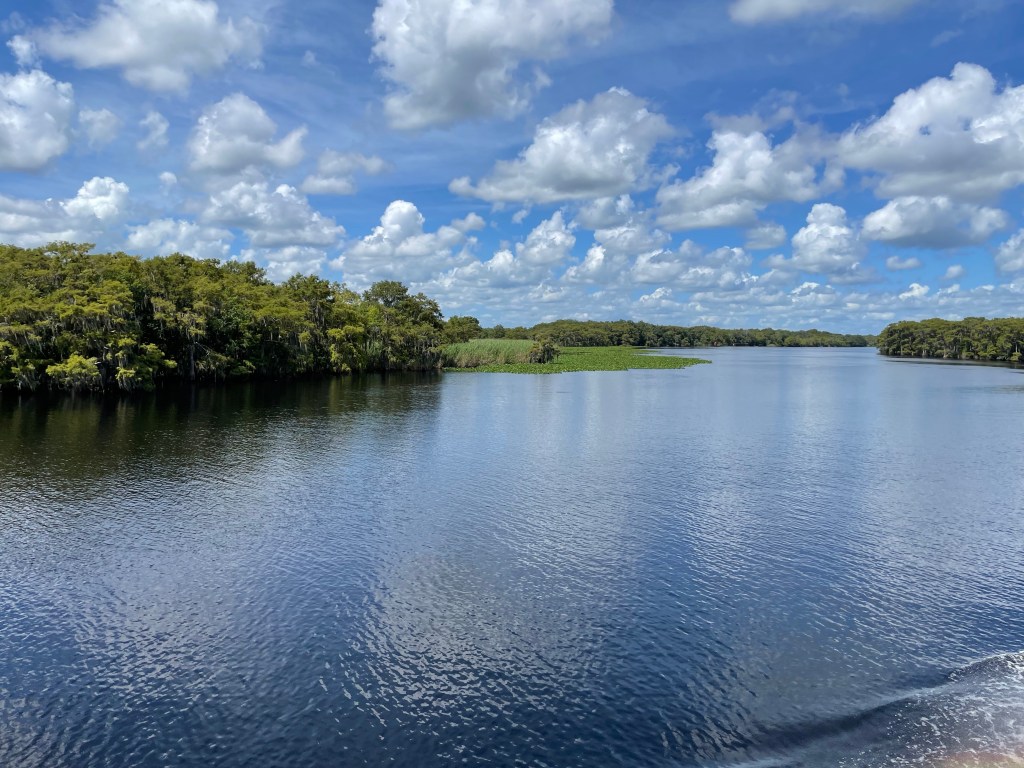
Some rivers are known for their length, others for their exciting rapids. The St. Johns River boasts of neither. However, it holds the title of the laziest river in the world. Remember your elementary science classes? Water flows along the path of least resistance. In Florida the path of less resistance is found between Indian River County in the south and Jacksonville in the north. The St. Johns is twenty seven feet higher at its source compared to its mouth. This slow moving river drops one inch per mile over the course of three hundred ten miles. No wonder white water rafters look elsewhere for thrills.

In spite of its laziness, throughout history the St. Johns has given rise to an abundance of activity. The river was one of the earliest routes used by Europeans to explore Florida. During the Civil War, the Union Navy operated steamboats up and down the river to carry out attacks on Confederate forts. After the war, riverboats carried wealthy tourists south for fun in the sun. Throughout the nineteenth century paddle wheelers moved produce from Florida farms to northern states.

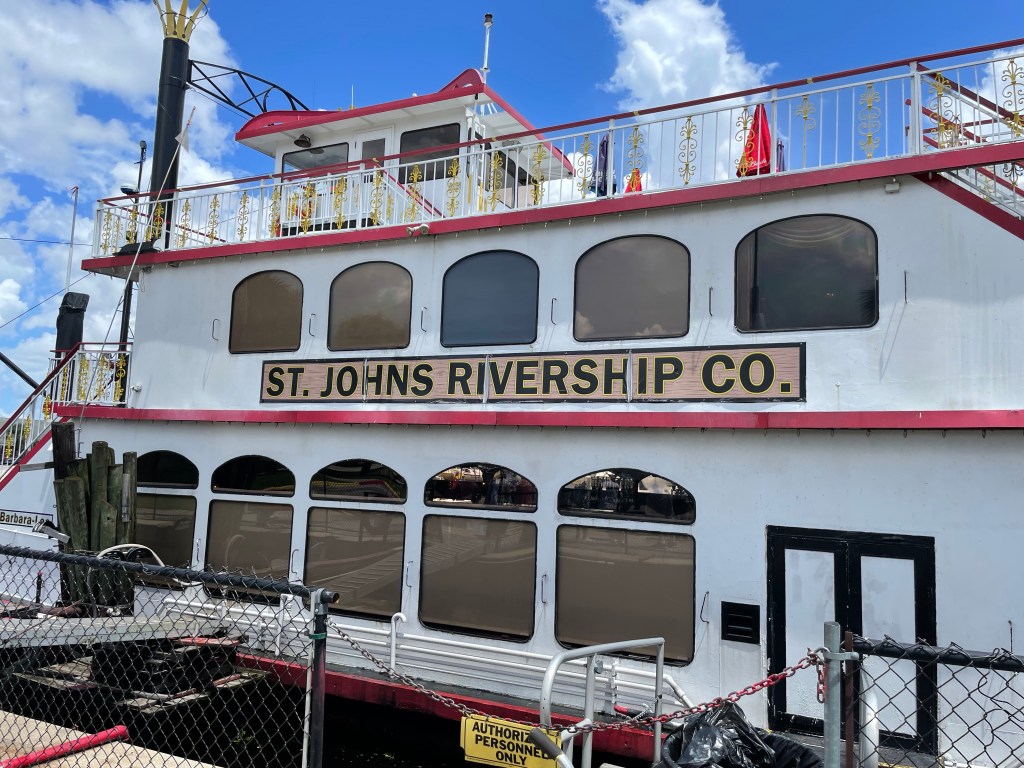
Today, the Barbara Lee is the only authentic riverboat sailing the St. Johns River. The ship was built in 1986 and refurbished in 2012. Unlike the steamboats of the past, the Barbara Lee uses diesel engines to turn the massive paddle wheels.

We boarded the Barbara Lee at its port in Sanford for a lunch cruise. (By the way, the dining room is air-conditioned.) The food tastes great and the service is superb. Above the dining room, we relaxed on the deck and marveled at the natural beauty of the river.

Standing on the deck, I felt miles away from the problems of the world. Rivers seem so sure of themselves. They have no doubt they will reach their destination. I felt linked with nature, connected to the past, and renewed in my spirit.

Herb and I loved our trip on the Barbara Lee.

Travelers looking for alligators may want to select an evening cruise. The water temperature averages eighty-five degrees in August. Our guide told us during the summer the gators seek cooler temperatures at the bottom of the river. At night the reptiles are more active. When the gators swim across the surface of the water their eyes cast an eerie glow. How spooky!

Click here to learn about the many cruises offered by the St.Johns Rivership Company.